Kumamoto Onsen: A First-Timer's Guide to the Best Hot Springs
Key takeaways
- Kurokawa Onsen (黒川温泉), about 90 minutes by car or bus from Kumamoto City, is the region's best-known hot spring town.
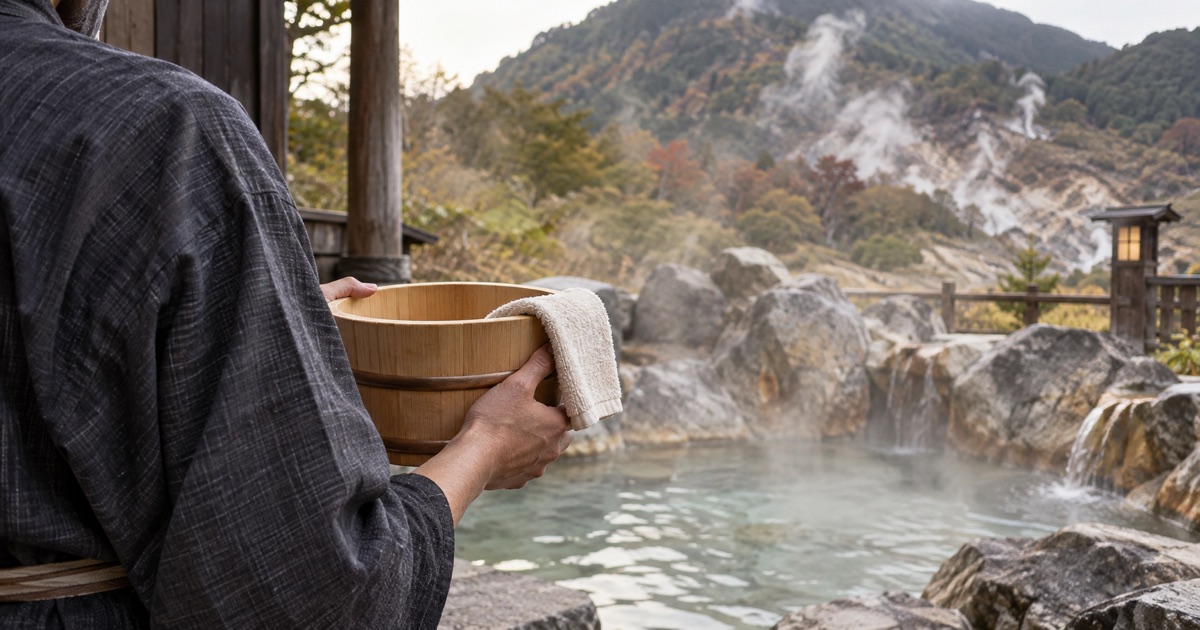
- Many Kumamoto onsen sit near Mount Aso, so day trips often combine a soak with volcano or caldera views.
- A rotenburo-hopping pass exists in Kurokawa for visiting multiple outdoor baths; check current price and rules on the town's official site.
Where Are the Best Onsen in Kumamoto?
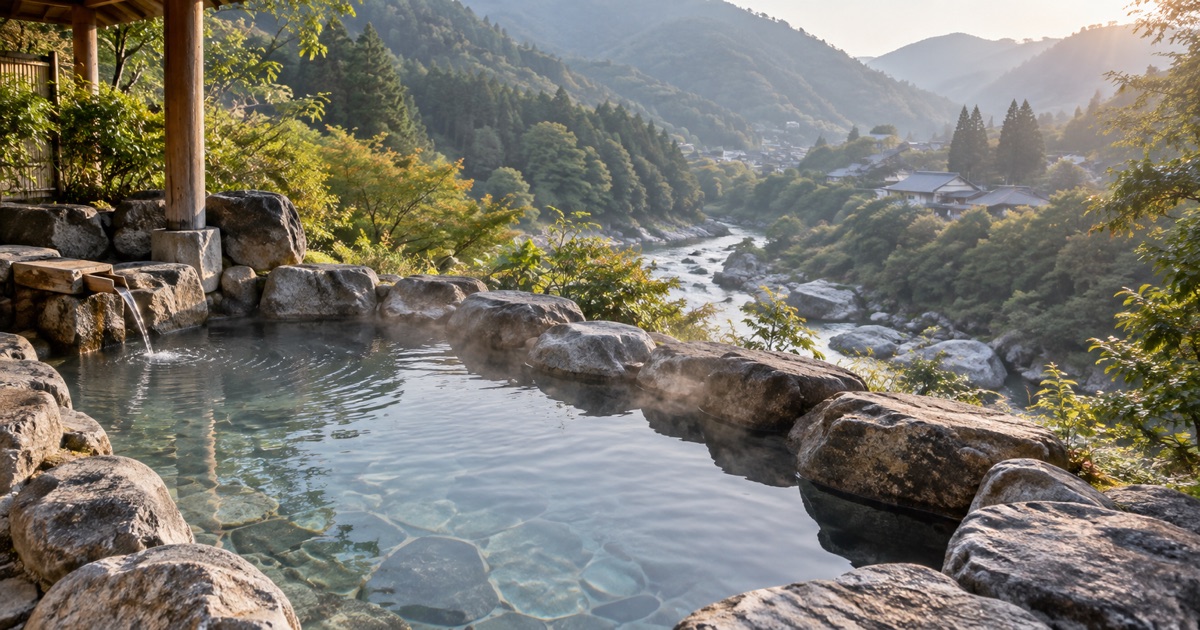
The best-known hot spring area in Kumamoto Prefecture is Kurokawa Onsen (黒川温泉), a small riverside town roughly 90 minutes by car or bus from Kumamoto City, prized for its rustic wooden ryokan and open-air baths. Kumamoto also has onsen closer to the city center and near Mount Aso, making it easy to combine a soak with sightseeing regardless of how much time you have.
Kumamoto Prefecture sits on the southern island of Kyushu and is shaped by volcanic activity from Mount Aso, one of the world's largest calderas. That geology is exactly why the region has so many mineral-rich hot springs scattered across mountain valleys, rural towns, and even within Kumamoto City itself. For visitors without a car, some areas are easier to reach than others, so it helps to know the main options before booking anything.
Kurokawa Onsen: The Signature Hot Spring Town
Kurokawa Onsen is consistently ranked among Japan's most atmospheric onsen towns, known for its narrow cobblestone lanes, wooden footbridges, and ryokan built along a small river gorge. Unlike larger hot spring resorts, Kurokawa has deliberately kept its scale small and its buildings traditional in style, which is part of its appeal for travelers seeking a quieter, more old-fashioned atmosphere than cities like Beppu offer.
Verdict: Kurokawa suits travelers who want a classic onsen-town atmosphere without big resort crowds. Its strength is walkability and scenery; its limitation is that public transport options are limited, and cars sell out ryokan reservations fast in peak seasons. Check timetables well ahead.
A well-known feature here is the tegata (手形) system, a wooden pass that lets holders enter a set number of different outdoor baths (rotenburo) around town within a validity period, often around a day. Policies, pricing, and the number of baths included can change, so confirm current details on the town's official tourism information before you go.
Getting there: Direct access from Kumamoto City usually involves a highway bus; travel time is roughly 90 minutes to two hours depending on the route and traffic. From Fukuoka or Beppu, bus connections also exist but take longer. Because departures are limited per day, it's worth checking current schedules and booking in advance rather than assuming you can turn up and go.
Onsen Near Mount Aso
Several hot spring spots sit close to the Aso caldera, letting visitors pair a bath with views of the volcano's grasslands and crater areas. Aso's onsen tend to be smaller and more low-key than Kurokawa, often attached to individual ryokan or minshuku (family-run guesthouses) rather than forming a dense cluster of bathhouses.
Verdict: Aso-area onsen are good for travelers already visiting the volcano who want to end the day with a soak rather than make bathing the main event. The strength is convenience alongside sightseeing; the limitation is fewer day-use options and more reliance on a rental car.
Public transport to the Aso area is possible via train and bus connections from Kumamoto City, but services can be infrequent, and the volcano's crater area is sometimes closed to visitors for safety reasons depending on activity levels. Always check current access conditions before planning a visit around the crater itself.
Onsen Inside or Near Kumamoto City
For travelers short on time, there are onsen facilities within or close to Kumamoto City, making a soak possible without a long day trip. These range from simple public bathhouses to day-use baths attached to hotels. They won't have the scenic drama of Kurokawa or Aso, but they're practical for anyone based in the city who wants to try an onsen between sightseeing stops at places like Kumamoto Castle.
Verdict: City-area onsen suit travelers prioritizing convenience over atmosphere. The strength is easy access without a car; the limitation is a more ordinary, less "destination" feel. A reasonable choice if your schedule is tight.
Kikuchi and Tsuetate: Quieter Alternatives
Kikuchi Onsen (菊池温泉) and Tsuetate Onsen (杖立温泉) are smaller hot spring towns in the northern part of the prefecture, drawing more domestic visitors than international tourists. They offer a more local, unpolished atmosphere than Kurokawa, with fewer English-language services. These are worth considering for travelers who have already experienced a more famous onsen town and want something quieter, though independent transport (typically a car) makes visiting far easier.
How to Plan a Kumamoto Onsen Trip
Getting to Kumamoto
Kumamoto is accessible by Kyushu Shinkansen from Fukuoka (Hakata Station) in around 35-40 minutes, or from Kagoshima in a broadly similar timeframe. Kumamoto also has an airport with domestic flight connections. For rail travel around Kyushu, it's worth checking current routes and any relevant rail passes on the JR Kyushu website, since schedules and pass conditions are updated periodically.
Day-Use vs. Overnight Bathing
Many ryokan in Kurokawa and elsewhere in Kumamoto offer higaeri onsen (日帰り温泉), or day-use bathing, for a few hours at a set fee, without requiring an overnight stay. This is a good way to experience multiple baths on a single trip, particularly using Kurokawa's tegata pass system. That said, day-use hours are often more limited than overnight guest access, and some ryokan pause day-use bathing during busy periods, so confirm availability directly with each facility.
What to Bring
- A small towel for washing and a larger one for drying off (some facilities sell or rent towels, but not all)
- Coins or small bills, as some smaller bathhouses and rural onsen don't accept cards
- Any bandages for small cuts, since most facilities ask guests with open wounds to avoid the baths
- A swimsuit is rarely needed or allowed in traditional baths, but some newer mixed-use spa facilities permit them — check each facility's rules in advance
Common Mistakes First-Timers Make
A frequent misstep is assuming all onsen towns in Kumamoto are as walkable as Kurokawa; many rural baths near Aso or in smaller towns genuinely require a car. Another is not washing thoroughly at the shower stations before entering the bath, which is expected etiquette at essentially all Japanese onsen. Travelers also sometimes assume tattoos are universally banned or universally fine — in reality, policies differ by facility, so it's worth checking each onsen's own website or asking at the front desk rather than assuming either way.
Tattoos and Onsen Etiquette
As with onsen elsewhere in Japan, rules on visible tattoos vary by facility in Kumamoto. Some ryokan and public baths prohibit them outright, others allow small tattoos if covered with a patch, and some are fully tattoo-friendly, particularly private baths (kashikiri-buro) booked for individual use. Since there's no single nationwide rule, the most reliable approach is checking the specific facility's website or contacting them directly before your visit. For general etiquette and planning information across Japan, the Japan National Tourism Organization is a useful starting reference.
Whichever area you choose, Kumamoto's combination of volcanic scenery and traditional bathing culture makes it a worthwhile detour from Kyushu's bigger cities, as long as you plan transport and reservations with the realistic travel times above in mind.
FAQ
- Q. What is the best onsen area near Kumamoto City?
- A. Kurokawa Onsen is the most famous, but Kikuchi Onsen and Tsuetate Onsen are closer alternatives with a quieter, more local feel.
- Q. Can I visit Kumamoto onsen as a day trip without staying overnight?
- A. Yes, many ryokan and public bathhouses offer day-use bathing (higaeri onsen) for a few hours, usually for a modest entry fee.
- Q. Are tattoos allowed in Kumamoto onsen?
- A. Policies vary by facility; some ban visible tattoos, others allow them or offer private baths, so check each facility's website before visiting.