Kumano Kodo Onsen Towns: Where to Soak After the Trail
Key takeaways
- onsen towns—Yunomine (湯の峰), Kawayu (川湯) and Watarase (わたらせ)—cluster within about a 10-minute drive of each other in the Kumano Kodo area.
- Kawayu Onsen's riverbed hot spring pool is typically only diggable in winter, roughly December to February; check official sources for current dates.
Kumano Kodo Onsen Town: Quick Answer
The main onsen towns along the Kumano Kodo (熊野古道) pilgrimage route are Yunomine Onsen (湯の峰温泉), Kawayu Onsen (川湯温泉) and Watarase Onsen (わたらせ温泉), all located in the mountains of Tanabe City, Wakayama Prefecture. They sit within roughly 10 minutes of each other by car and are popular stopping points for hikers finishing sections of the trail near Kumano Hongu Taisha (熊野本宮大社) shrine.
These three towns are small, quiet, and built around natural hot springs rather than nightlife or shopping, which makes them well suited to travelers looking to rest after walking parts of the historic pilgrimage route.
What Makes This Area Different From Other Onsen Towns
This cluster of onsen towns is different from larger hot spring resorts because its appeal is tied directly to the Kumano Kodo pilgrimage rather than to entertainment or scenery alone. The three towns are registered as part of the UNESCO World Heritage "Sacred Sites and Pilgrimage Routes in the Kii Mountain Range," and Yunomine Onsen in particular is said to be one of the oldest hot springs in Japan, with a history going back over 1,800 years according to local tradition. Travelers typically come here after walking a day or more of the Nakahechi route, making the hot water feel like a natural reward rather than a tourist stop.
Getting to the Kumano Kodo Onsen Towns
Reaching Yunomine, Kawayu or Watarase onsen usually involves a combination of train and bus, since there is no direct rail line into the mountains. Most travelers approach from either Kii-Tanabe Station (紀伊田辺駅) on the JR Kisei Line or Shingu Station (新宮駅), also on the JR Kisei Line, both reachable from Osaka or Nagoya with a transfer. From either station, local buses operated by regional bus companies connect to the onsen area, with the ride typically taking around 1.5 to 2 hours depending on the stop.
Because bus services in this region run on a limited schedule—sometimes just a handful of departures per day—it is worth checking timetables before finalizing a hiking plan, rather than assuming a bus will be available whenever you finish walking. Information on routes to the wider Kii region can be checked through JR West, which operates train services into Wakayama Prefecture.
Common Mistakes When Planning Transport
One common mistake is assuming taxis are easy to find in these towns; they are not, since all three onsen towns are small villages with very limited taxi availability. Another is underestimating travel time between the train station and the onsen area, which can turn a full day of hiking plus transit into a very long day. Building in an extra hour of buffer time is a practical safeguard, especially for the last bus of the day.

We are working to carry Japanese craft and everyday culture beyond Japan, by building Japan Towns with local partners.
Read the Japan Town plan →Yunomine Onsen (湯の峰温泉)
Yunomine Onsen is the oldest and most compact of the three towns, built along a narrow river valley with steam visibly rising from the water in several spots. The town is known for Tsuboyu (つぼ湯), a small World Heritage-listed public bath set directly over the hot spring source in the riverbed; access is limited and reservations or a queue system often apply, so checking the local information center or official tourism sites before arrival is recommended. Yunomine also has a few public bathhouses open to day visitors, and some lodgings offer onsen-cooked eggs and vegetables using the naturally hot water, a well-known local custom rather than a health claim.
Kawayu Onsen (川湯温泉)
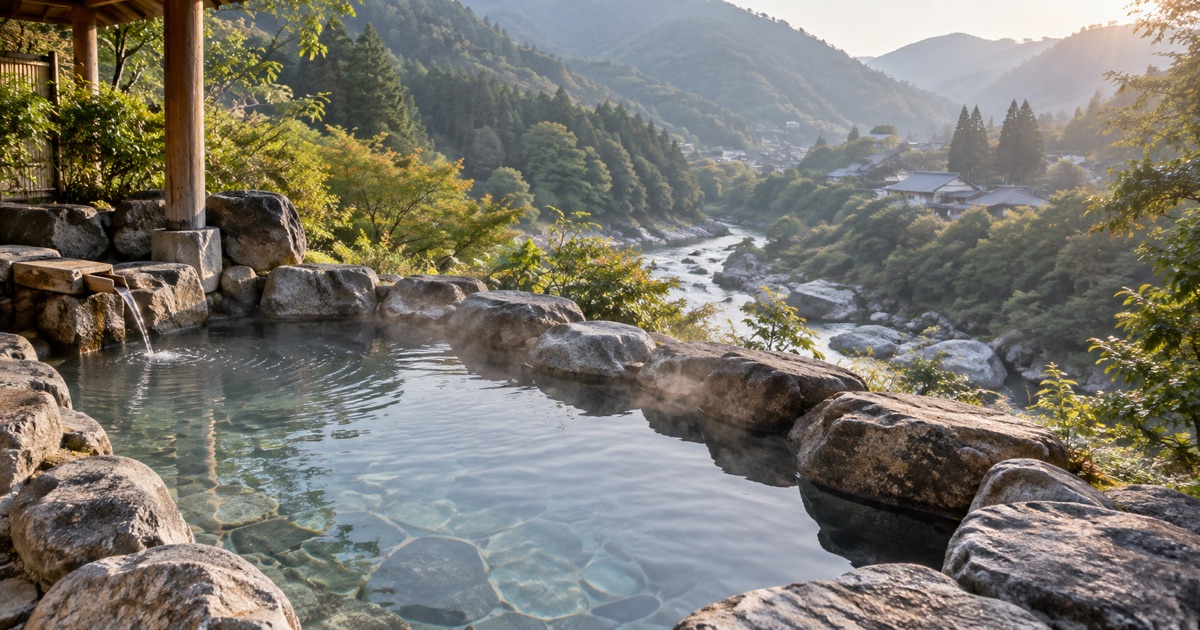
Kawayu Onsen sits along the Oto River (大塔川) and is best known for its seasonal riverbed hot spring pool, where hot water mixes with the cooler river to create a large open-air bathing area. This riverbed pool, sometimes called Sennin-buro (仙人風呂) during the winter season, is typically only dug and maintained from around December to February, and the exact dates can shift year to year depending on conditions, so confirming current information locally is important. Outside of winter, the river still flows warm in patches, and several accommodations in the town offer indoor or outdoor baths fed by the same hot spring source.
Watarase Onsen (わたらせ温泉)
Watarase Onsen is the least crowded of the three towns and is often associated with one large hot spring facility featuring multiple outdoor baths along the riverside. It tends to attract travelers looking for a quieter alternative to Kawayu, particularly outside the winter riverbed season. As with the other towns, opening days and hours can change, so checking the facility's own website or a current regional tourism page before visiting is the safest approach.
Practical Tips for Visiting
What to Bring
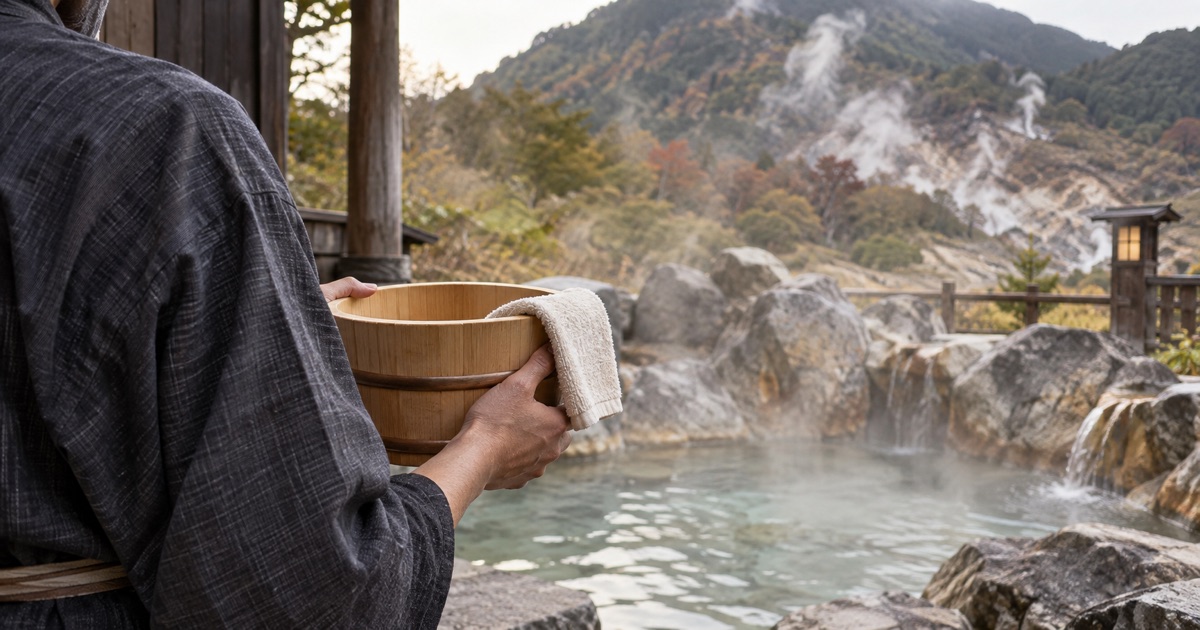
A basic onsen kit makes the visit smoother: a small towel for washing and a larger one for drying off, since not all smaller public bathhouses provide rental towels. Flip-flops or sandals are useful for walking between accommodation and bath areas, especially in Kawayu where part of the experience involves stepping into the riverbed itself. Hikers should also pack a change of clothes, since finishing a Kumano Kodo trail segment often means arriving sweaty and ready to bathe immediately.
Tattoos and Bathing Etiquette
Policies on visible tattoos vary by facility in this region just as they do elsewhere in Japan; some smaller public baths in Yunomine are relaxed, while others, especially larger commercial facilities, may ask guests to cover tattoos or decline entry. Because policies differ and can change, it is best to check each facility's official website or ask locally before bathing. Standard onsen etiquette applies throughout: washing thoroughly before entering the shared bath water, not bringing towels into the water itself, and keeping noise levels low out of respect for other bathers.
Planning Around the Pilgrimage Route
Many visitors treat these onsen towns as overnight stops along a multi-day Kumano Kodo itinerary, often pairing a day of walking with a night in Yunomine or Kawayu before continuing toward Kumano Hongu Taisha or on to the coast near Shingu. Trail sections can take anywhere from 2 to 7 hours depending on the route chosen, so checking distances and elevation gain in advance helps match the day's hike to a realistic arrival time at the onsen town. General trip-planning resources, including regional access information, are available through the Japan National Tourism Organization.
Because this is a mountain region with limited public transport and small-scale accommodation, booking lodging ahead of time—particularly during the Kawayu winter riverbed season—is strongly advised rather than assuming rooms will be available on arrival.
FAQ
- Q. Which onsen town is best for first-time visitors to Kumano Kodo?
- A. Yunomine Onsen is a good starting point because it sits close to the Kumano Hongu Taisha shrine and has a compact, walkable layout with several small public bathhouses.
- Q. Do I need a car to reach these onsen towns?
- A. A car is not required, since buses connect Kii-Tanabe Station and Shingu Station to Yunomine, Kawayu and Watarase, though services are infrequent and schedules should be checked in advance.
- Q. Can I visit the Kumano Kodo onsen towns as a day trip from Osaka or Kyoto?
- A. It is possible but tiring, since one-way travel often takes around 3 to 4 hours by train and bus combined, so an overnight stay is usually more comfortable.