Okayama Onsen Town Guide: Yunogo and Okutsu Explained
Key takeaways
- Yunogo Onsen is the most accessible Okayama onsen town, roughly 40-50 minutes from Okayama Station by bus or train plus a short transfer.
- Okutsu Onsen is a quieter, more rural riverside option further north, better suited to travelers with a car or extra time.
Okayama's Onsen Towns at a Glance
Okayama Prefecture's best-known onsen towns are Yunogo Onsen (湯郷温泉) and Okutsu Onsen (奥津温泉), both set along quiet rivers in the prefecture's inland hills rather than in Okayama City itself. Yunogo is the easier of the two to reach from Okayama Station, while Okutsu rewards travelers willing to go a little further for a more rural, slow-paced soak.
Neither town is a major international tourist destination, which is part of the appeal: expect modest ryokan, public foot baths, and a pace of life built around local visitors rather than overseas crowds. That also means English signage is limited, so a little planning goes a long way.
Why These Towns, and Not Somewhere Else
Okayama City itself has no large-scale onsen district of its own, so visitors looking for a traditional hot spring town experience need to head out to Yunogo or Okutsu, or further afield to areas like Yubara Onsen. This guide focuses on the two most practical options for someone based in or passing through Okayama City.
Yunogo Onsen: The Easiest Option From Okayama Station
Yunogo Onsen sits in Misaki, part of Mimasaka City, in the northeastern part of Okayama Prefecture. It's often described as a hot spring town with a long history, lined with ryokan along a small river, and known locally for foot bath facilities open to passersby.
Getting There
From Okayama Station, the most common approach is a direct or transfer bus service bound for Yunogo Onsen, or a combination of local train (toward the Tsuyama direction) and a short bus or taxi transfer from the nearest station. Total travel time is roughly 40 to 60 minutes depending on the connection, but schedules are not frequent, so check bus and train times in advance rather than assuming an onward connection will be waiting.
Because this is a regional route rather than a major tourist corridor, it's worth confirming the current timetable on the operator's website or at the Okayama Station information counter before you set out, and building in extra buffer time for your return journey, especially if you're planning to catch a Shinkansen afterward.
What To Expect in Yunogo
Yunogo's town center is small and walkable, built along the river with several ryokan offering both overnight stays and day-use bathing. A public foot bath is a common feature of towns like this, letting visitors dip their feet for free without booking a room, though exact locations and hours can change, so check locally once you arrive.
Common mistakes here include assuming shops and restaurants stay open late, when in fact this is a quiet residential-style onsen town where many places close earlier in the evening, and assuming you can walk in to any ryokan for a bath without checking first. It's best to confirm day-use bathing availability, prices and hours directly with the ryokan's own website before heading out, since some properties restrict day baths to certain hours or do not offer them at all.
We are working to carry Japanese craft and everyday culture beyond Japan, by building Japan Towns with local partners.
Read the Japan Town plan →Okutsu Onsen: A Quieter, More Rural Alternative
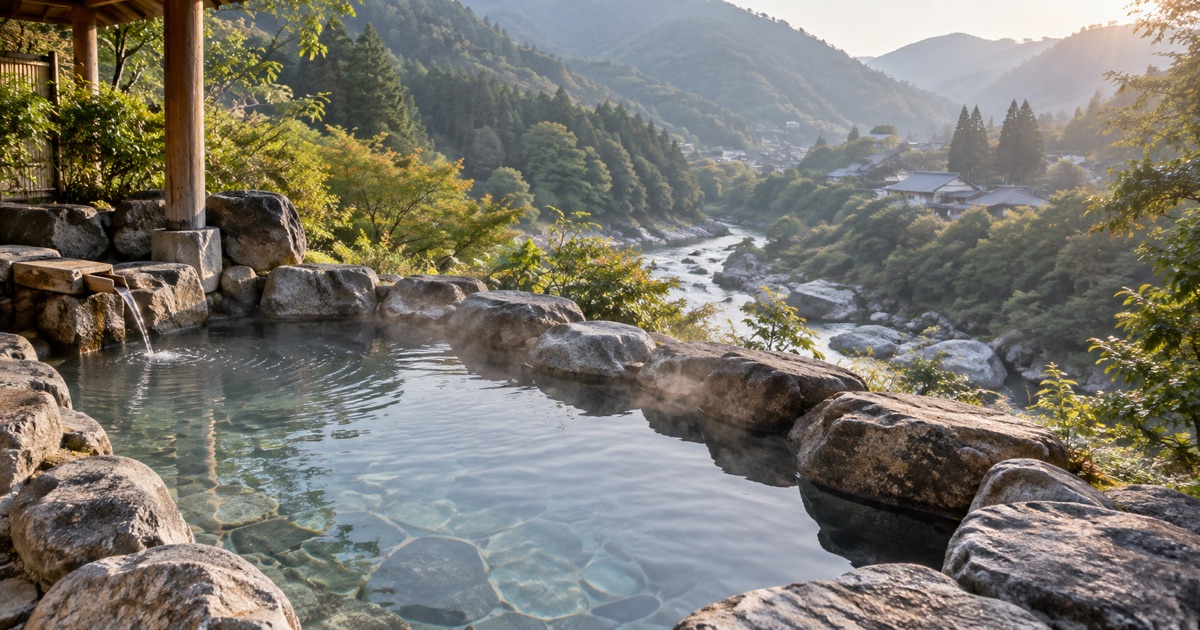
Okutsu Onsen lies further north and west, closer to the border with Tottori Prefecture, along the Yoshii River. It has a reputation as one of Okayama's more traditional and low-key hot spring towns, with a handful of ryokan set against forested hillsides.
Getting There
Okutsu is less convenient by public transport than Yunogo. The general route from Okayama Station involves a train toward Tsuyama followed by a bus connection, with total journey times commonly running over an hour and a half depending on waiting times between services. Because bus frequency in this area can be limited, especially outside peak seasons, travelers without a rental car should treat this as a destination for an overnight stay rather than a quick day trip, and should double-check the return bus schedule before heading out in the morning.
Visitors with a rental car will find Okutsu considerably easier to reach, and a car also opens up nearby scenery along the river valley that isn't practical to see on foot from the bus stop.
What To Expect in Okutsu
Okutsu's draw is its riverside setting and smaller scale compared to more commercialized onsen towns elsewhere in Japan. Ryokan here tend to be family-run, and some are known locally for open-air baths positioned along the river. As with Yunogo, day-use bathing policies, hours and prices vary by property and change seasonally, so check each ryokan's own website or call ahead rather than arriving unannounced.
Planning Your Visit: Practical Notes
What To Bring
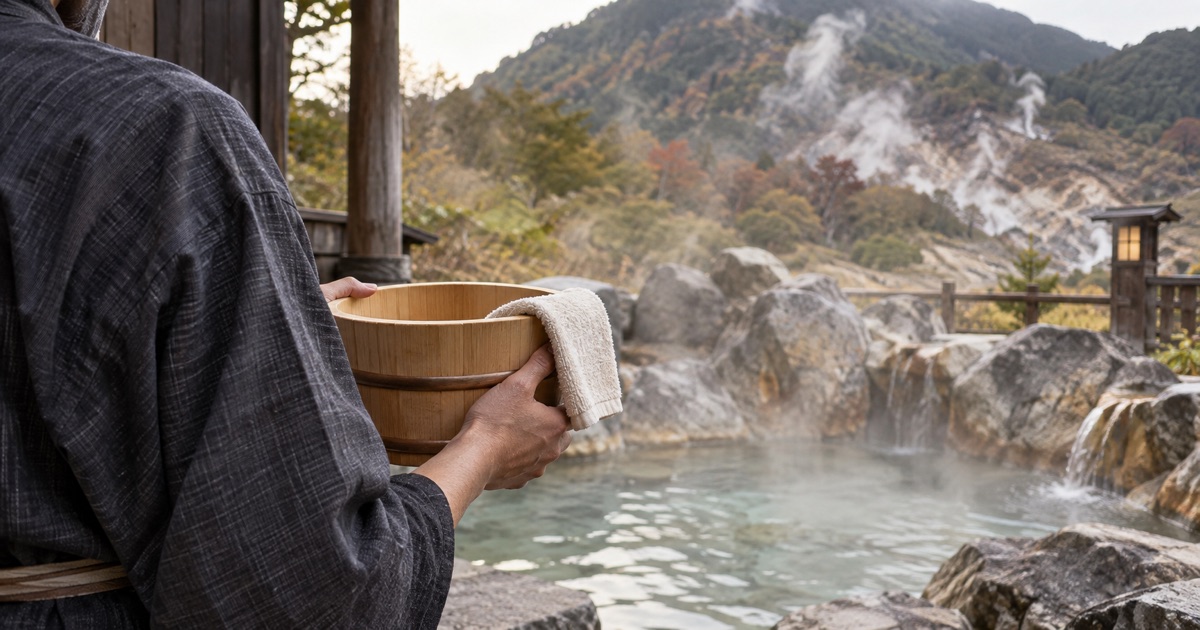
Bring your own small hand towel if your chosen bath doesn't supply one, along with any skincare items you normally use, since toiletries at smaller ryokan may be basic. Cash is still useful in both towns; not every ryokan or small shop accepts cards, and ATMs are not always close at hand once you're outside the main station areas.
Tattoos and Communal Bathing
Policies on visible tattoos vary widely by facility in both Yunogo and Okutsu, exactly as they do elsewhere in Japan. Some smaller, family-run ryokan baths are relaxed about this, while others maintain a no-tattoo rule for shared baths. There is no single rule that applies across either town, so the only reliable approach is to check the specific ryokan's official website, or contact them directly, before you travel.
Common Mistakes to Avoid
A frequent planning error is treating these towns like Kusatsu or Hakone in terms of transport frequency and English support; both are far smaller and quieter, so buses can be infrequent and signage is mostly in Japanese. Another common mistake is not confirming whether a chosen ryokan offers day-use bathing at all — some are overnight-guest only. Finally, travelers sometimes underestimate return journey timing, especially from Okutsu, and miss their last connection back toward Okayama Station or the Shinkansen line.
Combining With a Shinkansen Journey
Okayama Station is a major stop on the Sanyo Shinkansen line, which makes either onsen town a workable add-on to a wider trip through western Japan. For current Shinkansen schedules and route planning, the JR West website is a reliable starting point, and general trip-planning information for the region is also available through Japan National Tourism Organization.
Final Tips
Because opening hours, bus timetables and bathing policies all change periodically, treat anything you read in advance — including this guide — as a starting point rather than a fixed schedule. Confirming details directly with the ryokan or transport operator on the day, or a day before, will save the most frustration once you're on the ground in either Yunogo or Okutsu.
FAQ
- Q. Is there an onsen town within easy reach of Okayama City?
- A. Yes. Yunogo Onsen (湯郷温泉) is the closest well-known onsen town to Okayama Station, reachable in roughly 40-50 minutes by a combination of train or bus and a local transfer, making it feasible as a half-day or overnight trip.
- Q. Can first-time visitors who don't read Japanese get around these onsen towns easily?
- A. Basic navigation is manageable with signage, hotel staff, and translation apps, but these towns are smaller and less English-ready than Hakone or Kusatsu, so booking accommodation in advance and confirming transport details with the ryokan is recommended.
- Q. Do Okayama's onsen towns allow tattoos in communal baths?
- A. Policies vary by facility; some smaller ryokan baths are tolerant while others are not, so it's best to check each facility's official website or contact them directly before arrival.