Onsen Near Naha Airport: Best Options Before or After Your Flight
Key takeaways
- Naha Airport itself has no onsen bath, only regular restrooms and foot-rest areas.
- Day-use hot spring facilities exist a short taxi or monorail ride from the airport.
- Always check tattoo and nudity policies on each facility's own website before visiting.
Is There an Onsen at Naha Airport?
No, Naha Airport (那覇空港) does not have a hot spring bath built into the terminal. Travellers looking to soak before or after a flight need to head into Naha city or nearby coastal areas, where a handful of day-use hot spring and bathing facilities are within reasonable taxi or monorail distance.
This is a common point of confusion because some airports in mainland Japan, like certain stops along the Hokuriku Shinkansen route, are known for onsen towns right at the station. Naha is different: it is primarily a gateway to Okinawa's beaches, and hot spring culture here is less widespread than in regions like Kyushu or Tohoku. That said, Okinawa does have a small number of onsen and spa facilities that draw on real hot spring water, and some are accessible as a half-day trip from the airport.
Why Okinawa Has Fewer Onsen Than Mainland Japan
Okinawa's volcanic activity and geology differ from much of mainland Japan, so natural hot spring sources are less common here than in places like Hakone or Beppu. The facilities that do exist often pair hot spring water with resort-style amenities such as outdoor pools or spa treatments, rather than the traditional wooden bathhouse style found elsewhere. This means visitors should keep expectations realistic: Okinawa's version of an onsen experience is often more resort-spa in character.
Getting From Naha Airport Into the City
Naha Airport connects directly to the Yui Rail monorail (ゆいレール), which runs into central Naha and takes roughly 15 minutes to reach Naha city stops such as Asahibashi (旭橋) or Makishi (牧志). From there, onward travel to specific facilities usually requires a short taxi ride, since many hot spring and spa facilities sit slightly outside the monorail's walking range.
If a facility is located further along the coast, a taxi directly from the airport may be simpler, though costs will be higher than combining monorail and taxi. Always confirm the current access route and approximate travel time on the facility's own website before setting out, since routes and taxi availability can change.
Typical Travel Time Budget
- Airport to Naha city centre by monorail: around 15 to 20 minutes.
- City centre to a coastal facility by taxi: roughly 20 to 40 minutes depending on location.
- Add extra time for traffic, especially during peak tourist seasons.
Because of these transfer times, a day-use onsen visit from the airport is best planned as a half-day activity rather than a quick stop between flights.
We are working to carry Japanese craft and everyday culture beyond Japan, by building Japan Towns with local partners.
Read the Japan Town plan →What to Expect at a Day-Use Facility
Day-use hot spring and spa facilities in the Naha area typically offer indoor and sometimes outdoor baths, with entry fees that can range broadly depending on the facility and whether towels or robes are included. Treat any price you see online as a rough guide only, since fees and hours change and should be confirmed on the official site before travelling.
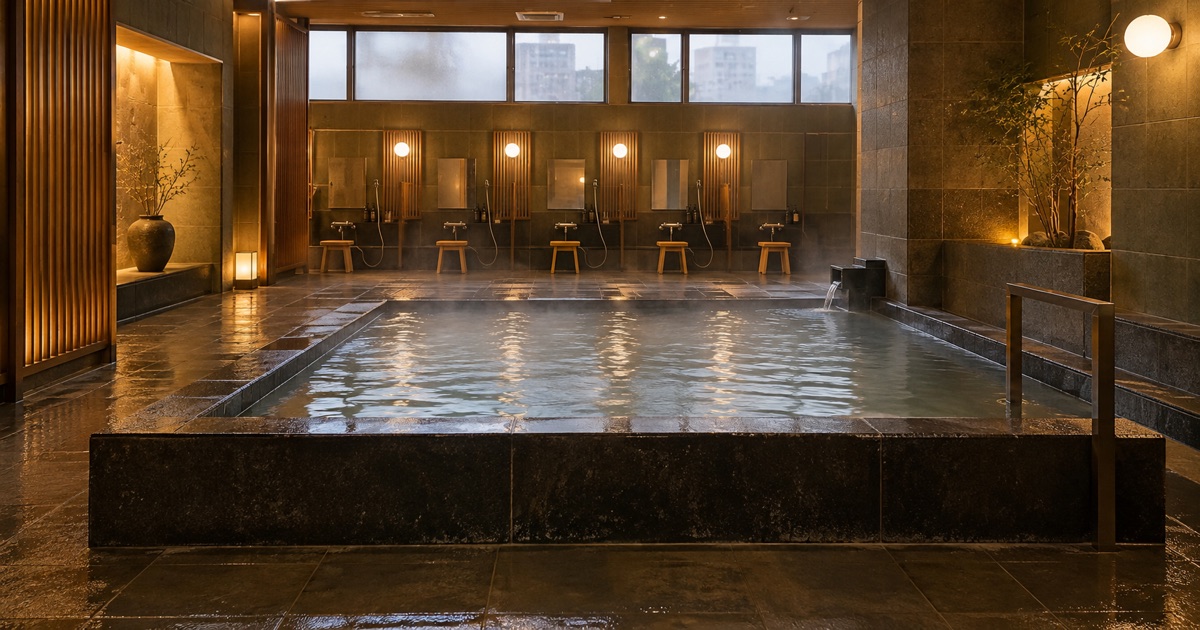
Most facilities expect guests to wash thoroughly at a shower station before entering the shared bath. Soap and shampoo are usually provided, but bringing a small personal towel is a good habit, since some facilities charge extra for towel rental or do not provide one at all.
Step-by-Step for First-Time Visitors
- Check the facility's official website for current hours, fees, and access instructions.
- Take the Yui Rail monorail from Naha Airport toward the relevant city stop.
- Transfer to a taxi if the facility is not within walking distance of the station.
- At the entrance, pay the admission fee and collect a towel if needed.
- Remove shoes and store them in the provided lockers near the entrance.
- Undress fully in the changing room; swimwear is not worn in traditional indoor baths.
- Rinse your body thoroughly at the shower stations before entering the bath.
- Keep long hair tied up and avoid letting towels touch the bath water.
- Dry off well before returning to the changing room to avoid dripping water.
- Check the return monorail or taxi schedule in advance of your flight time.
Common Mistakes to Avoid
A frequent mistake is assuming a quick onsen visit fits easily into a short layover. Between monorail transfers, taxi rides, bathing time, and airport security procedures, a round trip can easily take two to three hours or more, so this is not realistic for travellers with only an hour or two between flights.
Another common issue is not checking tattoo policies in advance. Some Okinawan spa and hot spring facilities are tourist-oriented and more relaxed about tattoos, while others maintain stricter traditional rules. Policies differ by facility, so it is worth checking each one's official website or contacting them directly rather than assuming a blanket rule applies across Okinawa.
Visitors should also be aware that most traditional-style baths require full nudity, with swimwear not permitted inside the bathing area itself. Some resort-style spa facilities with mixed pools may allow swimwear, but this varies, so confirm in advance rather than assuming.
Finally, travellers sometimes forget that luggage storage can be an issue if arriving straight from the airport with suitcases. Check whether the facility has lockers large enough for airport luggage, or consider using a coin locker at the airport or monorail station beforehand.
Planning Your Visit Around Flight Times
Given Okinawa's limited number of true hot spring facilities compared to other regions, it is worth deciding in advance whether a visit is feasible around your flight schedule. For an early morning flight, an onsen visit the evening before arrival may work better than trying to fit one in right before departure. For later flights, a late-morning or early-afternoon visit after checking out of accommodation can work well, provided there is a comfortable buffer before heading back to the airport.
For general information on travelling in Okinawa and across Japan, the Japan National Tourism Organization offers up-to-date travel guidance that can help with broader itinerary planning around Naha and the rest of the islands.
Key Takeaways
There is no onsen inside Naha Airport itself, so travellers need to budget time to reach a day-use facility in or around Naha city. Monorail access into the city is quick, but onward taxi transfers and bathing time mean this works best as a planned half-day activity rather than a between-flights stop. Always confirm hours, fees, and tattoo or nudity policies directly with each facility before travelling, since these details can change.
FAQ
- Q. Is there an onsen inside Naha Airport?
- A. No, Naha Airport does not have a hot spring bath inside the terminal itself, though some nearby facilities are reachable within a short ride.
- Q. Can I visit an onsen with tattoos in the Naha area?
- A. Policies vary by facility; some allow tattoos, some require cover-up stickers, and some refuse entry, so always check the official website first.
- Q. How much time should I budget for a day-use onsen near the airport?
- A. Plan for roughly two to three hours total, including travel time, bathing, and a buffer for airport check-in procedures.