Kumano Kodo Onsen Tattoo Policy: What Hikers Need to Know
Key takeaways
- Policies vary by facility along the Kumano Kodo; some allow small tattoos taped over, others ask for private baths only
- Private baths (kashikiri-buro) and ryokan with in-room baths are the most reliable option for visibly tattooed travelers
- Always check each onsen's official website or contact them in advance, since rules differ even within the same town
Can You Enter Kumano Kodo Onsen With Tattoos?
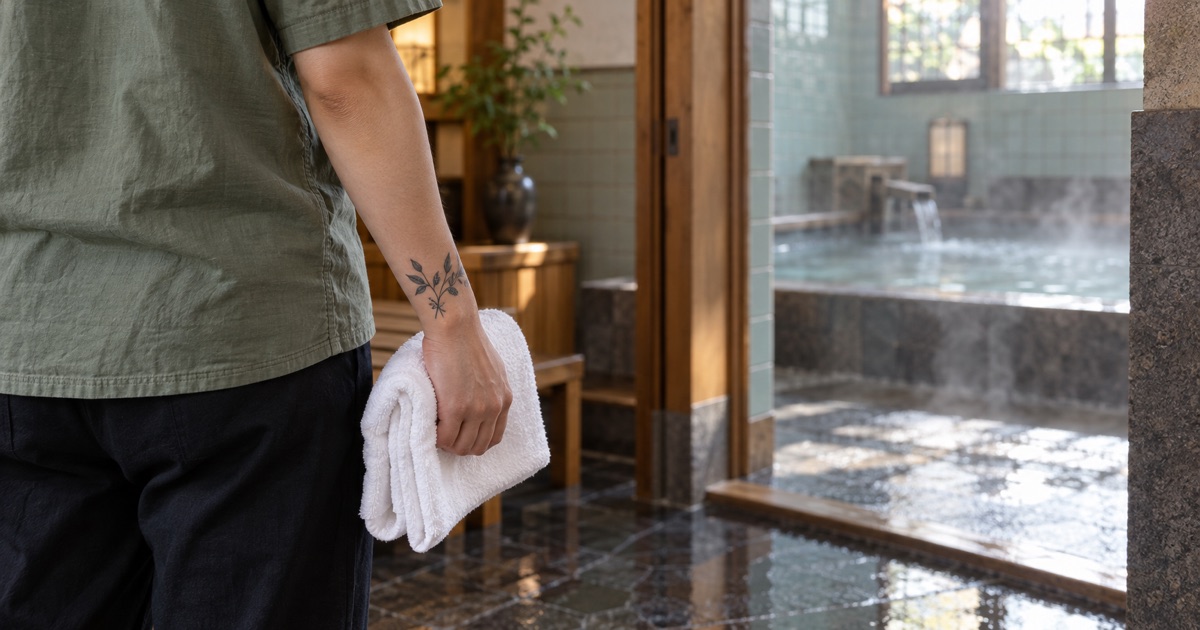
Yes, in many cases you can, but it depends entirely on the individual onsen facility. Some bathhouses along the Kumano Kodo (熊野古道) allow small tattoos to be covered with a waterproof patch, while others restrict visibly tattooed guests from shared baths altogether and instead recommend a private bath. Because there is no single rule for the whole region, the most reliable approach is to check each facility's official website or ask directly before you arrive.
Why Tattoo Policies Differ So Much Here
The Kumano Kodo is a network of ancient pilgrimage trails in the Kii Peninsula, connecting onsen towns such as Yunomine Onsen (湯の峰温泉), Kawayu Onsen (川湯温泉), and Watarase Onsen (わたらせ温泉) in Wakayama Prefecture. Unlike a single large resort with one unified policy, this area is made up of small, independently run ryokan, public bathhouses, and riverside baths. Each business sets its own rules based on its clientele, bath size, and local custom. A tiny communal bath with a handful of regular local users may be stricter than a larger ryokan accustomed to international pilgrims.
Historically, tattoo restrictions in Japanese onsen stem from associations with organized crime groups, but this is slowly changing as more facilities welcome overseas visitors, particularly in areas like the Kumano Kodo that attract many foreign hikers completing the pilgrimage route. Still, do not assume a relaxed policy just because you are in a rural, hiker-friendly area.
Practical Options for Travelers With Tattoos
Look for Cover-Up Stickers or Patches
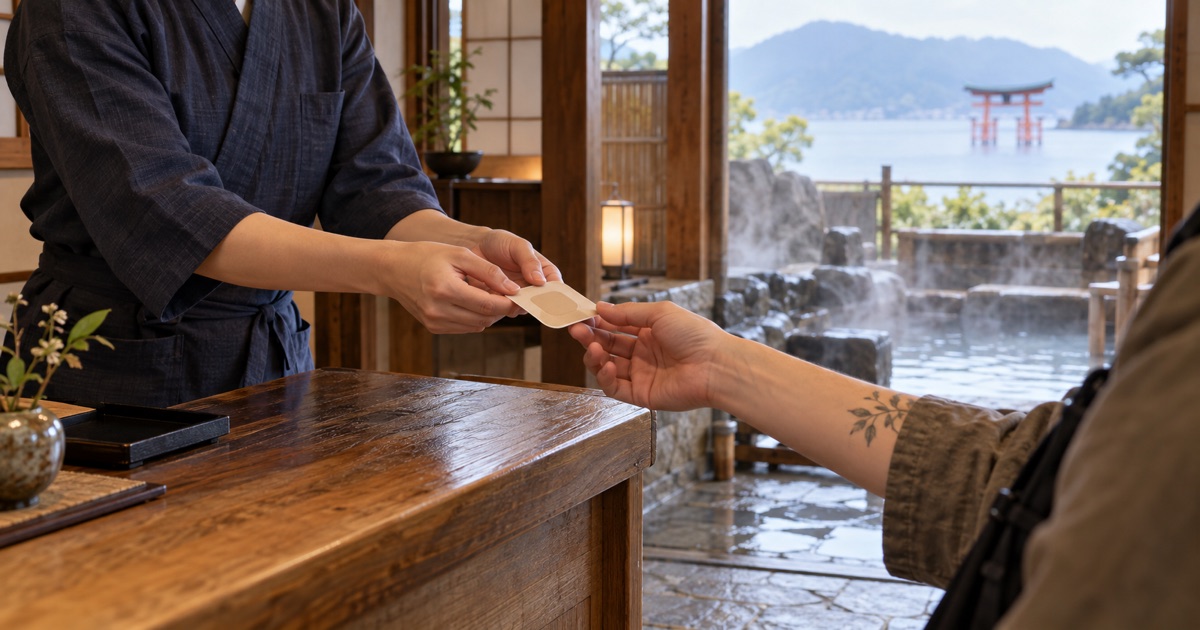
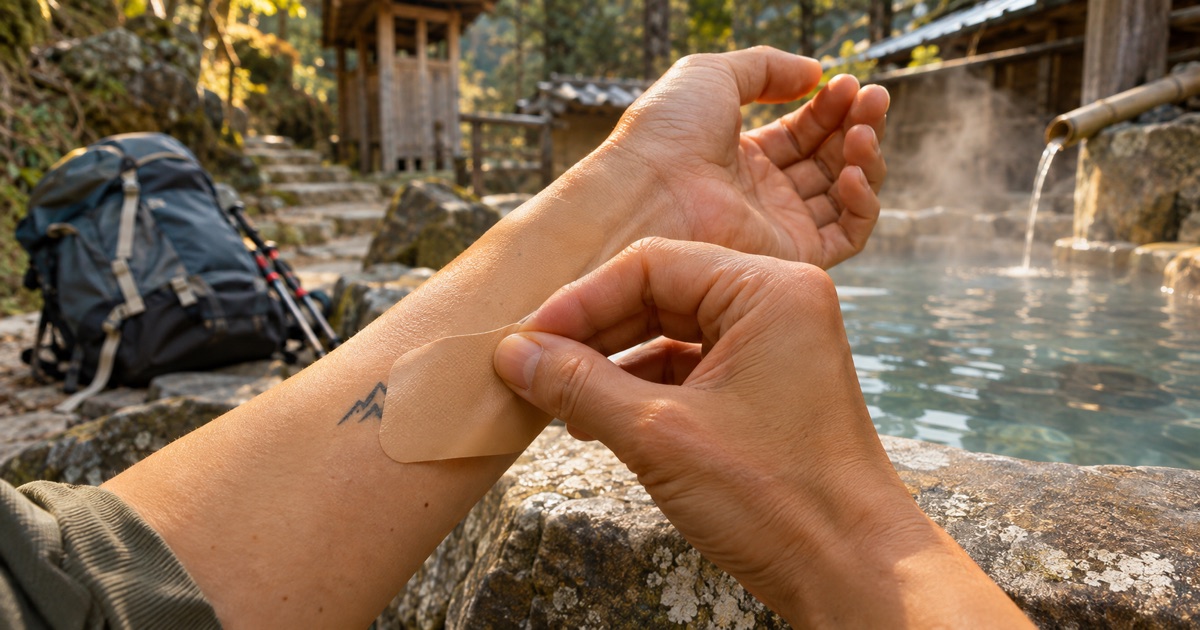
Many onsen that permit small tattoos will ask you to cover them with a waterproof adhesive patch, sometimes sold or lent at the front desk. If your tattoo is larger than roughly the size of a postcard, a patch usually will not be accepted, and staff may politely decline shared bath use. Bringing your own skin-colored tattoo cover tape from home is a practical backup, since not every facility stocks spares.
Choose Private Baths (Kashikiri-Buro)
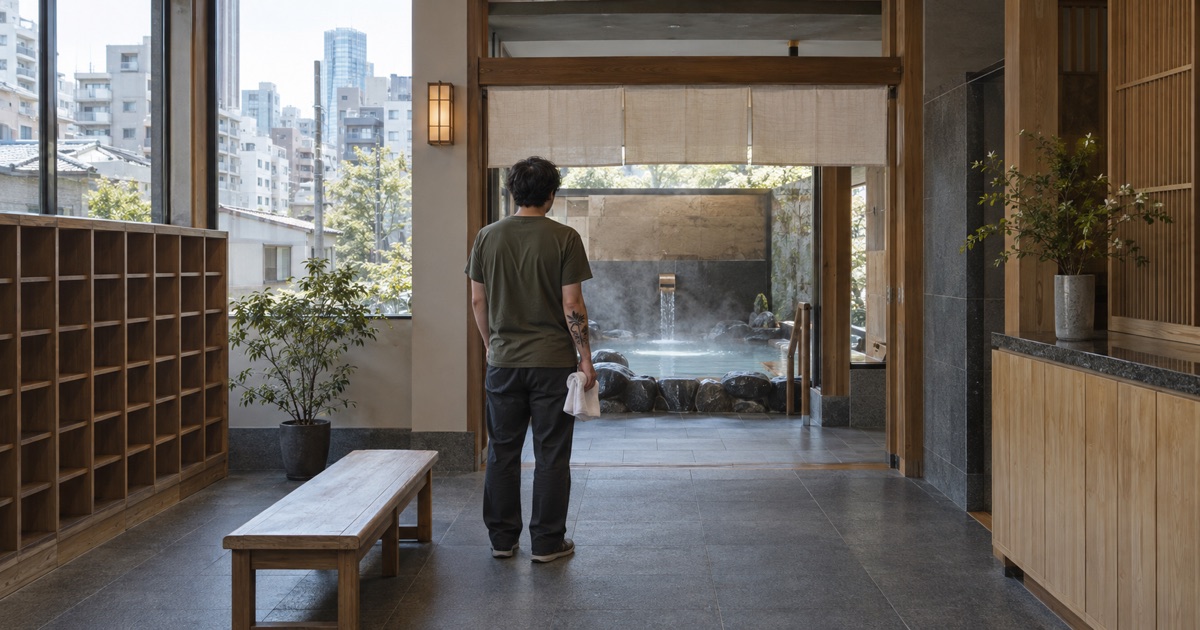
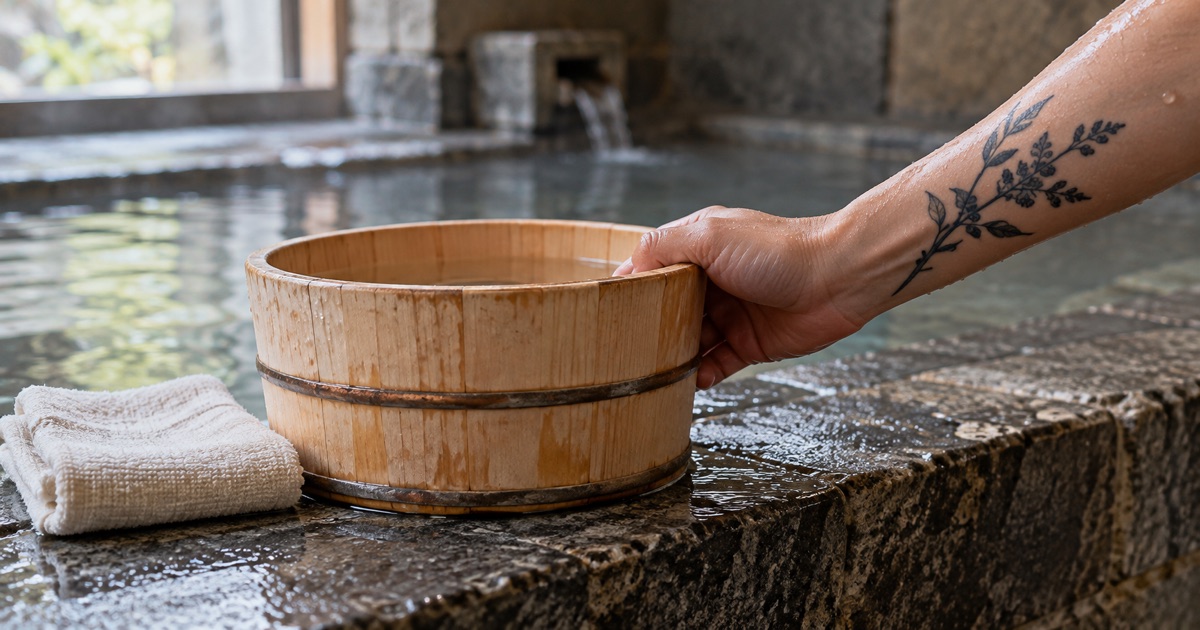
The simplest and most dependable solution is to use a private bath, known locally as kashikiri-buro (貸切風呂) or in some cases described as a family bath. These are reserved by the room or group for a set time slot, giving you full privacy regardless of tattoos. Many ryokan along the Kumano Kodo offer this option, and some lodgings include an in-room or semi-private bath as a standard feature. Reserve ahead where possible, especially during spring, autumn, and other popular hiking seasons, as slots can fill quickly.
Consider River Baths and Open-Air Options Carefully
Kawayu Onsen is known for its riverside hot spring area, where hot water mixes naturally with the river. Policies at open or semi-open river baths can be more relaxed than indoor facilities, but this is not guaranteed and may depend on the season or specific bathing spot. Treat any river bath the same way as an indoor one: check in advance rather than assuming.

We are working to carry Japanese craft and everyday culture beyond Japan, by building Japan Towns with local partners.
Read the Japan Town plan →Step-by-Step: Planning Your Onsen Stops Before You Hike
- List your overnight stops first. Most Kumano Kodo itineraries are built around where you sleep each night, such as Yunomine, Kawayu, or Watarase. Decide this before worrying about bath policy.
- Check each lodging's official website. Look for a section on tattoos, baths, or "入れ墨" policy notes, often translated into English for overseas guests. If unclear, use the site's contact form or email.
- Ask about private bath availability and cost. Private baths sometimes carry a separate fee or time limit, so confirm this when you book your room.
- Pack a tattoo cover patch regardless. Even if you plan to use private baths, having a patch on hand gives you flexibility if you want to try a public facility along the trail.
- Have a backup plan for day-use stops. If you are only passing through a town for a few hours, identify in advance whether any day-use baths accept tattoos or offer short-term private rentals.
Common Mistakes to Avoid
- Assuming rural onsen are automatically relaxed about tattoos. Some small-town baths are actually stricter, since they serve a predominantly local, older clientele.
- Not booking private baths early enough. Popular ryokan can sell out private bath slots during busy hiking periods, particularly weekends in spring and autumn.
- Relying on a single large tattoo patch for a large tattoo. Most patches are designed for small to medium tattoos; very large or multiple tattoos are unlikely to be accepted even with covering.
- Forgetting that policies can change seasonally or with new management. A facility that allowed tattoos last year may have updated its rules, so always verify current policy rather than relying on old blog posts or forum threads.
What to Bring
- A waterproof tattoo cover patch or skin-tone adhesive tape
- Cash, as many smaller onsen and ryokan in rural areas do not accept cards
- A lightweight towel for bathing, since not all facilities provide one
- Printed or saved confirmation of any private bath reservation
- Comfortable sandals for walking between your room and bath area in traditional ryokan
Getting to the Kumano Kodo
The Kumano Kodo region is typically reached via Kii-Tanabe or Shingu stations, accessible by limited express trains from Osaka on the JR lines serving the Kii Peninsula. From there, local buses connect to trailheads and onsen towns, though bus frequency can be limited, so check timetables in advance. For planning train travel to the region, the JR West website is a reliable starting point, and general trip-planning information for the area is also available through the Japan National Tourism Organization.
Final Advice
Tattoo policies on the Kumano Kodo are set facility by facility, not regionally, so the single most useful habit is checking each onsen or ryokan's own website before you commit to a reservation. Private baths remain the most consistent option for travelers who want certainty, while cover patches can open up shared bathing at facilities that allow them. Building a little flexibility into your itinerary, and packing a patch just in case, will save you from disappointment after a long day of walking the ancient trail.
FAQ
- Q. Can I enter Kumano Kodo onsen with tattoos?
- A. It depends on the individual facility. Some accept small, coverable tattoos with a patch, while others restrict tattooed guests entirely or require a private bath; always confirm beforehand.
- Q. Are there tattoo-friendly onsen towns along the Kumano Kodo?
- A. Towns like Yunomine Onsen (湯の峰温泉), Kawayu Onsen (川湯温泉), and Watarase Onsen (わたらせ温泉) have a mix of public and private bath options, so travelers with tattoos usually have more flexibility there than at a single large facility.
- Q. What is a kashikiri-buro and how do I book one?
- A. Kashikiri-buro (貸切風呂) is a private bath rented by the group or room for a set time, usually bookable through the ryokan or onsen facility directly; reserve in advance, especially in peak hiking season.
Cite or share this article
Copy the link below. If you quote this article, please link to this page as the source.