Naoshima Onsen Guide: The Art Island's Famous Bathhouse
Key takeaways
- Naoshima has one main public bathing facility, an art-installation bathhouse near Miyanoura Port, not a traditional onsen town.
- The water is heated/treated bathing water used as part of an art experience, so check the official site rather than expecting a natural spring soak.
- Bring your own towel or rent one, carry small cash, and allow about 30-60 minutes if you also want to browse the artwork inside.
Is There an Onsen on Naoshima?
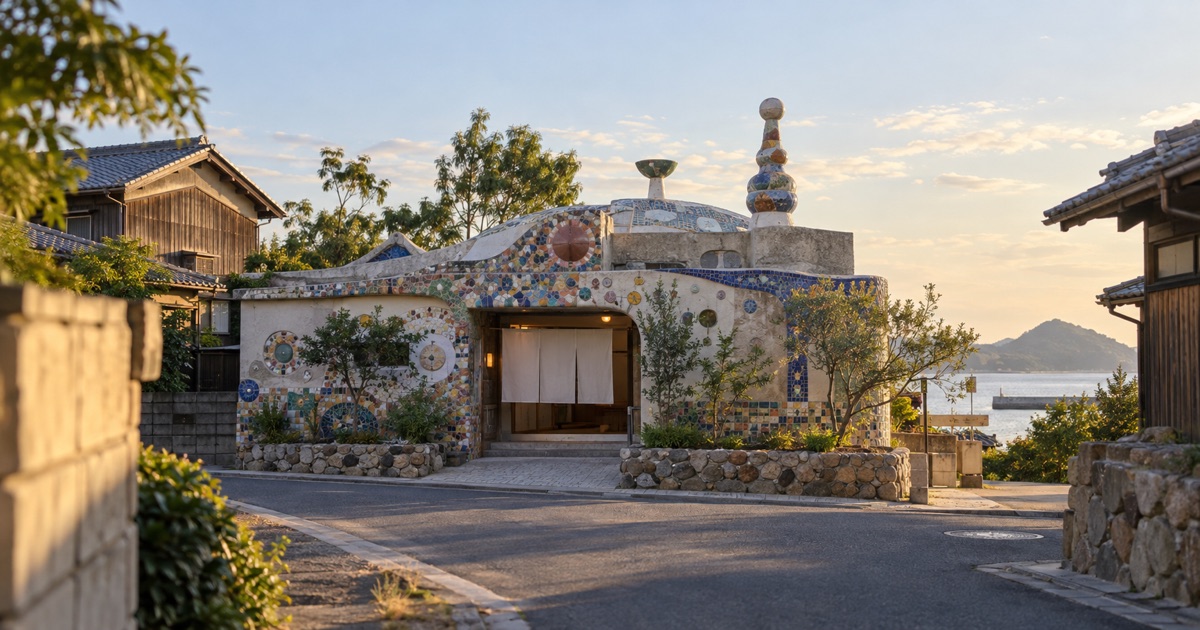
Naoshima's most famous bathing spot is not a traditional natural hot spring but a public bathhouse created as an art installation, located a short walk from Miyanoura Port (宮浦港), the island's main ferry terminal. It functions as a real, usable bath where visitors can soak, but it's best understood as part of Naoshima's wider identity as an "art island" rather than a classic onsen resort town like Hakone or Kusatsu.
This matters for planning: if you're hoping for a traditional hot spring soak with mountain views and multiple ryokan baths to hop between, Naoshima isn't that kind of destination. If you're interested in a quirky, art-filled bathing experience as part of a day exploring the island's museums and installations, it's a worthwhile stop.
What Kind of "Onsen" Is It?
The bathhouse is widely known among visitors to Naoshima as a mixed-media art piece you can actually bathe in, decorated inside with mosaics, found objects, and playful imagery. It operates as a public bath facility, open to day visitors, rather than as part of a ryokan (traditional inn) or hotel. Because it's run as both an art space and a working bath, details about the exact water source, whether it's a natural hot spring or heated tap water, can vary or be described differently depending on the source, so it's worth checking the facility's own information before you visit if this distinction matters to you.
Given Naoshima's position as a small island in the Seto Inland Sea, known primarily for contemporary art museums and outdoor sculptures, this bathhouse should be approached as one more art experience, one that happens to involve taking your clothes off and soaking in water with other visitors.
Getting to Naoshima and the Bathhouse
Naoshima sits in the Seto Inland Sea, reachable by ferry from the Okayama Prefecture side (via Uno Port) or from Takamatsu in Kagawa Prefecture on Shikoku. Most travelers combine a Naoshima trip with a stay in Okayama or Takamatsu, both accessible by Shinkansen and limited express trains.
A rough route from Okayama:
- Take a train from Okayama Station to Uno Station on the JR Uno Line (roughly 40-50 minutes).
- From Uno Port, take a ferry to Miyanoura Port on Naoshima (around 15-20 minutes).
- The bathhouse is within easy walking distance of Miyanoura Port, making it a convenient first or last stop on your island visit.
From Takamatsu, ferries also run to Naoshima, with journey times of roughly 50-60 minutes depending on the ferry type. Schedules for both trains and ferries are limited and can change seasonally, so always check current timetables before you travel. The Japan National Tourism Organization site is a good starting point for general route planning, and JR timetables can be checked through the relevant regional JR operator's website if you're coming via Shinkansen.
We are working to carry Japanese craft and everyday culture beyond Japan, by building Japan Towns with local partners.
Read the Japan Town plan →What to Expect When You Visit
Entry and Payment
Expect to pay a bathing fee in cash at the entrance; prices are modest, generally in the range of a few hundred to around a thousand yen, but this should be confirmed on the official site since fees can be adjusted over time. Credit card acceptance at small facilities in Japan is inconsistent, so carrying coins and small bills is a sensible habit island-wide, not just here.
What to Bring
- A small towel for washing and a larger towel for drying off; rental or purchase may be available, but bringing your own avoids any uncertainty.
- Basic toiletries if you prefer your own soap or shampoo.
- Flip-flops or sandals are useful for getting around the island generally, though indoor facilities will have their own rules about footwear.
- Cash in small denominations.
Bathing Etiquette
Standard Japanese bathing etiquette applies here as it would at any onsen or public bath: wash and rinse thoroughly at the shower or wash station before entering the shared bathing water, keep long hair tied up and out of the water, and avoid bringing your towel into the bath itself. Bathing is typically done without swimwear, and facilities are usually separated by gender, though it's worth checking signage or asking staff on arrival since layouts can vary.
Tattoos
Policies on visible tattoos differ from one bathing facility to another across Japan, and this art bathhouse is no exception. Rather than assuming it will be fine, or assuming it won't, check the facility's own official information in advance, or ask staff politely on arrival. If you're uncertain, bringing a waterproof cover patch is a practical backup some travelers use, though this isn't accepted everywhere either.
Planning Your Naoshima Day
Most visitors treat Naoshima as a half-day or full-day trip combined with its well-known contemporary art museums and outdoor installations near Miyanoura and Honmura areas. Renting a bicycle at the port is a common and practical way to get around the island, since public transport options are limited and distances between sites can be a 20-30 minute walk or more.
A loose half-day plan might look like this:
- Arrive at Miyanoura Port by ferry in the morning.
- Visit the art bathhouse early, before or after renting a bicycle, since it tends to be less crowded earlier in the day.
- Spend the afternoon cycling or busing to the island's museums and sculpture sites.
- Return to Miyanoura or another port for your departure ferry, allowing extra buffer time, as ferries can be infrequent and occasionally affected by weather.
Common Mistakes to Avoid
- Assuming Naoshima has multiple traditional onsen facilities like a classic hot spring town; in reality, the bathhouse near Miyanoura is the main draw.
- Underestimating ferry and train connection times, which can leave little buffer if schedules shift.
- Forgetting cash, since rural and small-island facilities may not take cards.
- Not checking tattoo and bathing policies in advance if this is a concern for your group.
Before You Go
Opening days, hours, and fees for the bathhouse and ferry schedules can all change, including seasonal adjustments and occasional closures for maintenance. Always check official sources closer to your travel date rather than relying on older blog posts or outdated guidebooks. The Japan National Tourism Organization website is a reliable place to cross-check general travel information for the Setouchi region, including Naoshima, before you finalize your itinerary.
FAQ
- Q. Is there a real natural hot spring on Naoshima?
- A. Naoshima is best known for its art-themed public bathhouse near Miyanoura Port rather than a natural geothermal hot spring district. Check the facility's official website for current details on the water source and facilities before visiting.
- Q. Can visitors with tattoos use the Naoshima bathhouse?
- A. Tattoo policies vary by facility and can change, so it's best to check the bathhouse's own website or ask locally before you go rather than assume either way.
- Q. Do I need to bring my own towel?
- A. Small hand towels and bath towels are often available to rent or buy at bathing facilities in Japan, but policies and availability differ, so bringing your own travel towel is a safe backup.
Cite or share this article
Copy the link below. If you quote this article, please link to this page as the source.