Kitakyushu Onsen Guide: Best Baths and Day Trips
Key takeaways
- Kitakyushu offers convenient urban sento and modern super sento within city limits, plus easy train access to historic onsen towns.
- Most facilities require full nudity, separate baths by gender, and maintain strict policies regarding visible tattoos.
- Neighbouring destinations like Mojiko, Kokura, and nearby Beppu provide diverse bathing experiences via JR Kyushu rail lines.
Kitakyushu features a mix of modern urban super sento, seaside bathhouses, and easy rail connections to premier hot spring regions in northern Kyushu. While the city itself is an industrial and commercial hub rather than a secluded mountain spa village, bathers can enjoy excellent mineral-rich waters within municipal borders and across neighbouring transit corridors.
Whether staying near Kokura Station (小倉駅) or exploring the historic port area of Mojiko (門司港), visitors have practical bathing options ranging from local neighbourhood baths to multi-story wellness complexes with outdoor pools.
Understanding Kitakyushu's Bathing Scene
Travelers planning an onsen outing in Kitakyushu should understand the distinction between traditional onsen and modern sento. A legal onsen (温泉) uses geothermally heated groundwater containing specific natural mineral contents. A sento (銭湯) or super sento (スーパー銭湯) is a public bathhouse that may use tap water heated by boilers, artificial mineral water, or hauled-in natural spring water.
Kitakyushu features several large super sento complexes offering diverse tub styles, saunas, and relaxation lounges. True mineral springs do surface along the surrounding coastal plains and mountain foothills, while iconic historic hot spring towns lie just a short limited express ride away via the rail network detailed by Japan National Tourism Organization.
Top Hot Springs and Bathhouses in Kitakyushu
Mojiko Port Bathing: Retro Coastal Relaxation
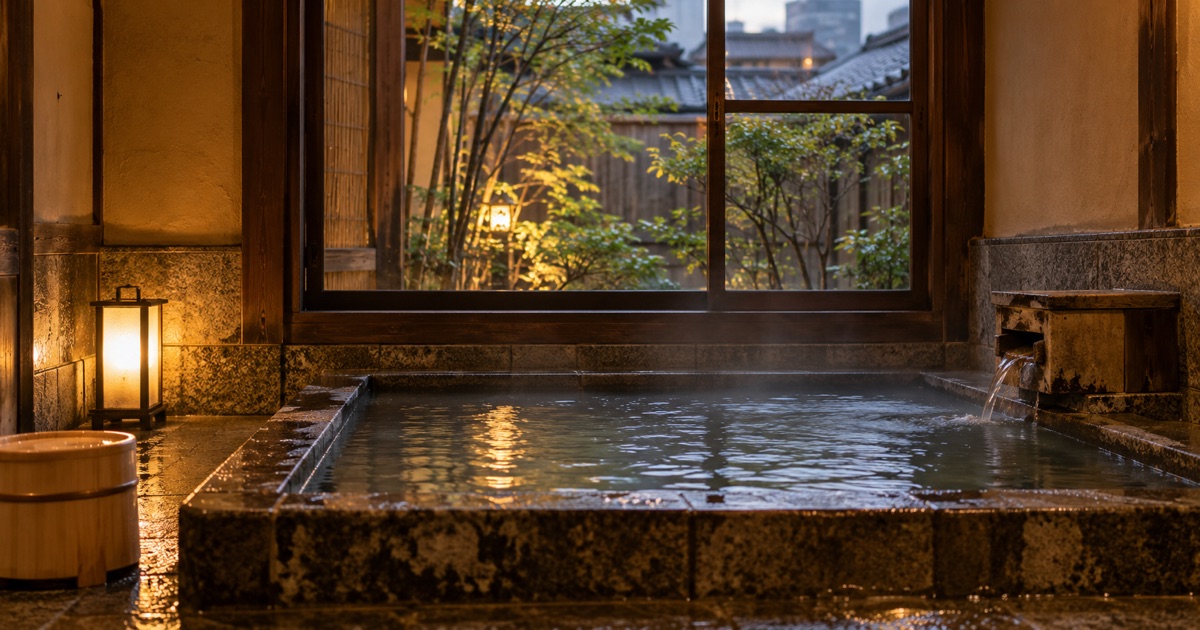
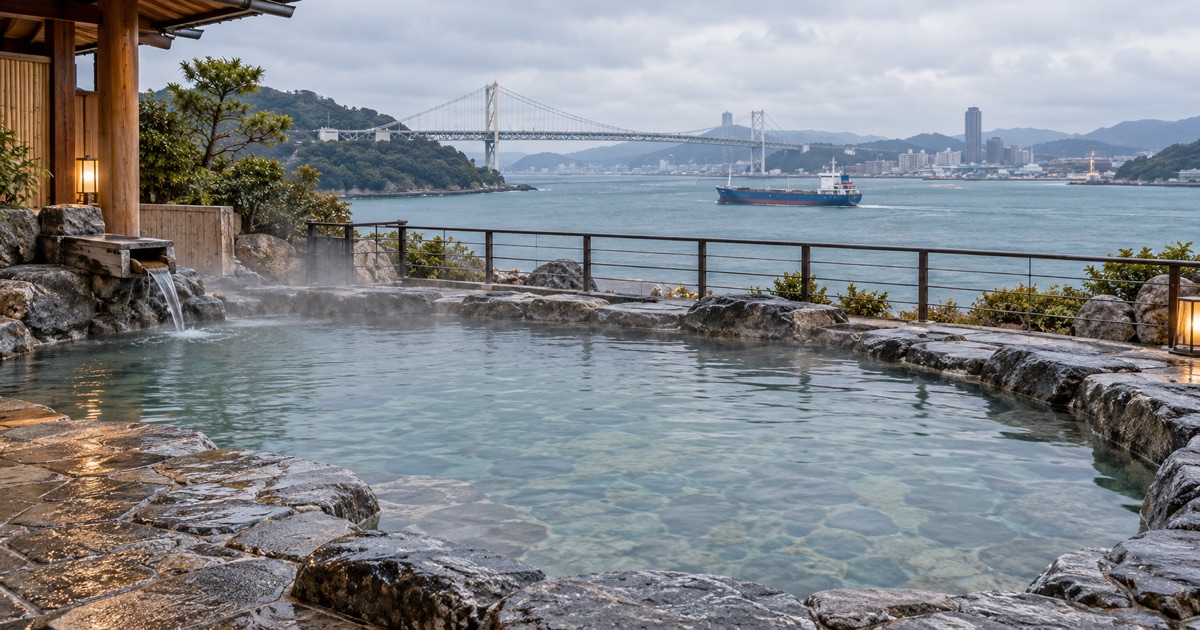
Near Mojiko Retro district, visitors can find public baths offering expansive coastal views over the Kanmon Strait (関門海峡). These facilities often feature open-air baths (rotenburo) where guests can soak while watching commercial cargo ships pass through the narrow waterway between Kyushu and Honshu.
Access is straightforward: take the JR Kagoshima Main Line to Mojiko Station (門司港駅). From the station, coastal facilities are either a 15-minute walk or a brief taxi ride away. Entry fees generally range around 800 to 1,200 yen for adults.
Kokura Urban Super Sento
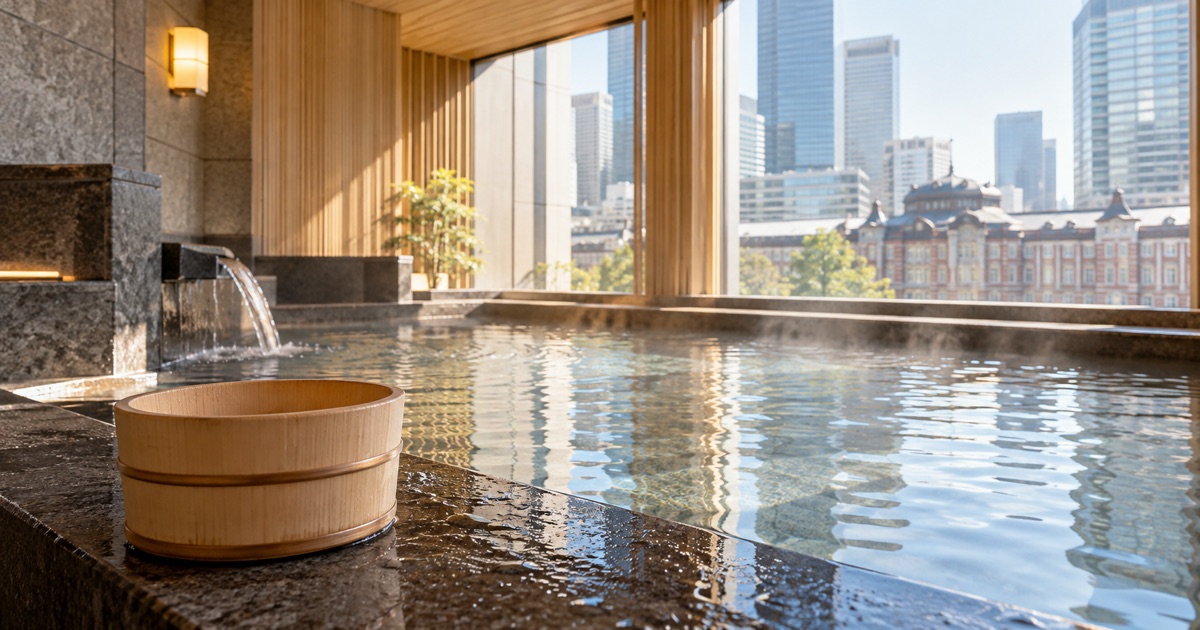
The central district around Kokura houses multi-facility bathhouses designed for full-day relaxation. These venues typically feature:
- Jet baths and carbonated water pools (tanso-sen)
- Cold plunge baths paired with dry or steam saunas
- Traditional ceramic pot baths (tsubo-yu) meant for single bathers
- Japanese-style rest areas with tatami matting and casual dining
Most locations sit within a 10-to-20-minute bus or taxi ride from JR Kokura Station. Expect admission fees roughly between 700 and 1,000 yen, with additional fees if you use specialized bedrock sauna zones (ganbanyoku).
Yahata and Wakamatsu Foothill Baths
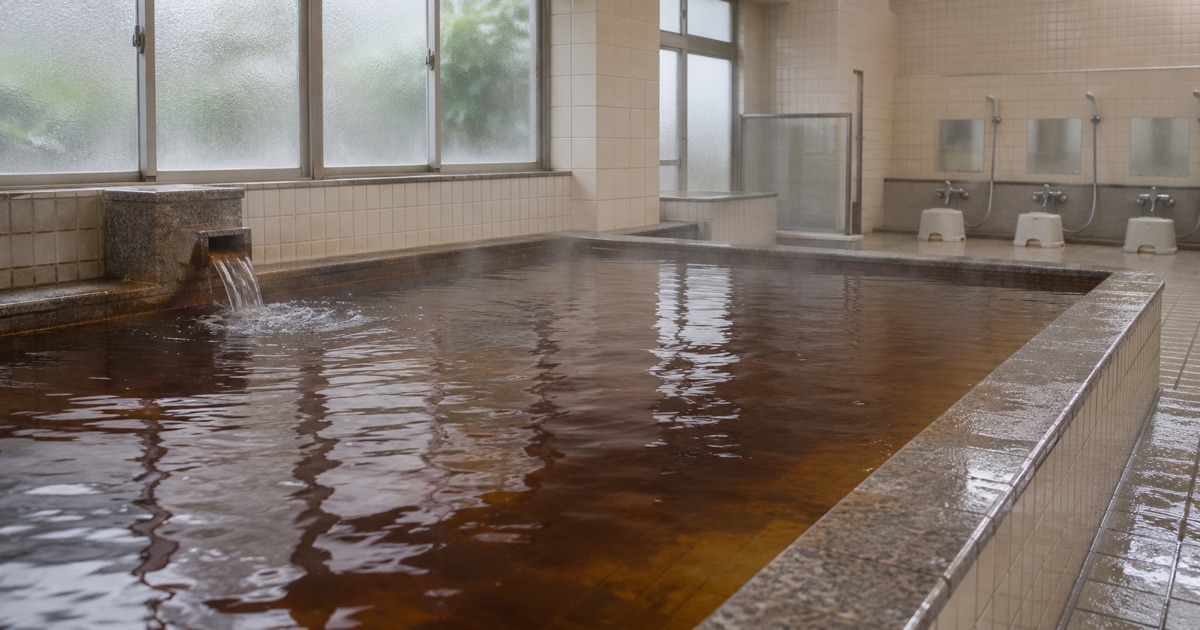
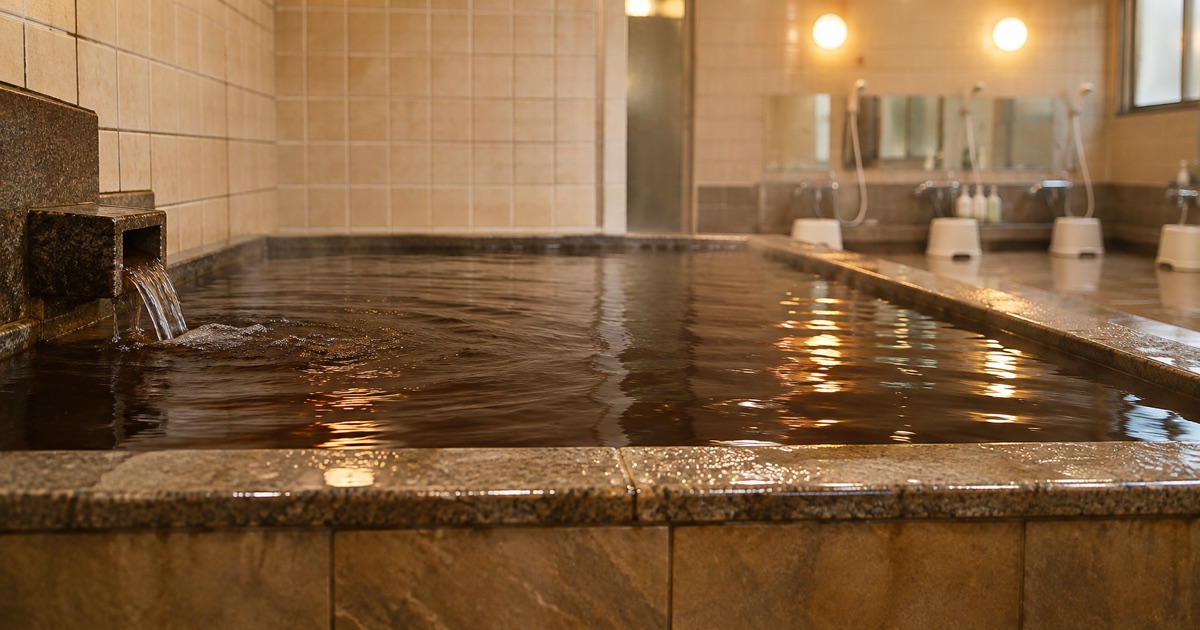
Along the base of Mount Sarakura (皿倉山) in Yahata and across the bay in Wakamatsu, several day-use onsen tap into underground thermal reserves. These baths tend to have higher natural sodium or bicarbonate concentrations, leaving a distinct, slick feeling on the skin. Access to these quieter neighbourhood spots often requires taking a local bus from stations such as Yahata (八幡駅) or Orio (折尾駅).
We are working to carry Japanese craft and everyday culture beyond Japan, by building Japan Towns with local partners.
Read the Japan Town plan →Easy Onsen Day Trips from Kitakyushu
Thanks to the Shinkansen and local express rail lines operated by JR West and JR Kyushu, Kitakyushu acts as a strategic base camp for world-famous thermal destinations.
+------------------+-----------------------------+-----------------------+
| Destination      | Train Type / Line           | Travel Time (Kokura)  |
+------------------+-----------------------------+-----------------------+
| Beppu (Oita)     | JR Sonic Limited Express    | Approx. 70-80 mins    |
| Takeo Onsen      | Shinkansen / Relay Express  | Approx. 75-90 mins    |
| Yufuin (Oita)    | Limited Express (via Oita)  | Approx. 110-130 mins  |
+------------------+-----------------------------+-----------------------+
Beppu Onsen (Oita Prefecture)
Beppu discharges more hot spring water than any other resort area in Japan. Catching the JR Sonic limited express from Kokura Station delivers you directly to Beppu Station in around 75 minutes. Here, you can experience sand baths (sunayu), steam baths (kannawa mushiyu), and historic municipal baths dating back to the Meiji era.
Takeo Onsen and Ureshino Onsen (Saga Prefecture)
Heading southwest through Hakata connects travellers to Saga Prefecture's premier waters. Takeo Onsen is famous for its 1,300-year history and its iconic two-story red entrance gate. Ureshino Onsen, reachable via connecting local buses or the Nishi-Kyushu Shinkansen line, is celebrated for its silky, alkaline spring waters.
Step-by-Step Onsen Etiquette for Beginners
Bathing in Japan involves communal spaces where specific hygiene customs keep the environment clean and comfortable for everyone.
1. Entering the Facility
Take off your outdoor shoes immediately inside the main entrance and place them into a coin-return shoe locker. Take the key to the front counter (front desk / chouba) or use the automated ticket vending machine (kenbaiki). Hand your ticket or shoe key to the desk staff. If you need towels, purchase or rent them here.
2. The Changing Room (Datsuijo)
Follow the split curtains (noren):
- Red/Pink: Women (女 - onna)
- Blue/Navy: Men (男 - otoko)
Strip down completely in the locker area. No clothing, swimwear, or underwear is permitted inside Japanese bath areas. Place all clothes, watches, phones, and valuables into a locker and keep the locker key band around your wrist. Take only your small modesty towel into the bathing hall.
3. The Washing Station (Kakariyu)
Never enter the pools directly. Head immediately to the washing stalls equipped with stools, handheld showerheads, shampoo, and body soap. Sit down to wash so you avoid splashing water onto others. Rinse off all soap completely before stepping into the tubs.
4. Soaking in the Tubs
Step into the baths slowly to let your body adjust to the water, which often ranges from 40°C to 43°C. Keep your hair tied up off the water. Your small modesty towel must never touch the communal bath water; fold it and set it on your head or place it on the rock edge alongside the pool. Keep conversation at a quiet volume.
5. Drying Off and Leaving
Before stepping back onto the woven mats or vinyl floors of the locker room, use your damp modesty towel to wipe down your body as thoroughly as possible. Do not drip puddles across the changing room floor. Lockers are cleared before returning to the reception desk.
What to Bring and What to Leave Behind
Most large day-use facilities in Kitakyushu supply liquid soap, shampoo, and hair dryers at no extra charge, but packing carefully avoids unexpected rental fees:
- Cash: Automated vending machines, lockers (requiring 100-yen coins that are returned upon unlocking), and ticket counters frequently do not accept international credit cards.
- Towels: Pack a thin, quick-drying face towel for the washing area and a compact bath towel for drying off. Rentals are available on-site for roughly 200 to 400 yen.
- Water bottle: Communal drinking fountains are standard, but hydration before and after long hot baths is essential.
- Leave cameras behind: Mobile phones and recording devices are strictly forbidden inside locker rooms and bath areas. Keep them locked in your daypack.
Common Mistakes to Avoid
- Entering the water without washing thoroughly: The bathwater is shared; it is strictly meant for relaxing, not for cleansing grime off your body.
- Washing inside the bath: Never bring soap, bottles, or scrubbing washcloths into the bath pools.
- Putting hair in the water: Long hair should be tied up with a hairband or wrapped in a towel before entering the water.
- Ignoring tattoo policies: Many sento and onsen in urban Fukuoka Prefecture prohibit visible body art. If you have tattoos, research whether the bath allows waterproof patch covers, or reserve a private bath (kashikiri-buro) to soak without complications. Facilities update policies independently, so always verify on their official site prior to arrival.
- Staying in too long: Extended exposure to hot mineral water can cause dizziness. Limit your soaking time to 10 to 15 minutes per tub, take breaks, and drink plenty of water.
FAQ
- Q. Can you visit an onsen with tattoos in Kitakyushu?
- A. Many traditional and modern bathhouses in Kitakyushu prohibit visible tattoos, though private rental baths (kashikiri) often allow them.
- Q. How much does a day-use bath cost in Kitakyushu?
- A. Urban super sento and day-use baths generally charge between 700 and 1,500 yen per adult, with towel rentals costing extra.
- Q. What is the closest famous hot spring town to Kitakyushu?
- A. Beppu in Oita Prefecture is roughly 70 to 80 minutes away from Kokura Station using the JR Sonic limited express train.
Cite or share this article
Copy the link below. If you quote this article, please link to this page as the source.