Shizuoka Onsen Guide: Best Hot Springs and Travel Tips
Key takeaways
- Shizuoka offers coastal and mountain onsen easily reached from Tokyo via the Tokaido Shinkansen or local lines.
- Major hot spring hubs include Atami, Ito, and Shuzenji, each offering distinct bathing atmospheres and sceneries.
- Day-use entry generally ranges from 500 to 2,000 yen, with strict rules requiring full nudity and pre-wash routines.
Quick Answer: Shizuoka onsen destinations rank among the most accessible hot springs in Japan, featuring coastal resorts like Atami and Ito alongside historic mountain retreats like Shuzenji on the Izu Peninsula. Most areas sit just 45 to 120 minutes from Tokyo along the Tokaido Shinkansen and regional railway lines, offering both luxury ryokan stays and affordable day-use baths.
Why Visit an Onsen in Shizuoka?
Shizuoka Prefecture (静岡県) stretches along Japan's Pacific coastline beneath Mount Fuji. Blessed with geothermal activity fed by surrounding volcanic belts, the region has been a premier bathing destination for over a millennium.
For overseas travelers, Shizuoka provides three major advantages:
- Unrivaled Access: High-speed bullet trains link Tokyo directly to the edge of the Izu Peninsula in under an hour.
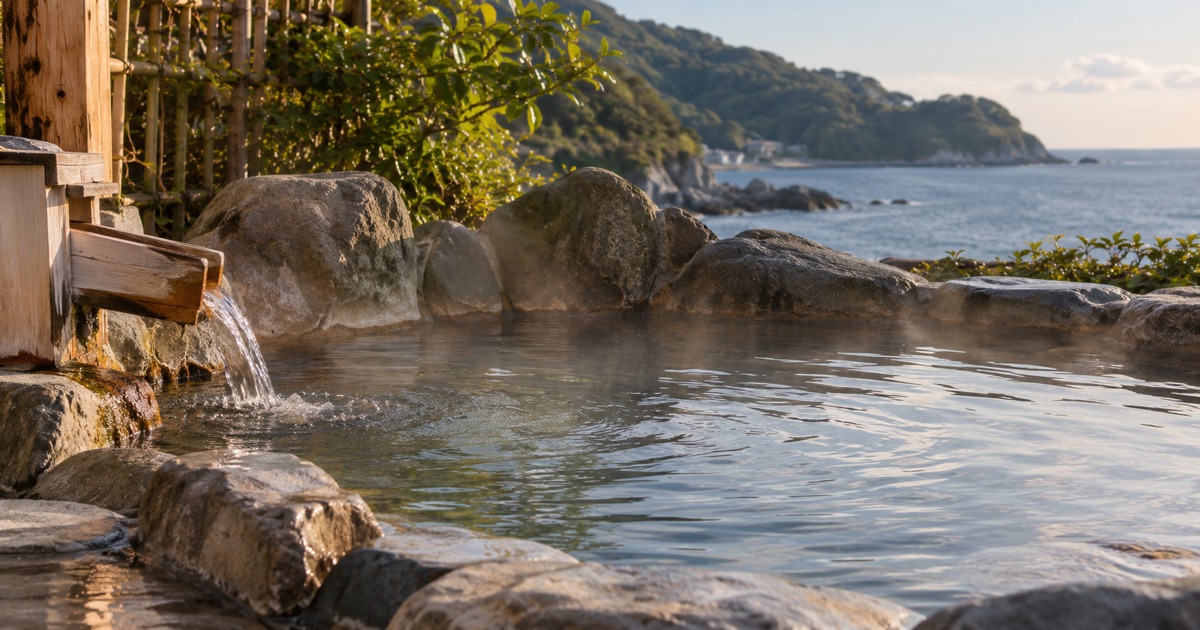
- Geographic Diversity: You can soak while looking over the Pacific Ocean, relax alongside rushing mountain streams, or catch glimpses of Mount Fuji across Suruga Bay.
- Flexible Options: Accommodations span historic Japanese inns (ryokan), modern seaside high-rises, and budget-friendly day-use public bathhouses (higaeri onsen).
Top Onsen Towns in Shizuoka
The Izu Peninsula (伊豆半島) accounts for the largest concentration of hot springs in the prefecture. Depending on your travel style, several distinct hubs stand out.
Atami Onsen (熱海温泉)
Perched on steep coastal hills overlooking Sagami Bay, Atami serves as the eastern gateway to Shizuoka's hot springs. It has welcomed bathers since the Nara period (8th century) and developed into a vibrant seaside resort during the 20th century. Today, it balances retro shopping arcades (shotengai) with modern oceanfront hotels.
- Vibe: Bustling, seaside, retro-modern resort.
- Travel Time: Around 45 minutes from Tokyo Station via the JR Tokaido Shinkansen Kodama or Hikari trains.
- Best For: Quick weekend trips, seaside fireworks festivals, and travelers wanting both city amenities and coastal views.
Ito Onsen (伊東温泉)
Located further south along the eastern coast of the Izu Peninsula, Ito boasts one of the highest water-discharge volumes in Japan. The town retains a calmer, traditional atmosphere compared to Atami. A walking path follows the Matsukawa River, lined with historical wooden architecture such as the Tokaikan (東海館), a preserved 1920s ryokan now open for daytime tours and weekend bathing.
- Vibe: Relaxed coastal town with early Showa-era architectural charm.
- Travel Time: Roughly 20 to 25 minutes from Atami via the JR Ito Line, or around 100 minutes directly from Tokyo on the JR Odoriko limited express train.
- Best For: Historic atmosphere, gentle coastal walks, and traditional wooden ryokan.
Shuzenji Onsen (修善寺温泉)
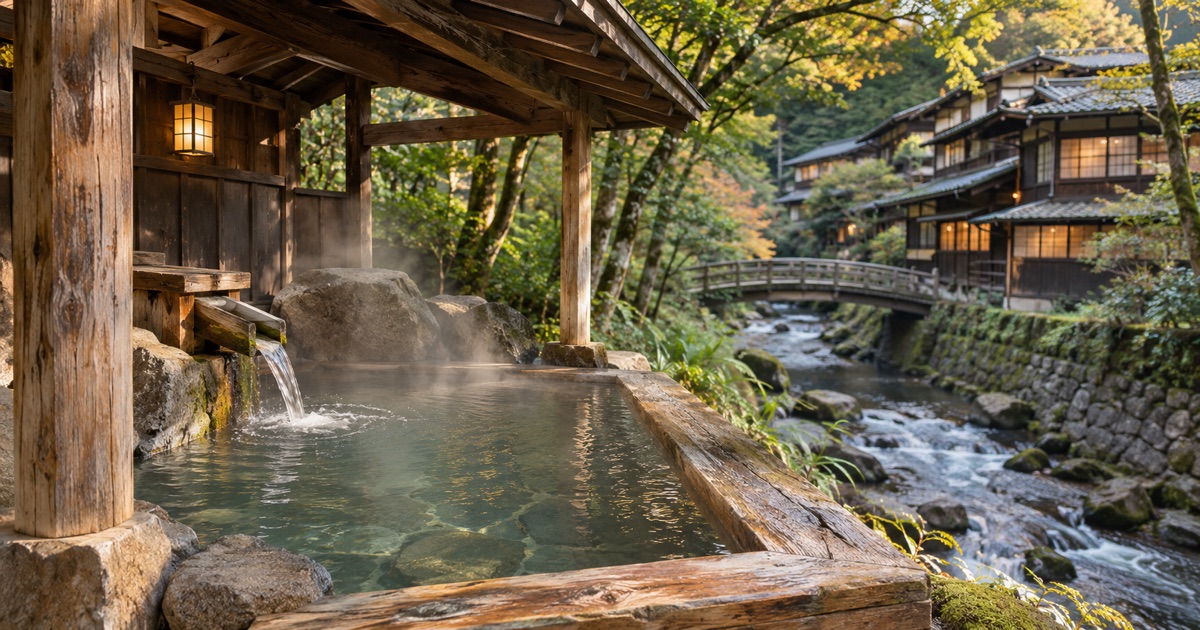
Situated in the inland mountains of northern Izu, Shuzenji is the oldest onsen town on the peninsula, founded according to legend by the Buddhist monk Kobo Daishi in 807 AD. Centered around the Katsura River, Shuzenji features stone-paved paths, bright red footbridges, a tranquil bamboo grove path (Chikurin no Komichi), and quiet, forested surroundings.
- Vibe: Historic, serene, temple-centered mountain retreat.
- Travel Time: Around 35 minutes via the Izuhakone Railway Sunzu Line from Mishima Station (which is served by the Tokaido Shinkansen).
- Best For: Couples, nature walks, quiet contemplation, and classic Japanese atmosphere.
Izu Nagaoka Onsen (伊豆長岡温泉)
Nestled near the base of the peninsula, Izu Nagaoka is well known for clear, mild alkaline waters and views of Mount Fuji from nearby ropeways. It features dozens of ryokan catering to both group travelers and independent visitors seeking a low-key base for exploring northern Izu.
- Vibe: Low-key, residential, traditional hot spring community.
- Travel Time: Roughly 20 minutes from Mishima Station on the Izuhakone Railway.
- Best For: Family-friendly stays and travelers exploring surrounding historical sites.
We are working to carry Japanese craft and everyday culture beyond Japan, by building Japan Towns with local partners.
Read the Japan Town plan →How to Get to Shizuoka Hot Springs
Navigating the transit network from Tokyo or Nagoya is straightforward using public rail services operated by JR Central.
By Shinkansen and Limited Express
- To Atami: Board the Tokaido Shinkansen (Kodama or select Hikari departures) from Tokyo Station (roughly 45 minutes) or Shin-Yokohama (roughly 30 minutes).
- To Central & Southern Izu: Take the direct JR East/JR Central "Odoriko" Limited Express train from Tokyo Station down through Atami, Ito, and all the way south to Shimoda, or inland toward Shuzenji.
- To Shuzenji & Nagaoka: Take the Shinkansen to Mishima Station, then transfer to the local Izuhakone Railway Sunzu Line.
Regional passes, such as the JR Tokyo Wide Pass (for sections covering the northern Izu border) or the Mt. Fuji-Shizuoka Area Tourist Pass Mini, can reduce transport costs depending on your exact itinerary. For detailed route planning and regional travel rules, consult the Japan National Tourism Organization.
Onsen Etiquette: A Step-by-Step Guide for First-Timers
Bathing in Japan involves specific customs designed to keep shared water clean and relaxing for all guests.
- Footwear at the Entrance: Remove outdoor shoes at the front entryway (genkan) or inside the locker room, depending on the venue. Place them into the provided shoe lockers.
- Changing Room: Enter the correct gender section (look for 男 for men, usually blue; 女 for women, usually red). Place all clothing, jewelry, and personal items into a wicker basket or locking locker. You must be completely unclothed in the bath area; swimsuits are prohibited in traditional onsen.
- The Modesty Towel: You may carry a small hand towel (tenugui) into the bath area for personal modesty while walking. Never let this towel touch the communal bathwater; fold it and set it on your head or place it on the rock edge beside you.
- Washing First: Walk straight to the sit-down wash stalls before stepping into any tub. Sit on the provided plastic stool. Use soap and shampoo to clean your body and hair thoroughly, and rinse away all suds before entering the water.
- Soaking: Ease into the bath gently without splashing. Keep your hair tied up if it is long so it stays clear of the water. Do not swim or submerge your face.
- Drying Off: Before stepping back onto the changing room mats, wring out your small towel and wipe excess water off your body. Enter the locker area dry to avoid slipping hazards.
What to Bring and Common Mistakes
What to Bring
- Cash: While many hotels take credit cards, small communal baths and rural ticket vending machines often accept only Japanese yen coins and bills.
- Small Hand Towel and Bath Towel: If visiting a day-use facility, bring your own to save money. Most spots sell small towels for roughly 200 to 300 yen and rent large bath towels for around 300 to 500 yen. Overnight ryokan provide these in your guestroom.
- Hair Tie: Mandatory if you have long hair, preventing stray strands from floating in the pool.
- Moisturizer / Skincare: Though hot spring water feels smooth, soaking can dry out sensitive skin.
Common Mistakes to Avoid
- Stepping in without washing: Entering the water with soap residue or without washing first is considered a major breach of etiquette.
- Soaking your large bath towel: Large towels stay inside your locker in the changing room; do not drag them into the wet bathing hall.
- Drinking alcohol right before soaking: High water temperatures combined with alcohol intake can cause dizziness and fainting. Drink water before and after your soak.
- Ignoring tattoo policies: Japan's onsen industry maintains varied rules regarding ink. While some modern hotels are relaxing policies, traditional bathhouses often enforce bans. Check the facility's official rules ahead of time. If you have tattoos, booking a ryokan with a private bath (kashikiri) or a guestroom featuring an open-air bath (rotenburo) provides total privacy.
Practical Information: Costs and Hours
- Day-Use Fees: Entry to local public baths typically ranges from 500 to 1,000 yen per adult. Upscale day-use facilities attached to resorts generally cost between 1,200 and 2,500 yen.
- Ryokan Stays: Expect to pay between 15,000 and 45,000 yen per person per night, including a multi-course dinner (kaiseki) and breakfast, depending on the season and luxury level.
- Operating Hours: Day-use baths often operate on split schedules (for instance, open late morning to early afternoon, then closing to day visitors so overnight guests can bathe privately). Always confirm opening hours, maintenance days, and admission deadlines directly on the venue's official website before traveling.
FAQ
- Q. How do you get to Shizuoka's onsen areas from Tokyo?
- A. You can take the JR Tokaido Shinkansen from Tokyo Station to Atami or Mishima in roughly 40 to 50 minutes.
- Q. Can people with tattoos bathe in Shizuoka onsen?
- A. Policies vary widely by facility, so book a private bath (kashikiri) or check individual venue rules beforehand.
- Q. What should you bring to a day-use onsen in Shizuoka?
- A. Bring a small washcloth and a bath towel, though many facilities sell small towels and rent large ones for a small fee.
Cite or share this article
Copy the link below. If you quote this article, please link to this page as the source.