Okayama Onsen Guide: Top Hot Springs and Day Trips
Key takeaways
- Okayama's best hot springs cluster in the northern Mimasaka region, accessible by train and bus from Okayama Station.
- Yubara, Yunogo, and Okutsu form the Mimasaka San-yu, offering outdoor riverside baths and traditional ryokan stays.
- Day trips from Okayama Station take roughly 90 minutes to two hours, so planning transit schedules in advance is essential.
Okayama onsen destinations offer a classic Japanese hot spring experience, centered around the northern Mimasaka region's three historic spa towns: Yubara, Yunogo, and Okutsu. Known collectively as the Mimasaka San-yu (美作三湯), these mountain resorts feature riverside baths, traditional inns, and quiet rural scenery within a two-hour journey from Okayama Station.
While Okayama City is famous for its black castle and Korakuen Garden, traveling just a short distance north opens up geothermal bathing waters that have welcomed travelers for over a millennium. Whether you want an easy day trip or an overnight ryokan stay, this guide breaks down the regions, transit routes, and practical steps for visiting an onsen in Okayama Prefecture.
The Mimasaka San-yu: Okayama's Historic Trio
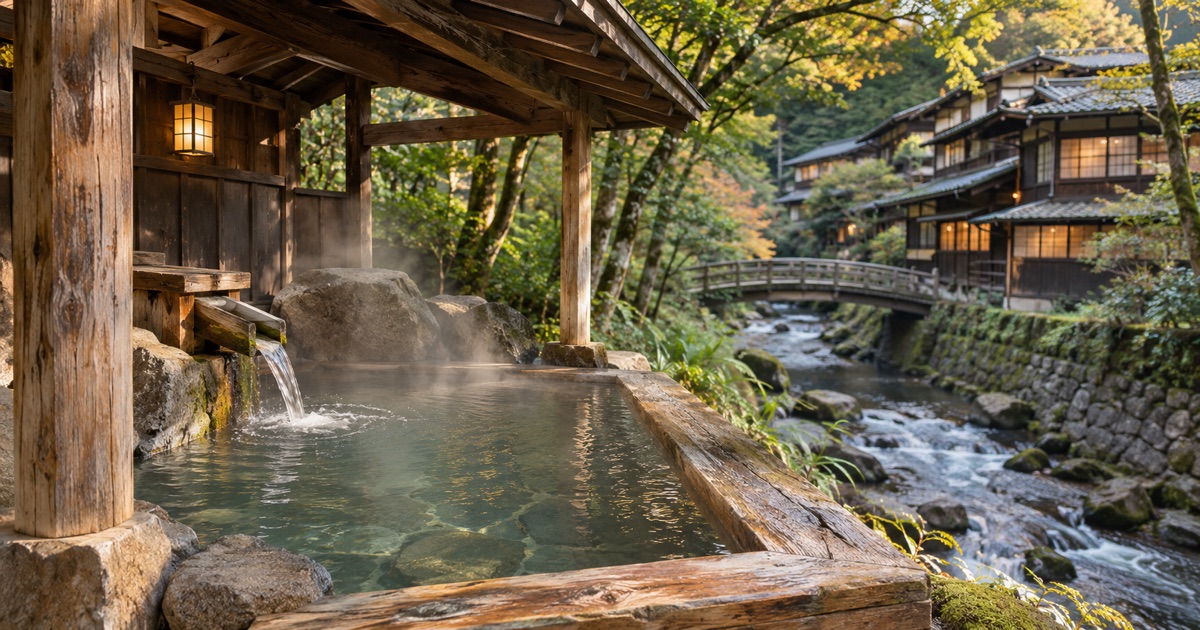
The heart of Okayama's hot spring culture lies in the Chugoku Mountains. If you want the full onsen town atmosphere—complete with wooden bridges, steam rising from riverbanks, and streets lined with ryokan—head to one of these three historic destinations.
Yubara Onsen (湯原温泉)
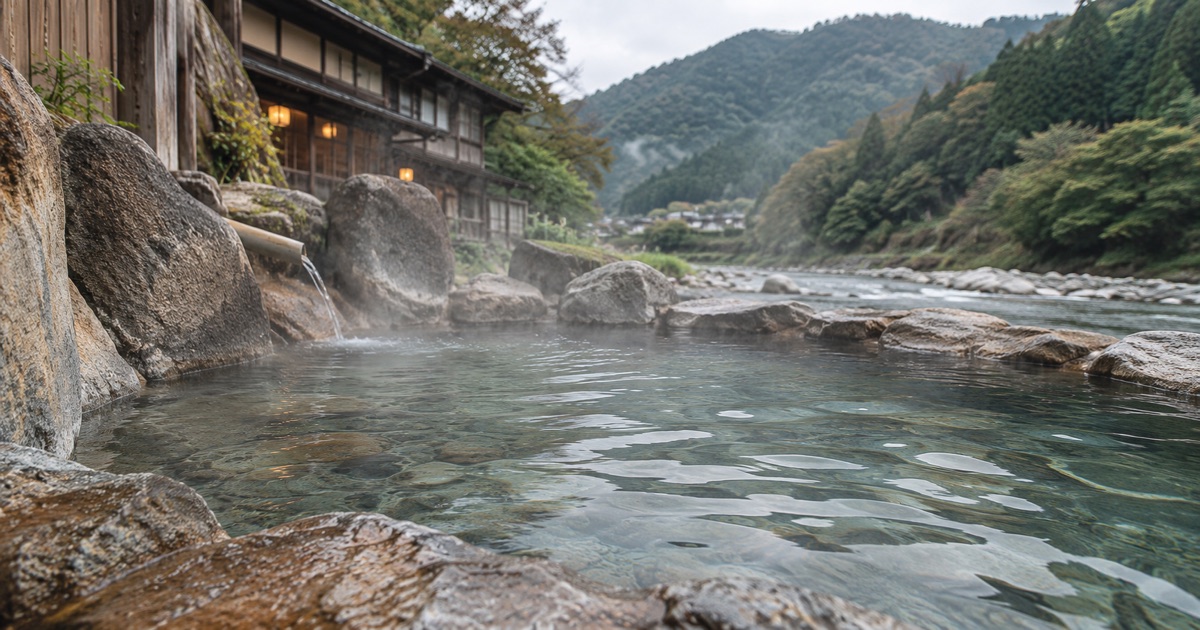
Situated along the Asahi River beneath the towering Yubara Dam, Yubara Onsen is celebrated for Sunayu (砂湯). Sunayu is a famous, completely free, outdoor public bath where thermal water bubbles up through the gravel riverbed.
Key features of Yubara Onsen:
- Mixed Bathing: Sunayu is one of Japan's rare mixed-gender outdoor baths (konyoku). Female bathers are permitted to wear special bathing wraps (available for rent nearby), while male bathers use a modesty towel.
- Natural Atmosphere: Surrounded by rocks and forest, the open-air setting changes dramatically through spring greenery, autumn foliage, and winter snow.
- Village Amenities: Beyond Sunayu, the village offers dozens of traditional ryokan, footbaths (ashi-yu), and small public bathhouses.
Yunogo Onsen (湯郷温泉)
Legend states that the high priest Ennin discovered Yunogo Onsen roughly 1,200 years ago after spotting a white heron soothing an injured leg in the thermal water. Today, Yunogo is a peaceful, walkable hot spring town in Mimasaka City.
Key features of Yunogo Onsen:
- Walkable Layout: Yunogo has a flat, concentrated town center. Visitors can stroll between souvenir shops, pottery studios, and footbaths with ease.
- Yunogo Sagisoyu (湯郷鷺温泉館): The town’s primary public bathhouse provides modern indoor baths, open-air baths (rotenburo), and private family rooms available by the hour.
- Art and History: The town frequently hosts craft workshops and retro museums, making it an enjoyable overnight escape.
Okutsu Onsen (奥津温泉)
Located in Kagamino Town along the clear waters of the Yoshii River, Okutsu Onsen is known for its serene, unspoiled mountain setting.
Key features of Okutsu Onsen:
- Ashibumi Sentaku (足踏み洗濯): In the past, local women washed clothing in the outdoor river springs by stomping on textiles while wearing traditional kimono and straw sandals. Demonstrations are still held on scheduled weekend mornings for visitors.
- Quiet Retreat: Okutsu is smaller and less commercialized than Yunogo or Yubara, making it ideal for travelers seeking quiet immersion in nature.
- Scenic Gorges: The nearby Okutsu Valley offers walking trails with striking river-carved rock formations and brilliant autumn leaves.
How to Get to Okayama Onsen Towns
Because the Mimasaka hot springs sit in the northern highlands, reaching them requires a combination of rail and local bus transit. Detailed schedule checks on JR West before traveling are strongly recommended.
Traveling to Yubara Onsen
- From Okayama Station (岡山駅), board the JR Tsuyama Line to Tsuyama Station (津山駅), or take the JR Hakubi Line to Chugoku-Katsuyama Station (中国勝山駅).
- The route via the Hakubi Line takes roughly 90 minutes by local or rapid train to Chugoku-Katsuyama.
- At Chugoku-Katsuyama Station, board a local Maniwa Community Bus bound for Yubara Onsen. The bus journey takes approximately 35 to 45 minutes.
Traveling to Yunogo Onsen
- From Okayama Station, take the JR Tsuyama Line northward to Tsuyama Station (roughly 60 to 70 minutes).
- From Tsuyama Station, board a regional bus operated by Ryobi Bus or Uno Bus heading to Yunogo Onsen (around 40 minutes).
- Alternatively, highway express buses run directly from Okayama Station's bus terminal to the Yunogo area, taking around 90 to 100 minutes depending on traffic.
Transit Tips for First-Time Visitors
- IC Cards Are Limited: While you can use Suica or ICOCA at major stations like Okayama, rural bus routes in Maniwa and Mimasaka often accept only cash. Keep 1,000-yen notes and 100-yen coins handy.
- Watch the Return Times: Rural buses run infrequently, often with gaps of one to two hours between departures. Snap a photo of the return timetable at the bus stop as soon as you arrive.
We are working to carry Japanese craft and everyday culture beyond Japan, by building Japan Towns with local partners.
Read the Japan Town plan →Day-Use Onsen Closer to Okayama City
If your travel itinerary does not leave enough time for a mountain excursion, you can still experience Japanese bathing culture near Okayama City.
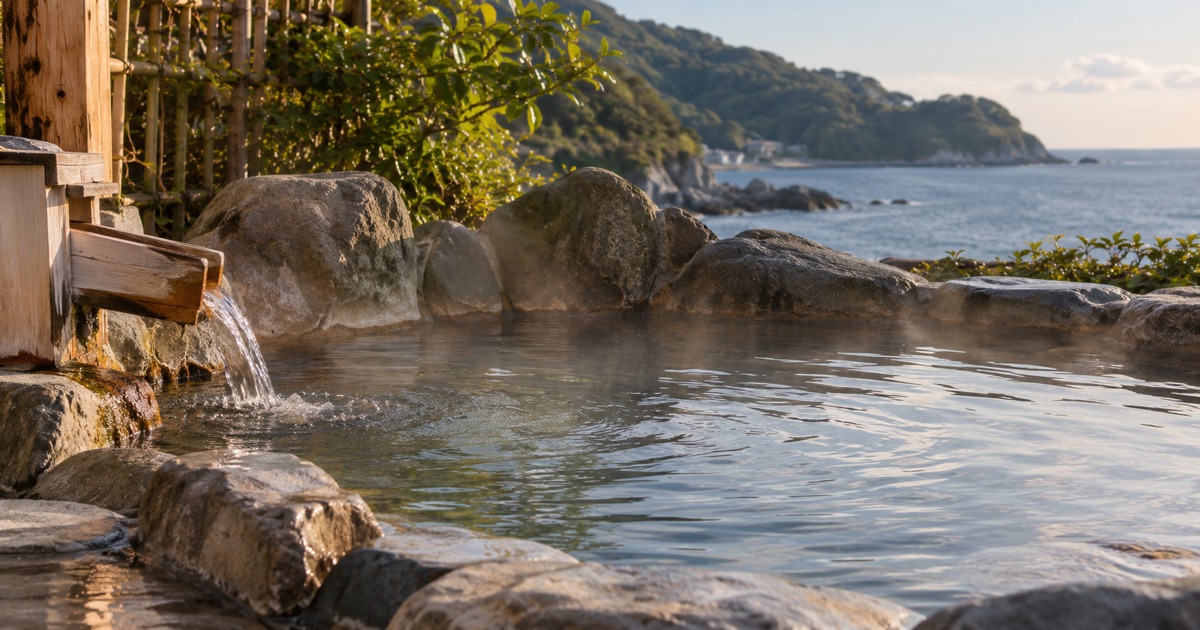
- Setouchi Onsen Tamano-yu (瀬戸内温泉 たまの湯): Located south of Okayama City near Uno Port (the gateway to the art island of Naoshima), this large day-use facility overlooks the Seto Inland Sea. It features outdoor seaside baths, saunas, and an on-site dining room serving regional seafood. It is roughly 45 to 55 minutes by train from Okayama Station to Uno Station.
- Urban Sento and Super Sento: Around Okayama City, large bath complexes provide modern thermal mineral baths, jet pools, and relaxation lounges. These offer an authentic snapshot of modern Japanese everyday life without long transit times.
Step-by-Step Onsen Etiquette
If you have never visited an onsen in Japan, the bathing procedure is straightforward and standard across all facilities.
- Remove Your Shoes: Take off outdoor shoes at the entrance (genkan) and place them in the provided lockers.
- Buy Your Ticket: Purchase your admission ticket at a vending machine or front desk (reception). Cash is often required. Hand your ticket to the staff.
- Choose the Right Curtain: Pass through the colored hanging curtain (noren). Red or pink typically indicates the women's bath (女), while blue typically indicates the men's bath (男).
- Undress Completely: In the changing room, remove all clothing, including swimwear. Store your belongings in a basket or locker. You take only your small modesty towel into the washing area.
- Wash Before Entering the Water: Sit on a plastic stool at a washing station. Use the provided body wash and shampoo to clean yourself thoroughly and rinse away all soap bubbles before stepping into any communal tub.
- Soak and Relax: Slowly enter the bath. Never submerge your head, hair, or hand towel in the thermal water. Place your folded towel on your head or leave it on the edge of the pool.
- Dry Off Before Entering the Locker Room: Squeeze out your hand towel and wipe excess water off your body before stepping back onto the changing room mats.
Practical Considerations: Tattoos and Private Baths
Bathing policies regarding body art vary across Okayama Prefecture:
- Public Bathhouses: Large facilities and municipal baths often maintain strict rules prohibiting visible tattoos. Always check the facility's official website or ask the entrance staff before paying.
- Covering Small Tattoos: Some modern day-use baths permit entry if small tattoos are concealed beneath waterproof bandages or skin-toned patches.
- Private Baths (Kashikiri): If you have extensive tattoos or prefer personal privacy with family or a partner, book a ryokan with a private rental bath (kashikiri-buro, 貸切風呂) or an in-room open-air bath (rotenburo-tsuki kyakushitsu). Private baths allow you to bathe together without public restrictions.
For additional regional transit schedules and seasonal event updates across the Chugoku region, refer to the Japan National Tourism Organization.
FAQ
- Q. Can you visit an onsen as a day trip from Okayama Station?
- A. Yes, you can reach hot spring towns like Yunogo or Yubara by train and regional bus in roughly 90 to 120 minutes, or visit day-use facilities closer to the city center.
- Q. Are tattoos allowed in Okayama hot springs?
- A. Policies vary by facility. Traditional public baths often prohibit visible tattoos, but private rental baths (kashikiri) at local ryokan welcome guests with ink.
- Q. What should you bring to an onsen in Okayama?
- A. Bring a small washcloth or modesty towel, a larger bath towel for drying off afterward, and cash in Japanese yen for admission ticket machines and local bus fares.
Cite or share this article
Copy the link below. If you quote this article, please link to this page as the source.