Best Onsen Near Ginza Chuo City: Day Baths & Sento
Key takeaways
- Natural onsen and public sento are accessible within walking distance or a short train ride from Ginza.
- All visitors must wash thoroughly before entering the communal hot spring baths, and swimwear is prohibited.
- Tattoo rules vary between neighbourhood sento and modern spas, making website verification essential.
While Ginza (銀座) in Chuo City is renowned for luxury shopping and upscale dining, you can easily enjoy a traditional hot spring bath within walking distance or a brief train hop. Authentic hot spring water (tennen onsen) and historic public baths (sento) operate throughout Chuo City and its adjacent wards, offering quick relaxation right in the centre of Tokyo.
Finding a bath near Ginza gives first-time visitors an approachable introduction to Japanese bathing culture without travelling hours into rural mountains. Whether you want a historic neighbourhood bathhouse dating back generations or a multi-story modern wellness spa on the waterfront, several accessible options surround Chuo City.
Understanding Baths Near Ginza: Onsen vs. Sento
Before heading out from Ginza Crossing, understanding the distinction between bathhouse styles will help you choose the right experience.
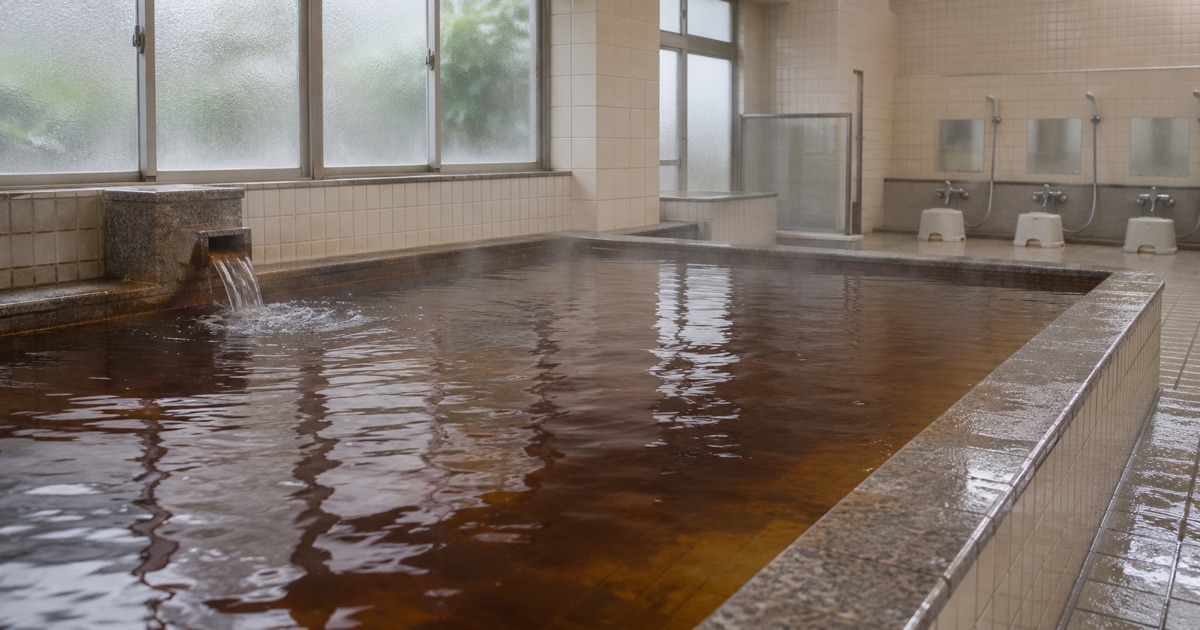
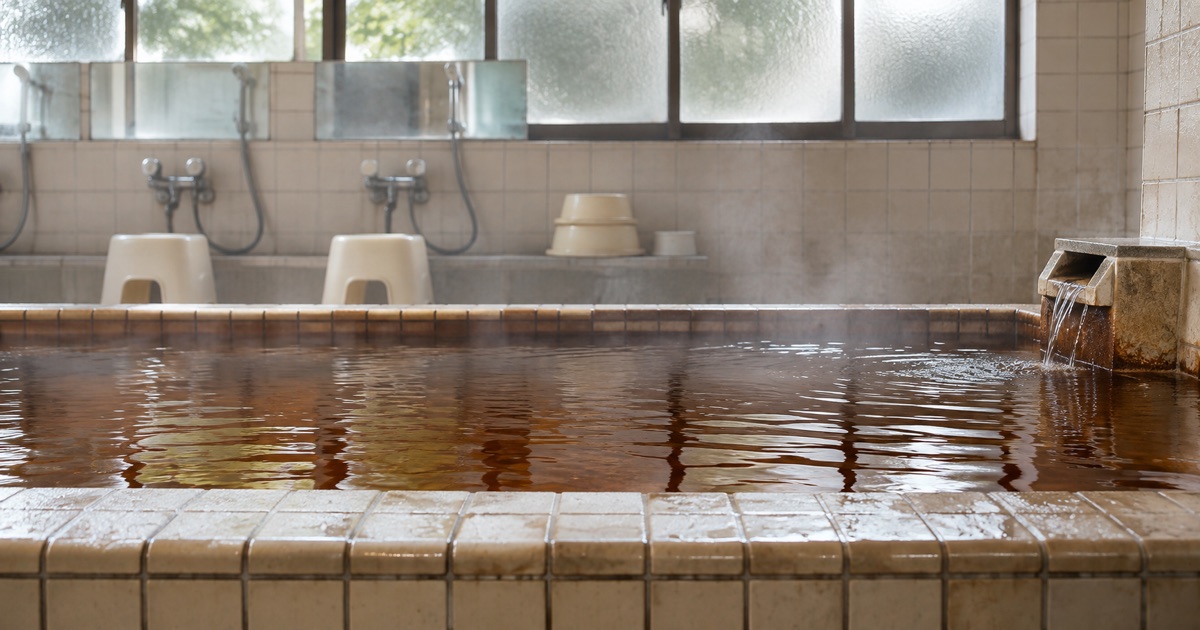
- Natural Onsen (天然温泉): Geothermally heated water drawn from deep underground containing specific dissolved minerals. In Tokyo, this water is frequently dark brown or black (kuroyu, or "black water"), coloured by ancient organic plant matter.
- Sento (銭湯): Traditional Japanese neighbourhood public bathhouses. Sento historically used heated municipal tap water, though several locations in central Tokyo have drilled deep wells to pump certified natural onsen water into their tubs. Sento operate under local municipal price caps and welcome ordinary daily bathers.
- Super Sento / Spa Complexes: Large commercial facilities offering multiple bath types, dry saunas, relaxation lounges, and massage services for a single entry fee.
Visitors can plan their route across Tokyo using official transit resources such as JR East for surface trains and Tokyo Metro for underground lines.
Top Baths and Onsen Near Ginza
Ginza Yu (銀座湯) – Walking Distance from Central Ginza
Located directly in Ginza 1-Chome, Ginza Yu is an authentic neighbourhood sento tucked quietly among high-rise office blocks. It does not pump mineral onsen water, relying instead on clean, hot municipal water, but its location makes it the most accessible bathhouse for anyone staying near Chuo City's central avenues. The interior features classic ceramic tile murals depicting Tokyo scenery. It provides a quick, unpretentious cultural immersion just steps from department stores.
- Rough Travel Time: Approximately a 5- to 10-minute walk from Ginza Station (銀座駅) or Yurakucho Station (有楽町駅).
- Entry Fee: Regulated standard Tokyo sento rate, roughly 500 to 600 yen. Check local posted notices.
Konparu-yu (金春湯) – Historic Bathing in Ginza 8-Chome
Dating back to the late Edo period, Konparu-yu sits on the southern edge of Ginza near the border of Shinbashi. Like Ginza Yu, this is a municipal sento rather than a deep mineral well. It remains famous for its traditional Mount Fuji tile murals crafted by master bathhouse painters. Visiting Konparu-yu offers an authentic slice of old downtown Tokyo life within a short stroll of high-fashion boutiques.
- Rough Travel Time: Around a 5-minute walk from Shinbashi Station (新橋駅) or an 8-minute walk from Ginza Station.
- Entry Fee: Standard Tokyo sento fee (around 500 to 600 yen). Towel rentals cost a small additional charge.
Tsukishima Onsen (月島温泉) – Natural Mineral Water Across the River
Located in Tsukishima (月島), within Chuo City just across the Sumida River from Ginza, Tsukishima Onsen sits on the second floor of a modern building inside the lively Monja Street shopping district. Unlike basic sento, this facility pumps genuine hot spring mineral water into its baths. It combines local neighbourhood charm with natural spring minerals, making it an excellent stop before or after dinner.
- Rough Travel Time: About 10 to 15 minutes via the Tokyo Metro Yurakucho Line from Ginza-itchome Station to Tsukishima Station.
- Entry Fee: Standard sento rates (approximately 500 to 600 yen), with small extra fees for sauna usage.
Manyo-no-Yu / Toyosu Senkyaku Banrai (豊洲 千客万来)
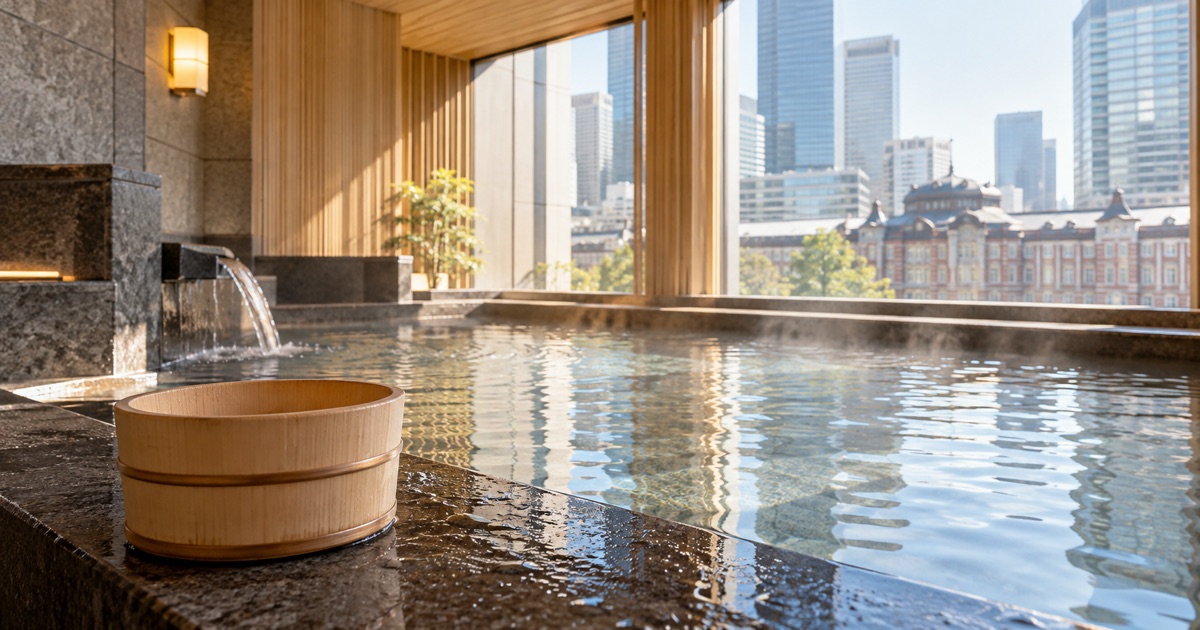
For an extensive onsen resort experience close to Ginza, head to the Toyosu waterfront. Opened next to the Toyosu Wholesale Fish Market, this sprawling complex transports authentic thermal mineral water directly from Hakone (箱根) and Yugawara (湯河原) by tank truck every day. It features open-air baths (rotenburo), saunas, bedrock stone spas (ganbanyoku), and extensive relaxation rooms overlooking Tokyo Bay.
- Rough Travel Time: Roughly 15 to 20 minutes from Ginza via the Yurakucho Line to Toyosu Station, connecting to the Yurikamome Line.
- Entry Fee: Comprehensive spa pricing, usually ranging between 3,000 and 5,000 yen depending on peak hours and late-night stays. Operating hours and pricing change periodically, so check the official facility website before visiting.
We are working to carry Japanese craft and everyday culture beyond Japan, by building Japan Towns with local partners.
Read the Japan Town plan →Practical Steps for First-Time Bathers
If you have never visited an onsen or sento in Japan, the process is straightforward once you know the step-by-step sequence.
- Shoe Locker: Remove your shoes at the entrance (genkan) and place them in a shoe locker. Take the wooden locker key with you to the reception counter (bandai or front desk).
- Payment and Tickets: Pay the admission fee. Sento often use a vending machine with buttons for entrance, towel sets, and soap; modern spas offer English-speaking counters or touchscreen kiosks.
- Changing Rooms: Enter through the correct curtain: blue usually marks the men's entrance (男, otoko), and red marks the women's entrance (女, onna).
- Undressing: Strip down completely. Place all clothes, watches, phones, and large towels into a clothes locker or basket. No clothing or swimsuits may enter the bath area.
- Washing Station First: Take your small washcloth into the bathing room. Sit down on a small plastic stool at an individual washing stall. Wash your hair and body thoroughly with soap and rinse completely before touching the bathwater.
- Soaking: Step gently into the hot tubs. Do not splash, dive, or submerge your head. Keep your modesty washcloth out of the water; balance it on your head or place it on the edge of the tub.
- Drying Off: Before stepping back into the carpeted dressing area, wring out your small towel and wipe excess water off your body to keep the changing room floor dry.
What to Bring and What to Rent
Packing for a public bath in Chuo City requires minimal preparation, as most facilities cater to unexpected drop-ins:
- Towels: Sento do not provide free towels. You can bring a small washcloth and bath towel from your hotel, or purchase a small washcloth (usually 100–200 yen) and rent a larger bath towel at the desk. Larger spa facilities provide towel sets and loungewear (館内着, kannaigi) included in admission.
- Soap and Shampoo: Many neighbourhood sento stock communal body wash and 2-in-1 shampoo at the washing stations, though some traditional spots sell miniature travel bottles at reception for roughly 50 to 100 yen. Spas provide premium toiletries, razors, and hair dryers.
- Cash: Small neighbourhood sento frequently operate on cash only. Bring 1,000-yen notes and 100-yen coins for entrance, drink machines, and hair dryer coin slots.
Navigating Tattoo and Etiquette Policies
Tattoo policies differ significantly depending on the management type:
- Neighbourhood Sento: Because public sento operate under municipal public health mandates to provide hygiene access for all city residents, many traditional sento permit visible tattoos. Both Ginza Yu and Konparu-yu have historically welcomed ink-bearing bathers, but policies can adjust without warning.
- Commercial Spas and Onsen Resorts: Larger commercial establishments strictly prohibit tattoos of any size. Some locations permit guests with small tattoos to enter if the ink is completely covered with waterproof flesh-coloured adhesive patches available at reception or convenience stores.
Never assume a facility allows tattoos. Always review the venue's entry rules on their website or look for signage at the counter. For comprehensive national etiquette guidelines, consult the Japan National Tourism Organization.
Common Mistakes to Avoid
- Putting towels into the bathwater: Even clean towels carry microscopic lint and soap residue. Keep your washcloth on your head or beside the bath.
- Washing inside the tub: Soaping up inside the bathwater contaminates the pool for everyone. All lathering, scrubbing, and rinsing must occur seated at the washing stations.
- Using phones in changing rooms: To protect guest privacy, smartphone use inside changing areas is strictly prohibited across all bathhouses in Japan. Keep devices securely stowed inside your locker.
- Rinsing off mineral water too quickly: If you bathe in natural mineral onsen water like that at Tsukishima or Toyosu, let the minerals dry naturally on your skin rather than immediately showering them away, unless you have sensitive skin that reacts to strong heat.
FAQ
- Q. Can you wear a bathing suit at onsen near Ginza?
- A. Communal hot baths in Japan require complete nudity, meaning swimsuits and rash guards are not permitted in the water. Small privacy towels are allowed outside the bath but must never touch the communal pool water.
- Q. Are tattoos allowed in public baths around Ginza and Chuo City?
- A. Traditional neighbourhood sento run under public bath regulations often permit tattoos, whereas modern commercial onsen complexes frequently restrict visible body ink. Visitors with tattoos should check the facility's official guidelines or consider renting a private bath room.
- Q. Do you need to book an onsen visit in central Tokyo in advance?
- A. Most neighbourhood sento and day-use onsen near Ginza operate on a walk-in basis without advance reservations. Private family baths (kashikiri) and premium hotel day spas do require prior booking online or by phone.
Cite or share this article
Copy the link below. If you quote this article, please link to this page as the source.