Hot Springs Near Kagoshima: Best Onsen Day Trips
Key takeaways
- Ibusuki offers unique coastal natural sand baths roughly one hour south of Kagoshima by JR train.
- Kirishima features mountain hot springs nestled in volcanic forests about one hour north of the city.
- City-center public baths in Kagoshima provide affordable volcanic spring water without leaving town.
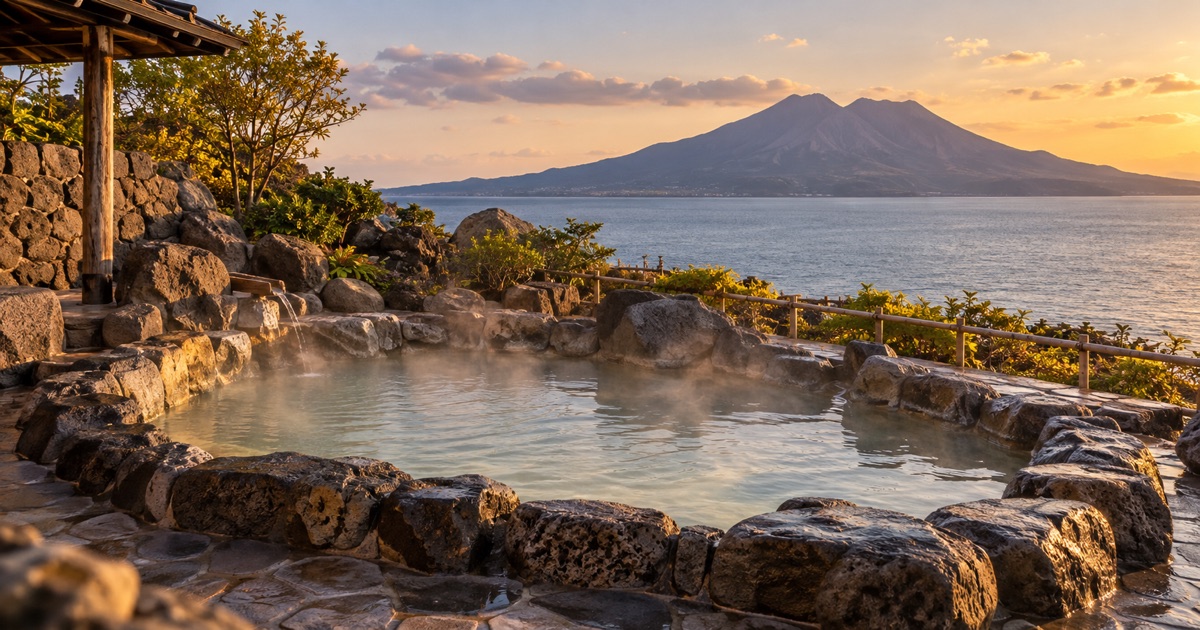
The best hot springs near Kagoshima are clustered in two world-class regions: the coastal town of Ibusuki to the south, famous for volcanic sand baths, and the forested slopes of Kirishima to the north. Visitors staying in central Kagoshima City can reach either area in roughly 50 to 80 minutes by local train or bus, while urban onsen and Sakurajima ferry baths offer immediate options right on the city's doorstep.
Kagoshima Prefecture sits on one of the most volcanically active zones in the world. As a result, geothermal water flows beneath the entire region, giving travellers access to mineral-rich baths ranging from seaside sand pits to remote highland pools.
Ibusuki: The Coastal Steam Sand Experience
Located at the southern tip of the Satsuma Peninsula, Ibusuki (指宿) is roughly one hour from central Kagoshima and offers one of Japan's most distinctive bathing traditions: sunamushi onsen (砂むし温泉), or natural sand steaming.
Geothermally heated springs run under the coastal beaches here. Instead of soaking in hot water immediately, bathers are buried up to their necks in warm, volcanic sand.
How a Sand Bath Works
- Check-in and change: At a facility like the municipal Saraku Sand Bath Hall (砂むし会館 砂楽), you pay the entry fee and receive a lightweight cotton yukata. Head to the changing room, remove all clothing, and put on the yukata directly against your bare skin.
- Head to the beach: Walk down to the designated sand area carrying a small face towel to keep sand out of your hair and off your face.
- Get buried: Staff members dig a shallow trench. Lie down on your back, rest your head on a small wooden block or sand pillow, and let the attendants shovel warm sand over your entire body.
- Rest: A standard session lasts roughly 10 to 15 minutes. The weight of the sand combined with rising geothermal steam creates intense warmth.
- Rinse and soak: Stand up gently, shake off loose sand, and return to the indoor bathhouse. Rinse off thoroughly in the designated shower stations before soaking in the standard indoor hot spring pools.
Travel to Ibusuki
From Kagoshima-Chuo Station (鹿児島中央駅), take the JR Ibusuki-Makurazaki Line. The journey takes around 50 to 60 minutes on the limited express train (such as the scenic "Ibusuki no Tamatebako") or roughly 70 to 80 minutes on local services. Check rail details via the Japan National Tourism Organization before traveling, as limited express trains often require advance seat reservations.
Kirishima: Sacred Mountain Waters
North of Kagoshima Bay lies Kirishima (霧島), a mountainous national park region centered around active volcanic peaks. The hot springs here, collectively called Kirishima Onsenkyo (霧島温泉郷), are scattered across lush hillside forests.
Unlike the seaside resort atmosphere of Ibusuki, Kirishima offers a tranquil alpine retreat. Many baths feature milky-white, sulfur-rich waters and expansive outdoor pools (rotenburo) overlooking pine-covered valleys.
Top Areas in Kirishima
- Maruo Onsen (丸尾温泉): The primary transportation hub of Kirishima Onsenkyo. It features multiple hotels, day-use baths, and a small visitor center surrounded by rising steam vents.
- Kirishima Jingu Onsen (霧島神宮温泉): Located closer to the historic Kirishima Shrine (霧島神宮), this area combines cultural sightseeing with hot spring inns.
- Shin-Yu and Myoken (新湯・妙見): Tucked away along river valleys, these locations are known for rustic wooden bathhouses and traditional Japanese ryokan accommodations.
Travel to Kirishima
To reach Kirishima from Kagoshima-Chuo Station, ride the JR Nippo Main Line to Kirishima-Jingu Station (roughly 45 to 60 minutes on limited express trains), or take the JR Hisatsu Line to Kirishima-Onsen Station. From either station, local buses connect onward to the Maruo and hot spring areas in roughly 20 to 35 minutes. Always verify current bus schedules at the station information counter, as mountain departures can be infrequent.
We are working to carry Japanese craft and everyday culture beyond Japan, by building Japan Towns with local partners.
Read the Japan Town plan →Hot Springs Within Kagoshima City
You do not need to leave the metropolitan area to experience genuine hot spring water. Kagoshima City contains dozens of public sento bathhouses that tap directly into natural geothermal sources.
City Center Public Baths
In neighborhoods like Tenmonkan (天文館) and around Kagoshima-Chuo Station, community bathhouses offer entry for around 400 to 600 yen. These neighborhood baths are bare-bones, historic facilities where local residents bathe daily. Note that you often need to bring your own soap, shampoo, and towel, or buy single-use sets at the counter.
Sakurajima (桜島)
Directly across the bay sits Sakurajima, Kagoshima’s famous active volcano. A 15-minute public ferry runs continuously around the clock between the city port and Sakurajima Port.
- Yogan Nagisa Park Footbath: Just a short walk from the ferry terminal, you will find a 100-meter-long outdoor footbath (ashiyu) filled with natural geothermal water. It is free to use and faces the Kagoshima coastline.
- Rainbow Sakurajima: A municipal lodge near the port that opens its large volcanic-spring baths to daytime visitors for a modest fee.
Practical Onsen Etiquette and First-Timer Tips
Navigating a Japanese bathhouse is simple once you understand the basic workflow:
- Footwear off at the entrance: Remove outdoor shoes at the front door and place them in a shoe locker.
- Separation by gender: Men’s areas typically display blue curtains with the character 男 (otoko); women’s areas display red curtains with the character 女 (onna).
- Complete nudity in the bath: Bathing suits are strictly prohibited in standard Japanese hot springs. Leave all clothes, jewelry, and phones inside the changing room baskets or lockers.
- Wash thoroughly before soaking: Sit on one of the provided stools at the washing taps. Soap, wash, and rinse your entire body completely before entering any pool. The communal bath water must remain soap-free and clean.
- Keep towels out of the water: Your small modesty towel should rest on your head or on the side of the tub; never submerge it in the bath water.
- Tattoos: Policies differ significantly by facility. Some public sento allow small tattoos, while historic ryokan or large modern resort complexes may ban them entirely. Visitors with body art should look for facilities advertising tattoo tolerance, cover small ink with waterproof patches, or reserve a private family bath (kashikiri-buro). Always check the facility's official website in advance.
What to Pack for a Day Trip
- Small face towel: Essential for modesty when walking between the shower and the bath, and for wiping dry before returning to the changing area.
- Bath towel: Many day-use facilities do not include large drying towels in the entry price; you can bring your own or rent one for around 200 to 400 yen.
- Cash (coins and small notes): Entry ticket vending machines, hair dryers, shoe cubbies, and changing lockers often require 100-yen coins.
- Plastic bag: Handy for carrying your damp towel back to your hotel.
- Easy-to-remove footwear: Slip-on shoes save time when visiting multiple facilities.
Choosing Between Ibusuki and Kirishima
If you only have one day available from Kagoshima, tailor your choice to your travel priorities:
| Destination | Best For | Travel Time from Kagoshima-Chuo | Bath Type |
|---|---|---|---|
| Ibusuki | Unique coastal sand baths, seaside views | Approx. 50–70 minutes | Volcanic sand steam, coastal indoor onsen |
| Kirishima | Mountain forests, hiking, traditional ryokan | Approx. 60–80 minutes | Milky outdoor rotenburo, sulfuric spring pools |
| Sakurajima | Quick half-day trips, active volcano views | Approx. 30 minutes (ferry included) | Scenic outdoor footbaths, port-side day onsen |
Plan train and bus connections carefully, as rural transport lines in southern Kyushu operate on limited schedules outside peak commute hours. Consult railway portals such as the official Japan National Tourism Organization guide or local train station offices to confirm operating days, seasonal rail maintenance, and regional transit passes.
FAQ
- Q. What is the most famous hot spring near Kagoshima?
- A. Ibusuki (指宿) is the most famous destination, renowned worldwide for its natural coastal steam sand baths (sunamushi onsen).
- Q. Can you visit Kirishima hot springs on a day trip from Kagoshima?
- A. Yes, Kirishima is accessible in roughly an hour by JR train or highway bus, making it a straightforward day trip.
- Q. Are tattoos allowed in hot springs around Kagoshima?
- A. Policies vary widely by facility, so check official websites beforehand or book a private bath (kashikiri-buro) to ensure entry.
Cite or share this article
Copy the link below. If you quote this article, please link to this page as the source.