Nozawa Onsen Chuo Bus Terminal: Complete Arrival Guide
Key takeaways
- Nozawa Onsen Chuo Bus Terminal is the main transport hub connecting the village to Iiyama Station.
- Most village ryokan, public bathhouses (sotoyu), and footbaths are within a 5- to 15-minute walk.
- Buses from Iiyama Station usually require cash; IC cards like Suica or Pasmo are often not accepted.
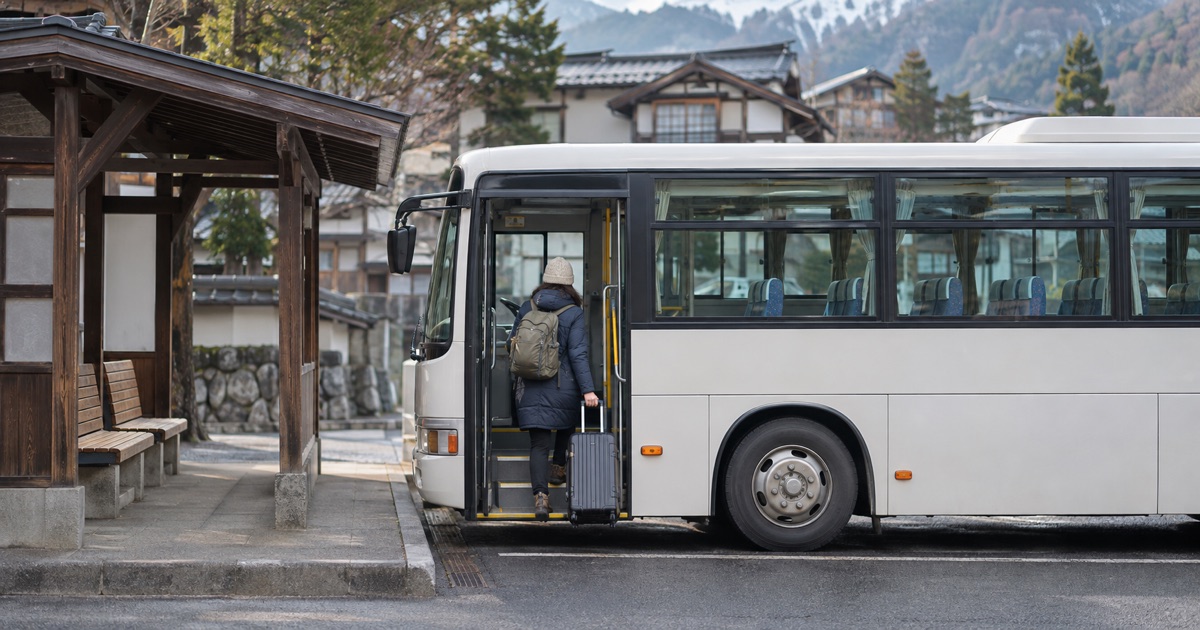
The Nozawa Onsen Chuo Bus Terminal (野沢温泉中央バスターミナル) serves as the primary transport gateway and arrivals hub for the historic hot spring village of Nozawa Onsen in Nagano Prefecture. Located directly at the edge of the pedestrian-friendly village core, this compact terminal connects rail passengers arriving via the Hokuriku Shinkansen at Iiyama Station (飯山駅) straight to the town's famous public baths, ski access routes, and traditional inns.
Navigating this transit point is straightforward, even for visitors who speak no Japanese. This guide outlines how to reach the terminal, what amenities to expect upon arrival, and how to reach your accommodation with minimal stress.
How to Reach Nozawa Onsen Chuo Bus Terminal
Reaching Nozawa Onsen from Tokyo or elsewhere in central Japan involves taking a bullet train followed by a direct local bus.
Step 1: Bullet Train to Iiyama Station
Most international travelers start their trip by riding the Hokuriku Shinkansen from Tokyo Station (東京駅) or Ueno Station (上野駅) to Iiyama Station (飯山駅). The train ride generally takes around 1 hour and 40 minutes to 2 hours, depending on whether you board a Kagayaki or Hakutaka service. Timetables, seat reservations, and rail pass validity can be verified on the official JR East website.
Step 2: The Nozawa Onsen Liner Bus
At Iiyama Station, exit through the ticket gates and head to the ground-floor bus platforms outside the station building. Look for the stop designated for the Nozawa Onsen Liner (野沢温泉ライナー) or local routes run by the Nagaden bus company.
- Travel Time: The drive from Iiyama Station up into the mountains takes roughly 20 to 25 minutes in good weather. Winter snowstorms can slow traffic, so leave ample buffer time when connecting back to outgoing trains.
- Fare: One-way adult fares typically run around 600 yen, with child fares priced around 300 yen. Fares are subject to periodic adjustments.
- Payment: Unlike Tokyo city buses, local rural buses in this area often do not accept IC transport cards such as Suica or Pasmo. Passengers generally pay using exact cash into an automated fare machine next to the driver upon disembarking. Bring plenty of 1,000-yen notes and 100-yen coins to avoid payment delays.
The Nozawa Onsen Liner stops at a few outlying drop-off points before reaching its final destination at the central bus hub: Nozawa Onsen Chuo Bus Terminal.
What to Expect at the Chuo Bus Terminal
The terminal itself functions as an enclosed waiting area and staging ground rather than a massive commercial transit station. While compact, it provides the essential amenities needed upon arrival or departure.
Waiting Room and Restrooms
The facility features an indoor waiting hall that shields travelers from winter snow and summer rain. Clean, public restrooms are accessible inside the building. Seating is available while you wait for departing buses.
Luggage Storage and Coin Lockers
A limited set of coin lockers is generally available on-site for storing backpacks and smaller day bags. However, extra-large rolling suitcases and snowboard bags may not fit inside standard locker sizes.
During peak winter ski season (December through March), lockers can fill quickly early in the morning. If you arrive before your accommodation allows check-in, the best approach is usually to walk directly to your ryokan or hotel to leave your luggage at front reception. Many local properties happily hold bags for arriving guests.
Information and Maps
Paper maps of the village are often displayed on racks inside the waiting area. These village maps highlight the locations of the 13 free public bathhouses (sotoyu / 外湯), the moving walkway (Yu-road) leading up to the ski slopes, and major landmarks like the Oyu (大湯) bathhouse. Grabbing a physical map helps navigating the winding, narrow alleys of the village where satellite mobile signals can occasionally falter between tall buildings.
Additional regional travel assistance can also be researched in advance via the Japan National Tourism Organization.
We are working to carry Japanese craft and everyday culture beyond Japan, by building Japan Towns with local partners.
Read the Japan Town plan →Navigating from the Terminal to Your Lodging
Once you step outside the Nozawa Onsen Chuo Bus Terminal, you are right at the threshold of the historic village. The village layout relies on dense, winding, and often steep footpaths originally laid out centuries before automobiles.
Walking Distances
- Main Street (Oyu-dori): Roughly a 3- to 5-minute walk from the terminal doors.
- Historic Oyu Bathhouse: Roughly a 5- to 7-minute walk.
- Hikage Gondola Base via the Yu-road: Roughly a 10- to 15-minute walk uphill.
- Outlying Ryokan and Pensions: Typically no more than a 15-minute walk anywhere within the inner village zone.
Winter Walking and Snow Handling
If you visit between late December and early April, village streets are covered in hard-packed snow and ice. While many central streets use geothermal pipes and underground water channels (doso) to melt roadway snow, pedestrian walkways can remain slick.
- Footwear: Wear sturdy waterproof boots with deep rubber treads. Avoid smooth-soled street shoes, running sneakers, or dress shoes.
- Luggage: Dragging heavy four-wheeled rolling suitcases across uneven cobblestones and thick snow sludge is exhausting. If traveling with heavy winter gear, consider shipping bulky bags directly from the airport to your lodging using standard Japanese luggage delivery services (takkyubin).
Village Etiquette and First Steps
After dropping your bags at your lodging, most visitors immediately set out to explore the village's signature hot springs.
Visiting the Sotoyu (Public Baths)
Nozawa Onsen is celebrated for its 13 community-run bathhouses (sotoyu). These historic communal baths are maintained by local neighborhoods (yu-nakama) and open to respectful visitors.
- Donations: While these baths traditionally do not charge a commercial admission fee, small donation collection boxes (saisenbako) sit near the entrance. Dropping a modest coin donation (commonly around 100 to 200 yen per visit) helps support maintenance, hot water supply lines, and daily cleaning.
- Bring Your Own Supplies: Sotoyu are historic community bathhouses, not luxury day spas. They do not supply free towels, soap, or shampoo. Bring a small washcloth and drying towel from your room. Many baths ask guests to wash with water only, leaving heavy shampooing for their private accommodations to avoid overloading simple drain networks.
- Washing Before Entering: Always wash and rinse your body completely using the small washing buckets before stepping into the communal bath basin. Never put washcloths into the hot spring water; fold them and place them on your head or set them by the edge.
- Water Temperature: Natural thermal water feeds these baths continuously, making many of them exceptionally hot—often well above 43°C (110°F). Enter slowly. If a cold water tap is available, it is polite to ask other bathers before running tap water into the pool, as locals generally prefer the traditional high heat.
- Tattoos and Nudity: Traditional bathing in Japan requires full nudity; swimwear is never permitted in standard onsen baths. Because the village sotoyu are community facilities rather than private corporate resorts, tattoo restrictions are generally non-existent or far more relaxed than in urban spas. However, commercial day-use facilities and private hotel onsen establish their own specific rules. Always verify tattoo policies on each private facility’s website or at the front desk before entering.
Essential Practical Tips
- Carry Physical Cash: While some Western-oriented ski rental shops and contemporary cafes accept credit cards, many small noodle shops, public hot springs, and local buses operate strictly on Japanese cash.
- Check Departure Times in Advance: Bus frequency between Nozawa Onsen Chuo Bus Terminal and Iiyama Station varies throughout the year. Services run frequently during peak ski season, but departures drop to wider intervals during spring, summer, and autumn. Verify current return timetables posted at the terminal window on the day you arrive to ensure a smooth journey back to the Shinkansen line.
FAQ
- Q. Where is the Nozawa Onsen Chuo Bus Terminal located?
- A. It sits near the western entrance of the main village center, within a short walking distance of most ryokan, shops, and bathhouses.
- Q. Can I pay for the Nozawa Onsen Liner bus with an IC card?
- A. Most buses running between Iiyama Station and the village operate on cash-only fares, so always prepare Japanese yen coins and small bills before boarding.
- Q. Is there luggage storage at Nozawa Onsen Chuo Bus Terminal?
- A. Coin lockers and luggage-holding services may be available inside or nearby, but spaces are limited during peak winter months.
Cite or share this article
Copy the link below. If you quote this article, please link to this page as the source.