Onsen Near Nagasaki Station: Best Options Without a Car
Key takeaways
- Nagasaki city itself has few traditional onsen; Unzen (雲仙) is the nearest well-known onsen town, roughly 1.5-2 hours away.
- For a genuine hot spring experience within a day trip, Unzen Onsen or Obama Onsen (小浜温泉) on the Shimabara Peninsula are the most realistic choices.
Onsen Near Nagasaki Station: What to Expect
There is no traditional natural hot spring bath inside or directly next to Nagasaki Station. The closest proper onsen towns—Unzen (雲仙) and Obama Onsen (小浜温泉) on the Shimabara Peninsula—are roughly 1.5 to 2 hours away by bus, making them realistic as a long day trip or, better, an overnight stay. If you want something within the city itself, a few hotels near the station have large communal baths, though these are not always fed by natural hot spring water, so it's worth checking each hotel's own website before booking.
This is a common point of confusion for first-time visitors to Nagasaki. The city is famous for its harbor views, history, and food, but it does not sit on a major hot spring source the way towns like Beppu or Yufuin do. Understanding this upfront will help you plan a realistic itinerary rather than hunting for something that isn't there.
Why Nagasaki City Itself Has Limited Onsen
Nagasaki's geology and urban development mean the city center was never built around a hot spring source. The real onsen geology of the region is concentrated on the Shimabara Peninsula, particularly around Mount Unzen, an active volcanic area that has supported hot spring bathing for centuries. This is simply a geographic reality, not a quality issue with Nagasaki city.
So when people search for "onsen near Nagasaki Station," what they usually find falls into two categories: city hotels with large baths (sometimes called "spa" or "daiyokujo" baths) that may or may not use natural hot spring water, and genuine onsen towns that require some travel. Both can be worthwhile, but they are different experiences.
Option 1: Unzen Onsen (雲仙温泉)
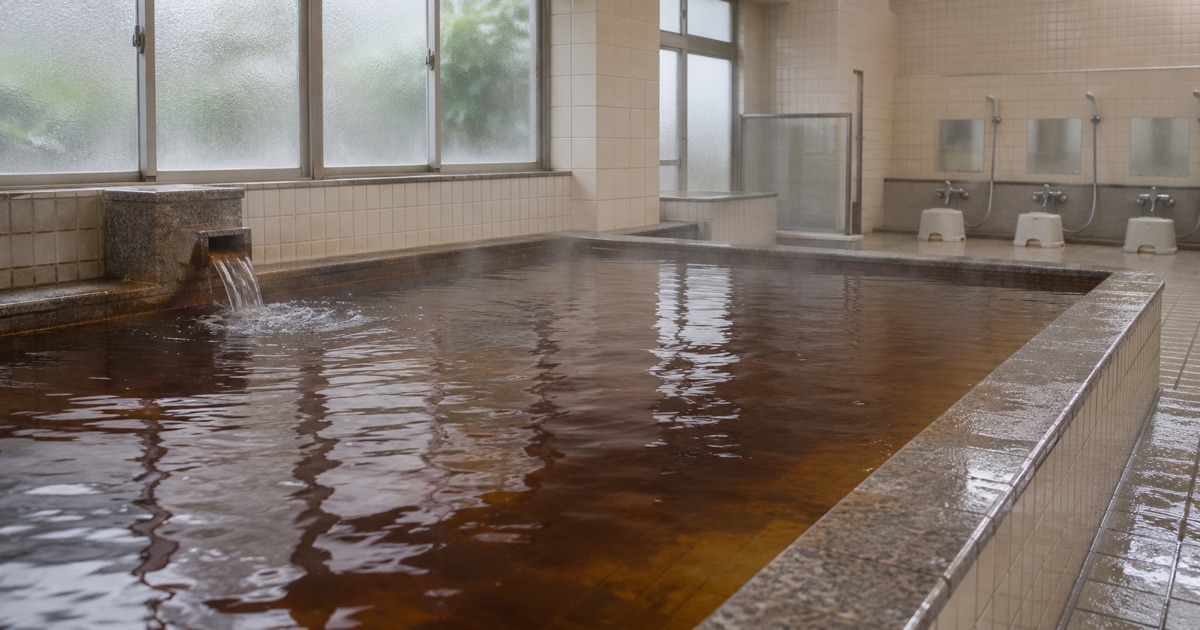
Unzen is the best-known onsen town accessible from Nagasaki. The area is famous for its steaming volcanic vents, known as "jigoku" (hell), where sulfurous steam rises visibly from the ground near the town center. The onsen water here is distinctly sulfuric, which gives it a strong, recognizable smell that many visitors find memorable.
How to get there: From Nagasaki Station, the typical route involves a direct or connecting highway bus to Unzen, with a total journey of roughly 1.5 to 2 hours depending on the service and traffic. Schedules and routes can change, so check current bus information before your trip, ideally a day or two in advance.
What's there: Unzen has a cluster of ryokan (traditional inns) and some day-use bathing facilities. Many ryokan welcome day visitors for a fee, allowing you to use their baths without staying overnight, though this depends entirely on the individual property's policy. Walking around the jigoku area itself is free and worth doing even if you don't bathe.
Good to know: Because the water is sulfuric, some people notice it can be slightly harsh on jewelry (silver especially can tarnish). Remove accessories before bathing as a precaution. Bring a small towel for washing and drying, and expect strong sulfur smell to linger faintly on skin and hair for a while afterward—this is normal and not a sign of anything wrong.

We are working to carry Japanese craft and everyday culture beyond Japan, by building Japan Towns with local partners.
Read the Japan Town plan →Option 2: Obama Onsen (小浜温泉)
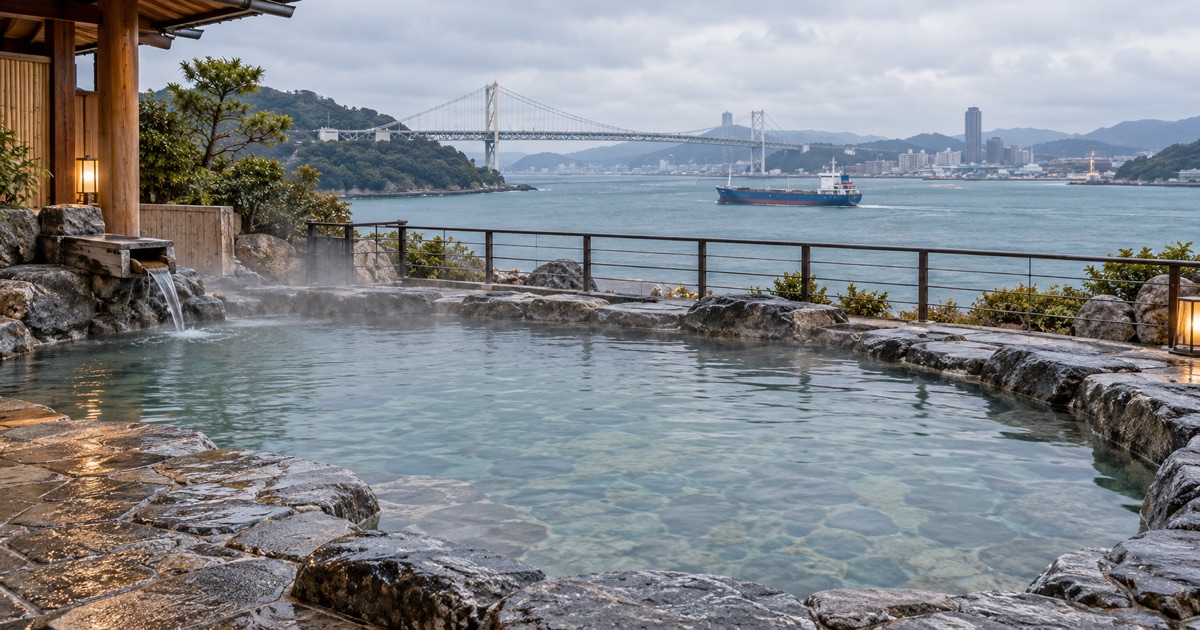
Obama Onsen sits on the coast of the Shimabara Peninsula and is known for having some of the hottest spring water temperatures in Japan at its source, though facilities dilute and manage this to safe bathing temperatures. It has a more relaxed, seaside atmosphere compared to the volcanic drama of Unzen.
How to get there: Obama is typically reached by bus from Nagasaki or via a transfer through Isahaya, with total travel time also landing in the 1.5 to 2 hour range. Again, confirm current bus schedules before departing, since rural bus services can run less frequently than city routes.
What's there: The town has foot baths (ashiyu) along the waterfront that are free and open to casual visitors, which is a good way to experience the hot spring without committing to a full bath. Some ryokan and day-use facilities also offer regular bathing for a fee.
Option 3: Hotel Baths Near Nagasaki Station
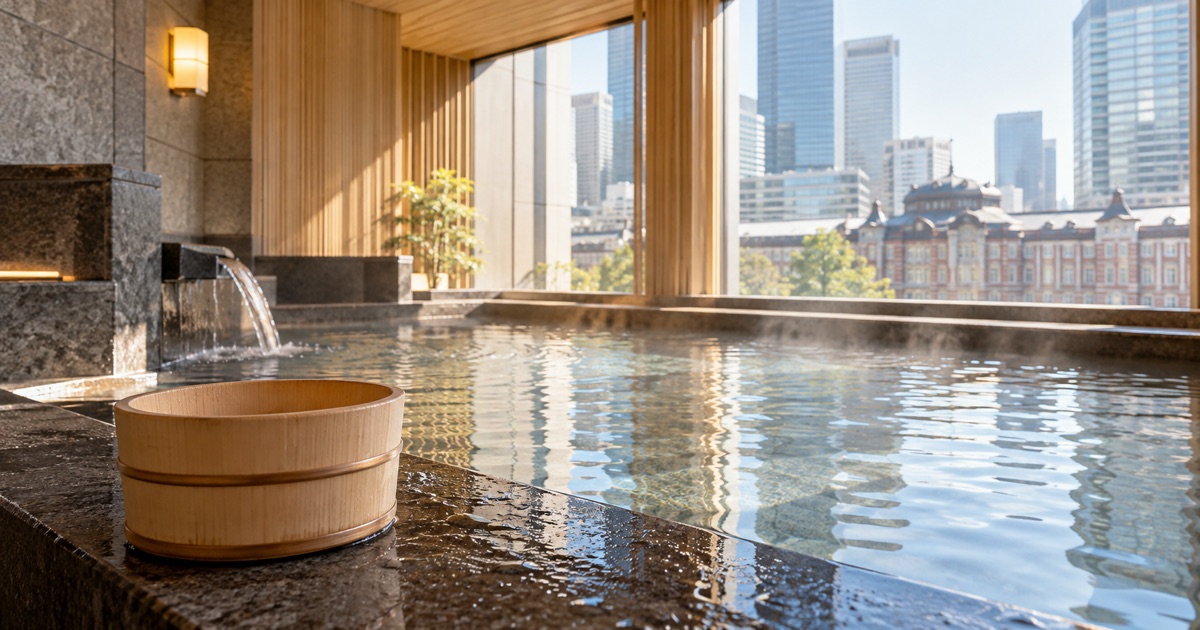
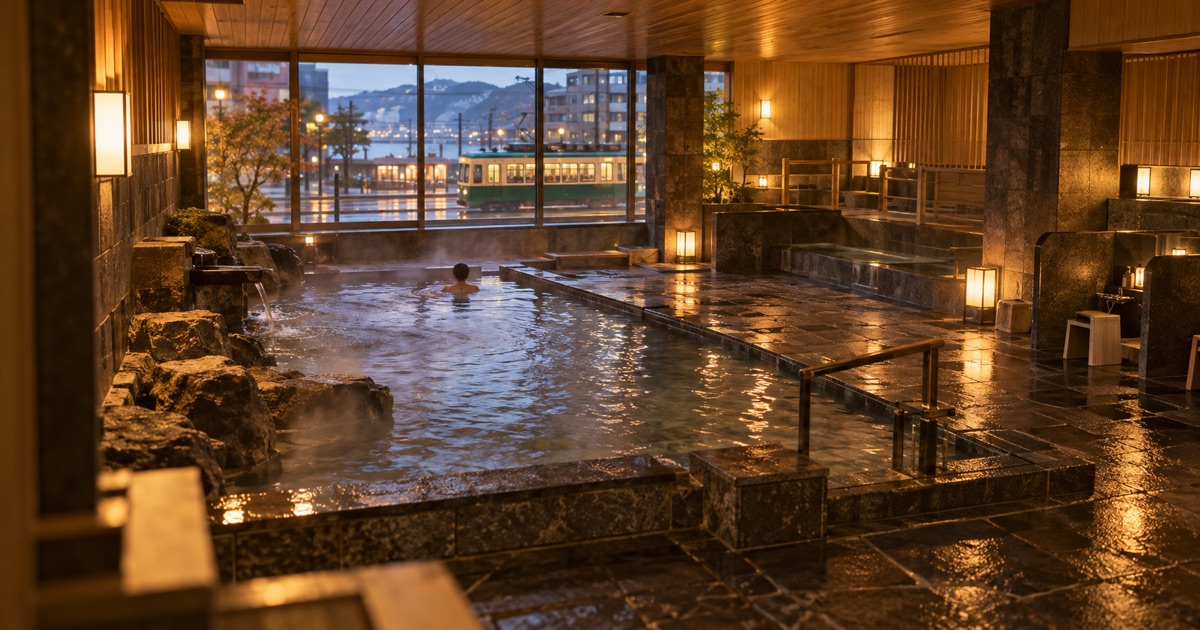
If a trip to Unzen or Obama doesn't fit your schedule, some hotels near Nagasaki Station advertise large communal baths. These vary widely: some genuinely pipe in natural hot spring water, while others heat regular tap water or add mineral bath salts to recreate a similar feel. Neither is inherently better, but they are different, and the distinction matters if a genuine hot spring experience is specifically what you're after.
Always check the hotel's own website or ask at check-in whether the bath uses natural "onsen" water (温泉) or is a standard large bath (大浴場). The Japanese word "onsen" legally refers to water meeting certain mineral and temperature standards drawn from an underground source, so hotels using real onsen water will usually state this clearly.
Practical Tips for First-Time Visitors
What to Bring
- A small towel for washing (often available to buy or rent on-site, but bringing your own is a safe backup)
- A larger towel for drying off, if the facility doesn't provide one
- Any hair ties, as long hair should generally be kept out of the water
- Coins or small cash, since smaller rural facilities may not accept cards
Common Mistakes to Avoid
Don't assume every "onsen" sign near the station means a natural hot spring; many are simply bathhouses or hotel spa facilities. Don't skip the pre-bath shower, since washing thoroughly before entering a shared bath is standard etiquette across Japan. Don't rush an Unzen or Obama day trip without checking return bus times first, as rural services can be infrequent, especially in the evening.
Tattoos and Bathing Policies
Policies on visible tattoos vary significantly by facility in this region, just as elsewhere in Japan. Some ryokan and public baths still restrict guests with tattoos, while others are more relaxed or offer private bathing options. If this applies to you, check the specific facility's own website in advance or contact them directly rather than assuming either way.
Planning Your Trip
For train travel to and around Nagasaki, the JR Kyushu network covers the main regional routes, while Nagasaki Station itself connects to local buses heading toward Unzen and the Shimabara Peninsula. For broader travel planning and official regional information, the Japan National Tourism Organization is a reliable starting point.
Given the travel time involved, many visitors find it more relaxing to treat Unzen as an overnight stop rather than a rushed day trip, especially if arriving in Nagasaki already tired from other travel. Whichever option you choose, confirm current transport schedules and facility opening times close to your travel date, since these details can and do change.
FAQ
- Q. Is there an onsen inside Nagasaki Station itself?
- A. No. Nagasaki Station has shops, restaurants and a hotel complex nearby, but no natural hot spring bath on-site; the nearest real onsen towns are an hour or more away by bus or train.
- Q. Can I visit Unzen Onsen as a day trip from Nagasaki Station?
- A. Yes, it's possible as a long day trip using a direct or connecting bus, but many visitors prefer an overnight stay to relax without rushing the return journey.
- Q. Do I need to bring my own towel to these onsen?
- A. Small hand towels are often sold or rented at the entrance, but bringing your own travel towel is a sensible backup, especially for simpler day-use facilities.
Cite or share this article
Copy the link below. If you quote this article, please link to this page as the source.