Onsen Near Shinjuku Station: Best Options for a Soak in Tokyo
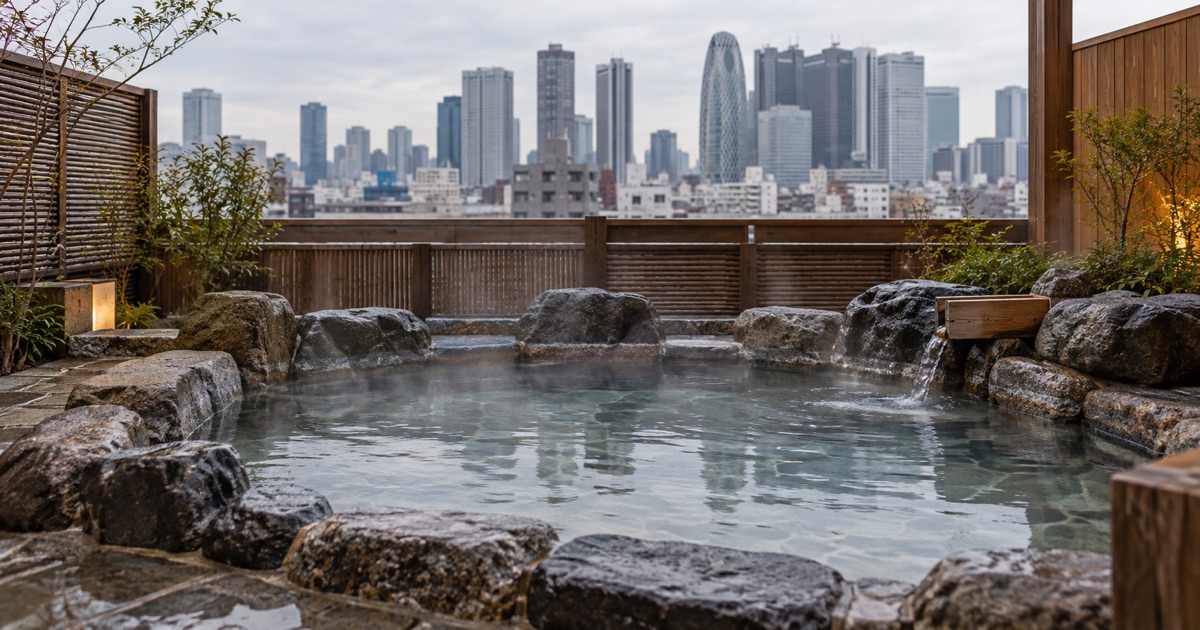
Key takeaways
- Shinjuku itself has few true natural hot springs, but day-use onsen facilities using genuine onsen water exist within a short train ride.
- Budget roughly half a day (2-4 hours) including travel, bathing, and resting if you want a relaxed, unrushed visit.
Is There an Onsen Near Shinjuku Station?
Shinjuku Station itself has no hot spring bath, but genuine onsen facilities and onsen-style bathing complexes are reachable within roughly 15 to 40 minutes by train or a short walk from the station. For visitors who can't travel out to a dedicated onsen town like Hakone or Kusatsu, this makes Shinjuku a realistic base for a half-day soak without a long trip.
Tokyo sits on some natural hot spring sources, and a handful of bathhouses in and around the city pump up real onsen water, sometimes blended with heated tap water to maintain volume and temperature. Others are "super sento," large bathing complexes with saunas, multiple tub types, and sometimes outdoor baths, but using artificial or municipal water rather than a natural spring. Both can make for a good soak, but if having genuine onsen water matters to you, it's worth checking each facility's own website before you go, since claims and water sources vary and change over time.
What Counts as a "Real" Onsen in This Area
In Japan, the word onsen has a legal definition tied to water temperature and mineral content at the source, set out in national regulations. A facility can only call itself an onsen if it meets this standard, though it may still supplement natural flow with heated water on busy days. Facilities calling themselves "spa" or "sento" are not required to meet this standard at all.
Because Shinjuku is deep in central Tokyo, true natural hot spring sources are less common here than in places like Hakone (箱根) or the Izu Peninsula (伊豆半島), both reachable from Tokyo but requiring an hour or more of travel. If your main goal is simply a hot bath with Japanese bathing culture and etiquette, a well-run day-use facility near Shinjuku will usually deliver that experience even if the water isn't drawn from a deep natural source.
We are working to carry Japanese craft and everyday culture beyond Japan, by building Japan Towns with local partners.
Read the Japan Town plan →Getting There From Shinjuku Station
Shinjuku Station is one of the busiest rail hubs in the world, served by JR East lines including the Yamanote, Chuo, and Saikyo lines, plus several private railways and the Tokyo Metro. Because the station is large and exits are numerous, the single biggest mistake visitors make is underestimating how long it takes just to find the right exit—build in an extra 10 to 15 minutes for this alone, especially on a first visit.
Before heading out, it helps to:
- Confirm which exit your destination facility recommends, since Shinjuku Station has exits spread across a wide area.
- Check the facility's access page for the nearest station if it isn't Shinjuku itself, as some reachable bathhouses sit near neighbouring stations one or two stops away.
- Allow for the fact that travel times given online are often door-to-door estimates from the nearest station exit, not from deep inside Shinjuku Station's concourse.
A suica or Pasmo IC card, usable across JR, subway, and most private rail lines in Tokyo, makes transferring between lines far smoother than buying individual paper tickets, and is worth getting on arrival if you don't already have one on your phone.
What to Expect at a Day-Use Onsen or Sento
Most day-use bathing facilities near Shinjuku follow a similar basic structure, though details vary:
- Pay an entry fee at a front counter or vending-machine ticket system, generally somewhere in the range of ¥1,000 to ¥3,000 depending on the facility and any sauna or extra bathing areas included.
- Separate into gender-divided locker rooms; nearly all onsen and sento in Japan are single-sex bathing spaces.
- Undress fully in the locker area—swimwear is not worn in the baths themselves at the vast majority of facilities.
- Wash thoroughly while seated at a shower station before entering any shared tub.
- Enter the baths quietly, keeping your small towel out of the water (most people fold it and place it on their head or beside the tub).
- Rest, rehydrate, and get dressed again before heading back out.
Bring a small towel for washing yourself and a larger one for drying off, although many facilities also rent or sell both if you forget. Carrying some cash is a good idea too, since not every machine or till accepts foreign cards.
Tattoos and Who Can't Bathe
Tattoo policies differ significantly from one facility to another in Tokyo. Some welcome visitors with tattoos outright, some ask that small tattoos be covered with a waterproof sticker or patch, and others still decline entry to anyone with visible tattoos. There's no single rule across the city, so if you have tattoos, check the specific facility's website or contact them directly before visiting rather than assuming either way.
People with certain skin conditions, open wounds, or who are heavily intoxicated are commonly asked not to enter shared baths, largely out of consideration for other bathers and hygiene rather than any claim about bathing itself. If you're pregnant, unwell, or managing a medical condition, it's sensible to check with the facility and, if in doubt, with a doctor before bathing.
Planning a Half-Day Visit
A realistic plan for a first-time visitor without a packed itinerary might look like this:
- Allow 20-30 minutes to get from central Shinjuku to the facility, including finding the right station exit.
- Plan for 1.5 to 2.5 hours inside for bathing, saunas if available, and resting between soaks.
- Add 20-30 minutes afterward if the facility has a rest area, restaurant, or lounge where many visitors linger after bathing.
Altogether, this comes to roughly half a day, which fits comfortably into a Tokyo itinerary as either a relaxing morning before sightseeing or a way to unwind in the evening. Avoid visiting right after a large meal or after drinking heavily, and try not to rush between stations—Shinjuku's scale catches out even repeat visitors.
Before You Go
Opening hours, entry fees, and tattoo or age policies at any given facility can change without much notice, and some bathhouses close periodically for maintenance or renovation. Always check a facility's own official website shortly before your visit rather than relying on older reviews or guidebooks. For general travel planning around Tokyo and wider Japan, the Japan National Tourism Organization is a reliable starting point for transport updates, seasonal events, and practical visitor information.
FAQ
- Q. Is there a real onsen inside Shinjuku Station itself?
- A. No. Shinjuku Station has no bathing facility on-site; any onsen or onsen-style bath will require a short walk or train ride from one of the station's exits.
- Q. What's the difference between an "onsen" and a "sento" near Shinjuku?
- A. An onsen uses natural hot spring water that meets Japan's legal mineral and temperature standards, while a sento typically uses heated tap water; some Tokyo facilities blend both, so check each one's own description.
- Q. Do I need to bring anything with me?
- A. Bring a small towel for washing and a larger one for drying off, though many facilities rent or sell both; also bring cash in case card payment isn't accepted everywhere.
Cite or share this article
Copy the link below. If you quote this article, please link to this page as the source.