Best Onsen Near Nagano City: Top Hot Spring Towns
Key takeaways
- Nagano City connects to several premier hot spring towns within a 30- to 60-minute train or bus ride.
- Shibu Onsen and Yudanaka Onsen offer historic bathhouse culture near the famous Snow Monkey Park.
- Day trips or overnight stays are accessible via local private railways and regional JR lines.
The best onsen near Nagano City include historic hot spring towns like Shibu Onsen, Yudanaka Onsen, Togura Kamiyamada Onsen, and the elevated baths of Yamada Onsen. Most of these destinations sit within 30 to 60 minutes of central Nagano by direct train or local bus, making them ideal for both day trips and overnight ryokan stays.
Nagano City serves as the primary transportation hub of the northern Shinshu region. While the city itself is famous for the ancient Zenko-ji (善光寺) temple, the volcanic mountains surrounding the basin hold dozens of distinct mineral springs. For travellers who do not speak or read Japanese, navigating these valleys is straightforward once you know which transit lines to take and what bathhouse customs to expect.
Top Onsen Towns Accessible from Nagano City
Shibu Onsen (渋温泉) and Yudanaka Onsen (湯田中温泉)
Located in the town of Yamanouchi northeast of Nagano City, Yudanaka and Shibu form a continuous corridor of geothermal activity. Yudanaka serves as the railhead, while Shibu sits just upstream along the Yokokawa River.
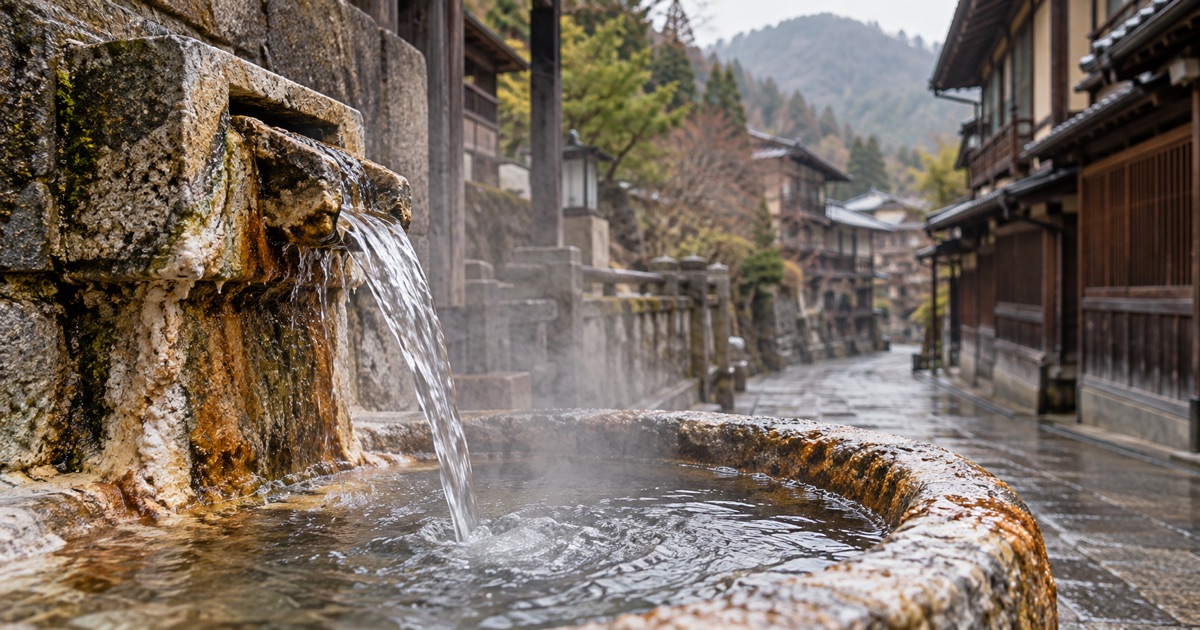
Shibu Onsen is famous for its cobblestone lanes lined with multi-storey wooden inns dating from the Meiji and Taisho eras. The town features nine historic communal bathhouses, known as the sotoyu (外湯). Guests staying overnight at an affiliated local ryokan receive a master wooden key that unlocks all nine baths. If you visit only for the day, the ninth and largest bathhouse, the Shibu Oyu (渋大湯), is generally open to non-staying day visitors for a small fee purchased at the local tourist information center.
Yudanaka Onsen features a mix of modern hotels, traditional inns, and public footbaths (ashi-yu) near the station. It is slightly more spacious and offers practical convenience for those who want quick rail access back to Nagano. Both towns are also the primary staging ground for visitors heading to the Jigokudani Monkey Park, where wild Japanese macaques bathe in geothermal pools.
How to get there:
From Nagano Station (長野駅), head to the underground platforms of the Nagano Electric Railway (Nagaden). Board the Snow Monkey Express train directly to Yudanaka Station (湯田中駅). The train ride takes roughly 45 to 50 minutes. To reach Shibu Onsen, catch a local bus from outside Yudanaka Station for roughly 5 to 10 minutes, or walk uphill along the river for about 25 minutes.
Togura Kamiyamada Onsen (戸倉上山田温泉)
Situated south of Nagano City along the Chikuma River, Togura Kamiyamada developed in the late 19th century as a post-pilgrimage retreat for visitors to Zenko-ji. It is characterized by its wide streets, retro Showa-era charm, and a high concentration of public bathhouses with clear, sulfur-rich mineral water.
Unlike the tight pedestrian alleys of Shibu, Togura Kamiyamada feels more like a lived-in riverside town. It offers numerous day-use onsen facilities (higaeri onsen) and welcoming footbaths scattered across town parks. Many ryokan here offer affordable day-use bathing plans during specific afternoon windows.
How to get there:
Take the local Shinano Railway line south from Nagano Station to Togura Station (戸倉駅). The journey takes roughly 25 to 30 minutes. From Togura Station, Togura Kamiyamada Onsen is a 5- to 10-minute taxi ride or roughly a 25-minute walk across the bridge. Check national train routes and connections via Japan National Tourism Organization.
Yamada Onsen (山田温泉) in Takayama Village
For visitors looking for alpine scenery away from train lines, Yamada Onsen sits inside the Matsukawa Gorge in Takayama Village (高山村). The town centerpiece is Oyu (大湯), a communal bathhouse built in traditional wooden architectural style with high ceilings that allow steam to escape into the cool mountain air.
The water here is naturally hot and has a cloudy, mineral-rich appearance. The village is quiet, surrounded by forested valley walls that turn vibrant red and gold in autumn and accumulate heavy snow in winter.
How to get there:
Take the Nagano Electric Railway from Nagano Station to Suzaka Station (須坂駅), which takes about 25 minutes. From Suzaka Station, transfer to a local Nagaden bus bound for Yamada Onsen, which takes roughly 35 to 45 minutes winding up the gorge.
Practical Steps for Day-Use Visitors
Visiting a Japanese public bathhouse or ryokan bath for the day is simple if you follow standard procedures.
- Purchasing Admission: Look for the ticket vending machine (kenbaiki) near the entryway or pay directly at the front desk (front or chuban). Day-use fees generally range from around 300 yen to 1,000 yen depending on whether it is a municipal bath or a private luxury hotel.
- Shoes Off: Remove your outdoor footwear at the entry step (genkan) and place them into the provided shoe lockers or shelves before stepping onto the raised floor.
- Gender Separation: Look for the curtain dividers (noren) leading to the changing rooms. Red, pink, or curtains displaying the character 女 indicate the women's section; blue or curtains displaying the character 男 indicate the men's section.
- Disrobe Completely: Swimsuits are not allowed. In the changing area, place all clothing, watches, and large items into a locker or basket. Take only your small modesty towel into the bathing room.
- Wash Before Soaking: Always sit down at a washing stall and scrub thoroughly before entering the hot spring water. Rinse all soap away completely. The pool water is strictly for resting and soaking, not for cleaning.
- Keep Towels Out of Water: Do not let your modesty towel touch the bathwater. Rest it on your head or place it on the rock edge outside the pool.
- Dry Off Before Entering Changing Area: Use your damp small towel to wring out and wipe your skin before stepping back onto the woven tatami or vinyl floors of the locker room.

We are working to carry Japanese craft and everyday culture beyond Japan, by building Japan Towns with local partners.
Read the Japan Town plan →Packing Essentials and What to Rent
Most Japanese public baths keep amenities basic. While higher-end ryokan provide free toiletries, neighbourhood public baths often charge separately for basic items.
- Towels: Bring your own small hand towel and a larger bath towel. You can purchase small washcloth-sized towels at the front counter of almost any facility for roughly 200 to 400 yen, which often feature the bathhouse logo as a souvenir. Bath towel rentals generally cost around 200 to 500 yen.
- Soap and Shampoo: Luxury ryokan provide high-grade shampoo, conditioner, and body wash at every stall. Basic communal baths (sotoyu) frequently provide none. Keep travel-sized bottles in your day bag if you plan to visit historic public baths.
- Cash (Coins and Small Notes): Many rural bathhouse ticket machines, lockers, and hair dryers require 100-yen coins. Digital payments like credit cards or IC transit cards are rarely accepted at small village baths.
Key Transit Tips from Nagano Station
Nagano Station is served by the Hokuriku Shinkansen operated by JR East, linking it to Tokyo in under 90 minutes. However, the hot spring towns immediately surrounding Nagano City are largely served by non-JR regional transport.
- Nagano Electric Railway (Nagaden): This private railway operates lines running northeast to Suzaka, Obuse, and Yudanaka. Note that national Japan Rail passes do not cover Nagaden trains; you must purchase a separate local ticket or a regional excursion pass at the Nagaden customer desk.
- Shinano Railway: Runs south towards Togura, Ueda, and Karuizawa. This line is also independent of the main JR network, though certain regional joint passes may cover parts of it.
- Bus Timetables: Mountain buses connecting train stations to remote villages run less frequently than city transport. Buses may only run once per hour or every two hours outside peak commuting times. Always verify the return bus departure times posted at the bus shelter when you arrive at your destination.
Tattoo Policies and Private Bath Alternatives
Hot spring facilities across Nagano manage body art under different operating rules. Municipal and historical bathhouses in places like Shibu Onsen are often unstaffed, with no strict restrictions on tattoos. However, many larger resort hotels and traditional ryokan still maintain rules against visible tattoos in shared communal pools.
If you have tattoos, check the policy on the specific facility’s official website beforehand. If a facility does not allow visible tattoos, you have several reliable solutions:
- Waterproof Patches: If your tattoos are small, you can cover them with waterproof flesh-coloured tape purchased at Japanese pharmacies or convenience stores.
- Private Baths (Kashikiri-buro): Many ryokan allow non-staying daytime guests to book a private bath for 40 to 60 minutes for a separate fee, typically ranging from roughly 2,000 yen to 4,000 yen. These baths are rented by individuals, couples, or families, providing total privacy with no tattoo restrictions.
- Rooms with Attached Open-Air Baths (Rotenburo-tsuki Kyakushitsu): For an overnight stay, reserving a room that includes its own private outdoor hot spring bath gives you unrestricted access to thermal water throughout your stay.
FAQ
- Q. Can I visit an onsen near Nagano City as a day trip?
- A. Yes, towns like Yudanaka, Shibu, and Togura Kamiyamada have public baths and day-use ryokan welcoming visitors.
- Q. How do I get to Shibu Onsen from Nagano Station?
- A. Take the Nagano Electric Railway train to Yudanaka Station, then take a local bus or taxi for roughly ten minutes.
- Q. Are tattoos allowed in hot springs near Nagano?
- A. Policies vary by facility. Some public bathhouses allow them, while traditional ryokan may require private bath rentals.
Cite or share this article
Copy the link below. If you quote this article, please link to this page as the source.