Best Onsen Near Niigata City: Top Hot Springs & Day Trips
Key takeaways
- Tsukioka and Iwamuro Onsen are reachable within 40 to 60 minutes from Niigata Station by public transit or car.
- Day-use bath fees typically range from 600 to 1,500 yen per person, though hours and policies change often.
- Bring your own small towel or buy one on site, as basic day-use admissions rarely include bath towels.
The best hot springs near Niigata City include Tsukioka Onsen, Iwamuro Onsen, and Yahiko Onsen, all located within a 40- to 60-minute journey from Niigata Station. Whether you want an easy afternoon soak or an overnight ryokan stay, these coastal and foothill hot spring towns provide authentic mineral baths close to the prefecture's main transit hub.
Niigata Prefecture is renowned across Japan for its heavy winter snow, premium rice, and dry sake. Beyond food and winter sports, its geological landscape feeds several historic geothermal spring clusters just outside urban Niigata.
Top Hot Spring Towns Near Niigata City
Tsukioka Onsen (月岡温泉)
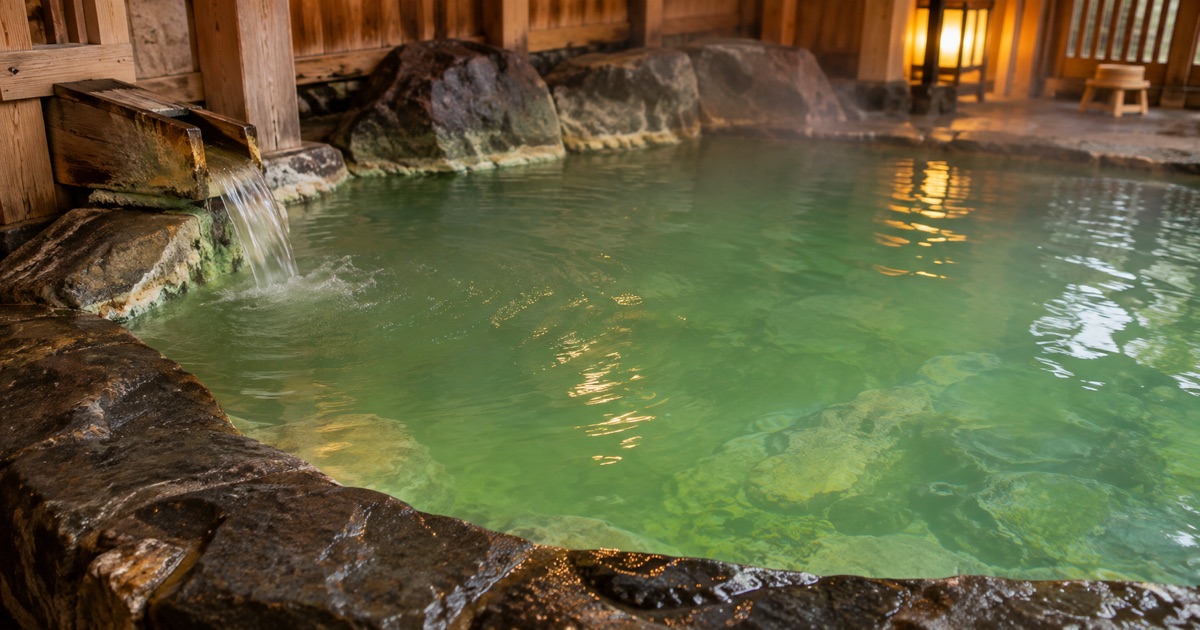
Tsukioka Onsen is situated northeast of Niigata City in Shibata (新発田市). It is famous across Japan for its emerald-green water, which is naturally rich in sulfur. When light hits the communal baths, the water displays a distinct jade hue, accompanied by a noticeable mineral aroma.
- Travel Time: Roughly 40 to 50 minutes. Take the JR Hakushin Line from Niigata Station to Toyosaka Station (about 20 minutes), then board a local shuttle bus or take a 20-minute taxi ride to the onsen town.
- Atmosphere: A walkable, lively resort village filled with traditional ryokan, footbaths (ashiyu), and local specialty shops offering sake tastings and rice crackers.
- Day-Use Soak: Several ryokan open their baths to non-staying guests for daytime hours, alongside public communal bathhouses like Hoju-no-Yu (ほうじゅの湯). Day admission generally ranges from 600 to 1,000 yen.
Iwamuro Onsen (岩室温泉)
Located southwest of Niigata City in Nishikan Ward, Iwamuro Onsen is a quiet, historic spa town with over 300 years of recorded history. It historically served as a resting stop for pilgrims visiting nearby Yahiko Shrine. The water here is clear to slightly milky, containing sulfur and sodium chloride.
- Travel Time: Around 50 minutes. Take the JR Echigo Line from Niigata Station to Iwamuro Station, followed by an 8- to 10-minute bus or taxi ride.
- Atmosphere: Much quieter than Tsukioka, Iwamuro is characterized by refined wooden inns, geisha traditions, and peaceful residential lanes.
- Day-Use Soak: Public facilities such as Yumotoya and community centers offer drop-in baths. Entry fees typically fall between 700 and 1,200 yen.
Yahiko Onsen (弥彦温泉)
Adjacent to Iwamuro, Yahiko Onsen sits at the base of sacred Mount Yahiko. It surrounds Yahiko Shrine (弥彦神社), one of the oldest and most revered Shinto shrines in the region. Combining a shrine visit, a ride on the Mount Yahiko Ropeway, and an afternoon bath is one of the most popular regional day outings.
- Travel Time: Approximately 60 minutes. Ride the JR Echigo Line to Yoshida Station, transfer to the JR Yahiko Line, and get off at Yahiko Station.
- Atmosphere: Historic, forested, and spiritual. Many hot spring baths here feature forest or mountain views.
- Day-Use Soak: Day baths are available at local inns and day facilities like Sakuan (さくらの湯). Expect fees around 800 to 1,500 yen depending on towel rentals and facility scale.
How to Plan a Day Soak: Practical Steps
Visiting a Japanese onsen for the first time is straightforward once you know the basic rhythm.
- Confirm Daytime Hours: Most traditional inns (ryokan) prioritize overnight guests. Their day-use bath hours (higaeri nyukoku, 日帰り入浴) are often restricted to a narrow window, frequently between 11:00 and 15:00. Always check the individual property’s official website or inquire locally before making the trip.
- Buy Your Ticket: At the reception desk, ask for "higaeri nyuyoku." You will pay the entrance fee by cash or credit card (cash remains standard at older bathhouses).
- Handle Footwear: Remove your shoes at the entrance (genkan) or at the locker area, placing them into the provided shoe cubbies.
- Enter the Correct Changing Room: Onsen are separated by gender. Look for the cloth curtains (noren) at the entrance: typically red or pink for women (女) and blue for men (男).
We are working to carry Japanese craft and everyday culture beyond Japan, by building Japan Towns with local partners.
Read the Japan Town plan →What to Bring and What to Leave Behind
Day-use hot springs provide the basics, but preparation makes the visit smoother.
- Small Modesty Towel (Tenugui): Bring a small washcloth. You use this to wash before entering the water and to dry off slightly before returning to the changing area. You can buy these at the front desk for around 150 to 300 yen.
- Bath Towel: Ryokan rarely include large bath towels with basic day admission. Bring your own, or pay an additional rental fee (usually 200 to 400 yen).
- Coins: Locker facilities often require a 100-yen coin for lockers, which is typically refunded when you unlock the door.
- Soap and Shampoo: Body soap, shampoo, and conditioner are nearly always provided free of charge at the washing stations, though simple municipal baths may require you to bring your own.
- Valuables: Keep expensive jewelry at your hotel. Sulfur-rich mineral water—especially in Tsukioka—causes silver to tarnish instantly.
Essential Bathing Etiquette
Public bathing rules are designed to keep the communal water pristine:
- Wash thoroughly before soaking: Sit down at the wash stations and wash your entire body with soap before entering the bath.
- Keep towels out of the water: Never let your washcloth touch the bathwater. Rest it on your head, place it on the rock edge, or leave it on the shelf.
- Tie up long hair: Hair should be tied with a band or kept above the water line.
- No clothes or swimsuits: Soaking is done completely naked.
- Dry off before entering the carpeted changing area: Use your small damp towel to wipe down your torso and limbs before stepping onto the mats in the changing room to prevent slips.
Tattoo Policies
Hot spring facilities in Niigata maintain varying policies regarding tattoos. Because onsen in rural and mid-sized prefectures cater primarily to domestic travelers, many inns maintain strict bans on visible body art in shared communal baths.
If you have tattoos:
- Check the facility rules online: Do not assume a property allows body ink. Look for explicit English or Japanese policies on their website.
- Use waterproof adhesive covers: If your tattoos are small, covering them with waterproof seals or athletic tape is acceptable at many locations.
- Book a private bath (kashikiri-buro, 貸切風呂): Many ryokan in Tsukioka and Iwamuro offer family baths that you can rent for 45 to 60 minutes for a modest fee (typically 1,500 to 3,500 yen above normal admission). In a private bath, tattoos are entirely unrestricted.
Getting Around from Niigata Station
Public transportation connects Niigata Station to regional hubs efficiently. You can plan transit routes using services provided by JR East.
- Train Travel: The JR Hakushin Line and JR Echigo Line run regularly from Niigata Station. Pay using an IC transport card (such as Suica) or purchase paper tickets at station kiosks.
- Taxis and Shuttles: Rural stations such as Iwamuro or Toyosaka have taxi stands outside the main gates. If taking a bus, confirm return schedules upon arrival, as rural buses may run only once an hour or less outside peak commute times.
- Car Rental: For travelers looking to combine hot springs with coastal scenic drives or visits to Yahiko Shrine, renting a car near Niigata Station provides maximum flexibility.
For broader regional travel updates and visitor passes across Japan, refer to the Japan National Tourism Organization. Always verify operating times and day-use access directly with individual facilities before traveling, as schedules, maintenance days, and admission prices change periodically.
FAQ
- Q. Can you do a day trip to an onsen from Niigata Station?
- A. Yes. Towns like Iwamuro, Yahiko, and Tsukioka are roughly 40 to 60 minutes away by local train, bus, or taxi.
- Q. Are tattoos allowed in hot springs around Niigata?
- A. Policies vary significantly by facility. Many traditional ryokan require covering tattoos, while others offer private rental baths.
- Q. Do onsen in the Niigata area provide towels?
- A. High-end ryokan provide towels for overnight guests, but day-use visitors generally must bring their own or purchase a small hand towel at the desk.
Cite or share this article
Copy the link below. If you quote this article, please link to this page as the source.