Chiba Onsen Guide: Best Coastal Baths Near Tokyo
Key takeaways
- Chiba offers scenic coastal hot springs across the Boso Peninsula, easily reached from Tokyo by limited express trains.
- Day-use bath facilities near Narita Airport and Makuhari provide quick access before flights or after trade shows.
- Spring water in Chiba varies from amber plant-rich moor baths to mineral-heavy sea-salt hot springs.
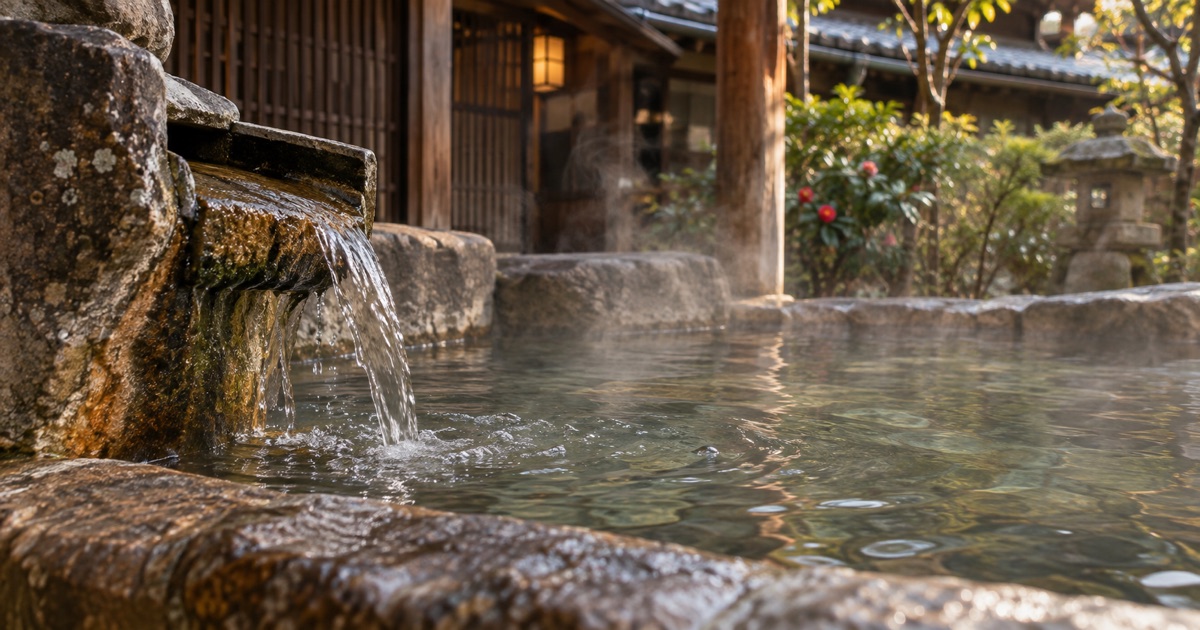
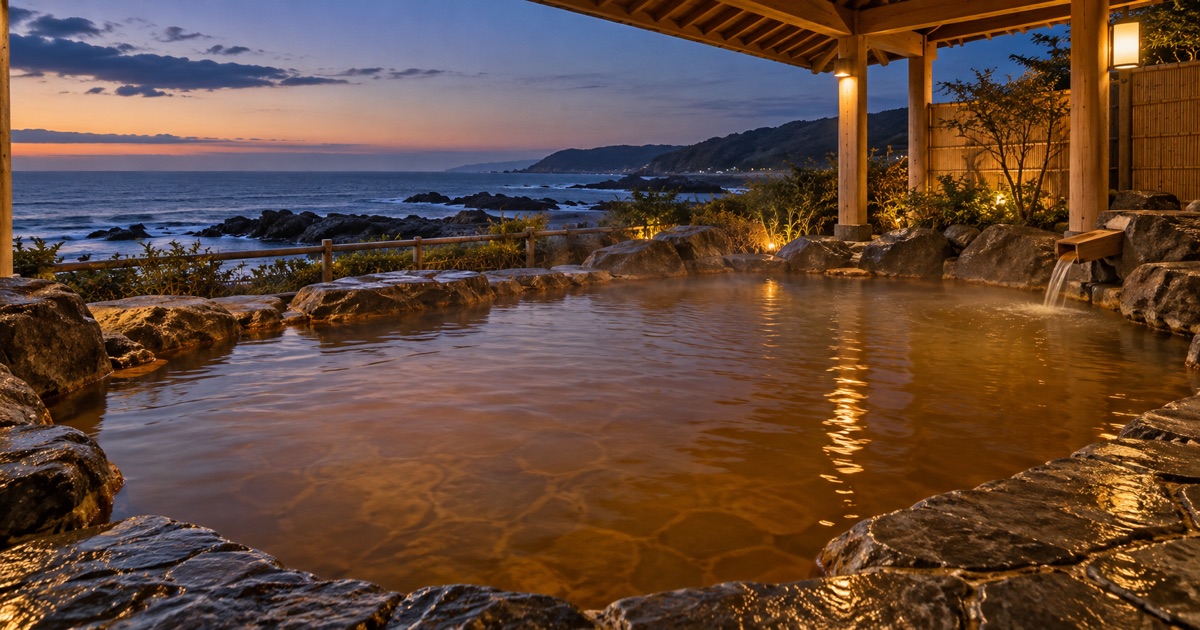
Chiba onsen resorts offer tranquil coastal bathing, dense forest retreats, and convenient thermal baths located just outside Tokyo. While often overlooked in favor of Hakone or Gunma, the hot springs across the Boso Peninsula (房総半島) feature distinctive amber-tinted waters, dramatic Pacific Ocean views, and quick transit connections from central Tokyo and Narita International Airport.
Whether you have a long transit layover or want a weekend coastal getaway, exploring the thermal baths of Chiba Prefecture (千葉県) provides a distinct alternative to inland mountain springs.
Understanding Chiba Hot Springs
Chiba is bordered by Tokyo Bay to the west and the open Pacific Ocean to the south and east. Because the Boso Peninsula sits along oceanic fault lines, its hot spring waters often draw from deep geothermal reserves or ancient fossil seawater.
Many baths feature kuroyu (黒湯), literally "black water." This water gets its amber or tea-colored hue from ancient decomposed plant matter (humic acid) buried deep underground. Other facilities along the coast draw natural saltwater springs that retain ambient warmth.
Unlike classic alpine onsen villages with steaming cobblestone alleys, Chiba's bath scene is dispersed. You will find standalone modern day-use complexes (super sento), secluded valley hideaways, and high-end oceanfront ryokan (traditional inns).
Top Onsen Destinations in Chiba
The Boso Peninsula splits naturally into distinct regions, each offering unique bathing environments.
Minamiboso and Shirahama (南房総・白浜)
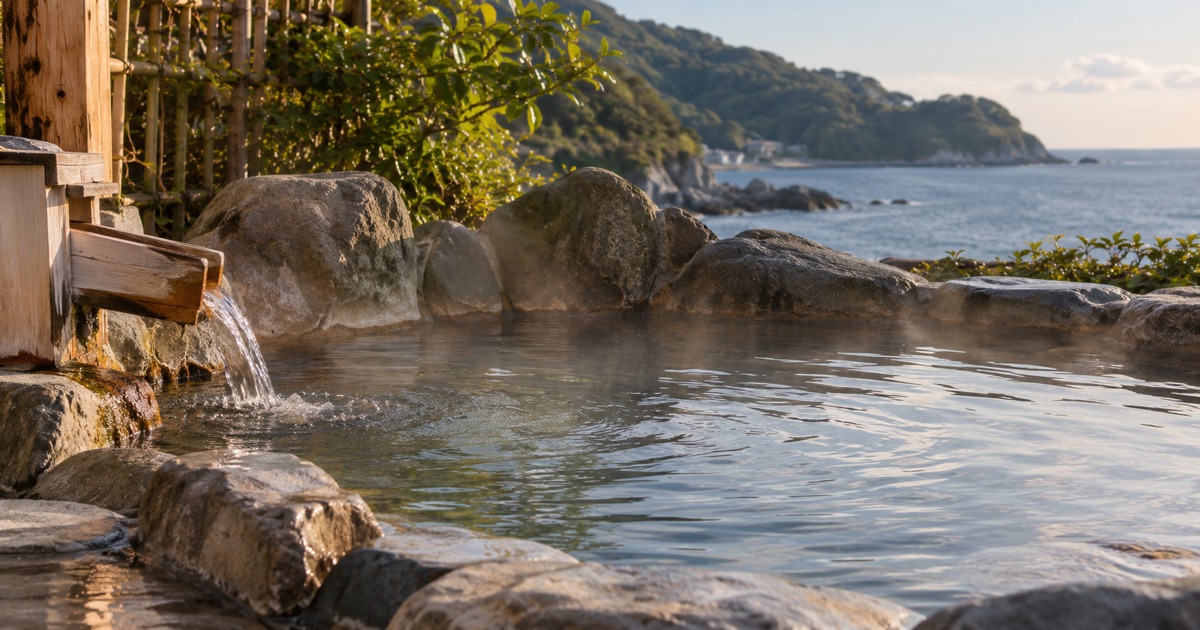
Located at the southern tip of the peninsula, Minamiboso offers wide ocean horizons. Bathing in an open-air bath (rotenburo) here lets you look directly out over the Pacific.
- Transit time: Roughly 2 to 2.5 hours from Tokyo Station via the JR Uchibo Line (内房線) or highway express buses.
- Atmosphere: Relaxed, coastal, and dominated by seaside ryokan and seafood markets.
Kamogawa (鴨川)
Situated on the southeastern Pacific coast, Kamogawa pairs natural thermal springs with dramatic rocky shores. Many waterfront hotels operate rooftop baths where you can watch the sunrise over the ocean.
- Transit time: Around 2 hours from Tokyo Station on the JR Wakashio Limited Express (わかしお).
- Atmosphere: Resort-oriented, active, and popular with domestic coastal vacationers.
Yoro Ravine (養老渓谷 / Yoro Keikoku)
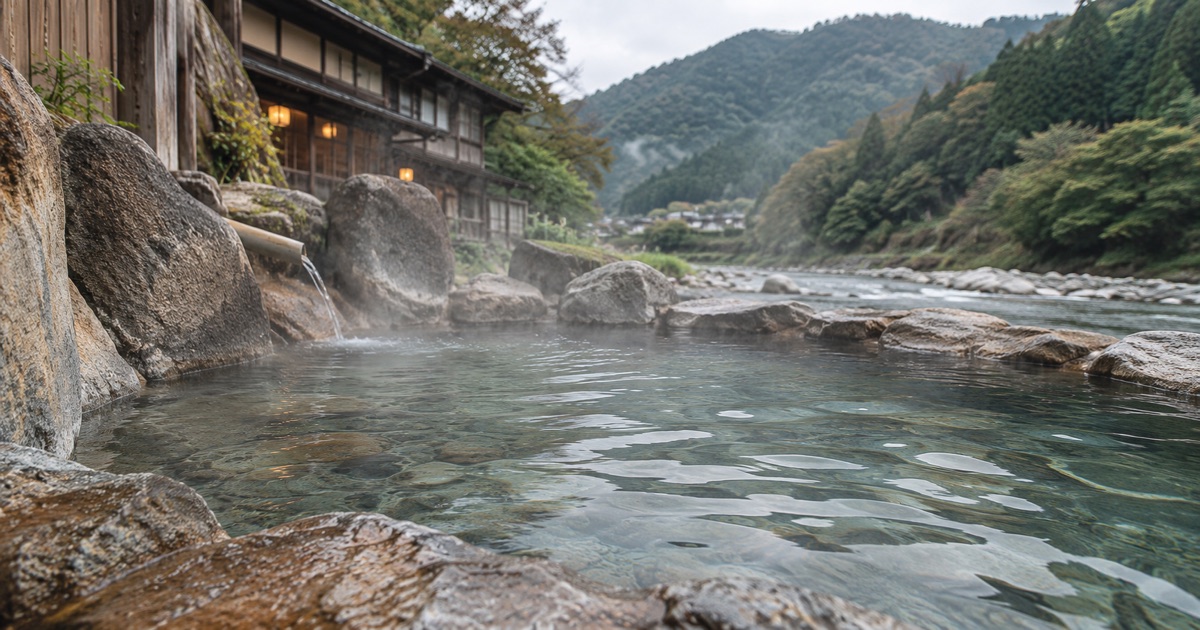
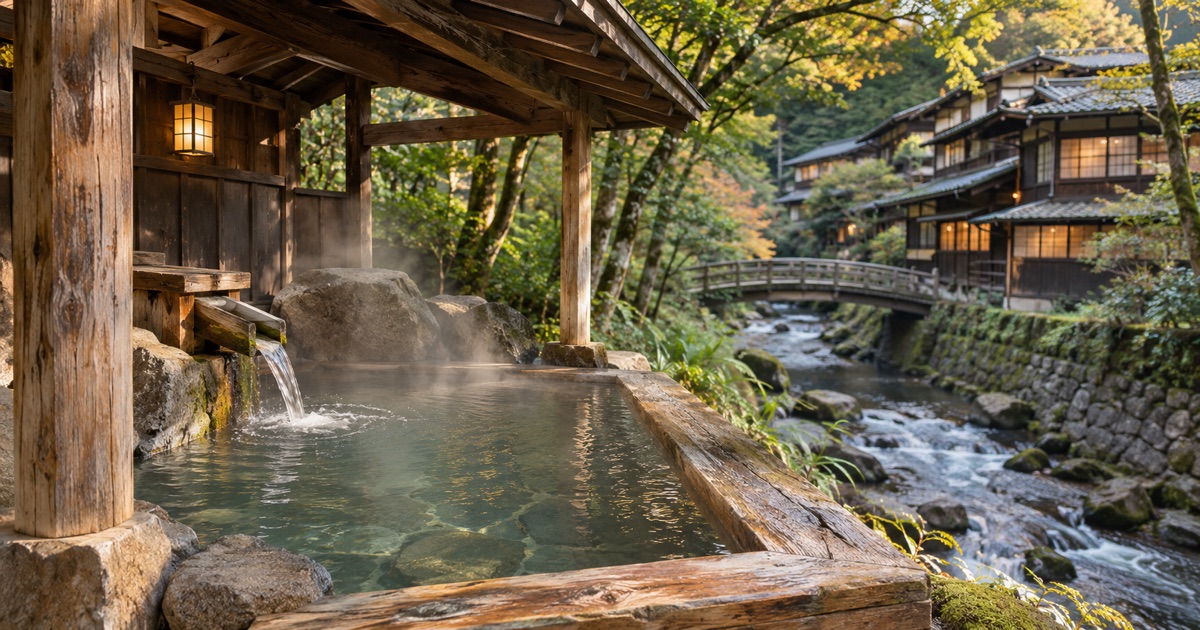
For a mountain retreat without leaving Chiba, Yoro Ravine offers dense woodlands, waterfalls, and traditional riverside ryokan. The hot springs here are famous for their dark amber kuroyu water.
- Transit time: Approximately 2 hours from Tokyo. Take the JR Uchibo Line to Goi Station, then transfer to the local, scenic Kominato Railway (小湊鐵道).
- Atmosphere: Forested, peaceful, and particularly striking during autumn foliage season.
Inubosaki and Choshi (犬吠埼・銚子)
Perched on the easternmost edge of the Kanto Plain, Cape Inubo (犬吠埼) is home to several panoramic onsen hotels perched on coastal cliffs. It is famous as one of the earliest places on the Japanese mainland to see the morning sun.
- Transit time: Roughly 2 to 2.5 hours from Tokyo Station via the JR Shiosai Limited Express (しおさい).
- Atmosphere: Rugged, maritime, and centered around a working fishing port.
Narita and Makuhari Day Springs
If your schedule is tight, several large day-use facilities operate around Narita International Airport and Kaihimmakuhari Station. These complexes offer natural hot spring baths, sauna complexes, and relaxation lounges where you can unwind before a long-haul flight.
- Transit time: Around 30 to 45 minutes from central Tokyo or a short shuttle ride from airport terminals.
- Atmosphere: Modern, practical, and family-friendly.
We are working to carry Japanese craft and everyday culture beyond Japan, by building Japan Towns with local partners.
Read the Japan Town plan →How to Get to Chiba Onsen
Reaching Chiba from Tokyo is straightforward thanks to extensive rail and highway networks.
- By JR Limited Express: Board the Wakashio, Sazanami, or Shiosai trains from Tokyo Station. These express routes connect directly to coastal hubs like Awa-Kamogawa, Tateyama, and Choshi without requiring transfers.
- By Highway Bus: Express buses depart frequently from the Tokyo Station Yaesu exits and the Shinjuku Expressway Bus Terminal (Busta Shinjuku). Buses travel across the Tokyo Bay Aqua-Line—an underwater tunnel and bridge system—reaching Kisarazu and southern Boso quickly.
- By Rental Car: Driving gives you the greatest freedom to reach tucked-away onsen inns in the central hills. Crossing the Aqua-Line brings you directly from Kanagawa or southern Tokyo into Chiba.
To check regional rail passes, train schedules, and seat reservations, visit the official JR East portal. For broader regional itineraries, refer to the Japan National Tourism Organization.
First-Time Etiquette and Rules
Japanese hot spring customs are based on shared hygiene and mutual consideration. The process is simple once you know the steps:
- Footwear off: Remove your shoes at the entrance and place them in the provided lockers or shoe shelves.
- Separation by gender: Walk through the correct curtain (noren). Red or pink typically indicates the women's bath (女), while blue indicates the men's bath (男).
- Undress completely: Remove all clothing, including swimwear and underwear, in the changing room. Place your belongings in a locker or basket.
- Wash before entering: Always sit at a washing station to clean your body thoroughly before stepping into any communal pool. Rinse away all soap suds.
- Keep towels out of the water: You may carry a small modesty towel into the bathing area, but do not submerge it in the spring water. Rest it on your head or place it on the side of the tub.
- Dry off before returning: Use your small washcloth to wipe excess moisture off your body before stepping back onto the changing room mats.
Tattoo Policies in Chiba
Tattoo acceptance varies significantly depending on the venue. Many traditional Japanese baths and public day spas maintain strict bans on visible body art due to historical associations with organized crime.
- Day-use super sento: Large chain facilities often enforce strict no-tattoo rules at the front desk.
- Small patches: If you have small, discreet tattoos, many facilities permit entry if you cover them completely with waterproof skin-toned adhesive patches.
- Private baths (kashikiri): If you have extensive body art, booking a private family bath (kashikiri-furo) or a ryokan room with an attached open-air bath (rotenburo-tsuki kyakushitsu) allows you to soak comfortably without restrictions.
Policies can change without notice, so verify current rules directly on the individual facility's official website prior to your arrival.
What to Bring and Cost Expectations
Packing for a Japanese bath is minimal because most facilities provide basic toiletries.
- Small face towel and bath towel: Ryokan provide these in your room. Day-use facilities often charge a small rental fee (roughly 200 to 500 yen), or you can bring your own.
- Coin for lockers: Keep a 100-yen coin handy. Many shoe and changing lockers require a refundable coin deposit.
- Hydration: Bring a water bottle or purchase water and tea from the vending machines inside the lounge after your bath.
Typical Cost Ranges:
- Public day-use baths: Admission generally ranges from 700 to 2,000 yen per adult, depending on amenities and weekend surcharges.
- Private bath rentals: Expect to pay roughly 2,000 to 4,500 yen per hour on top of standard admission.
- Overnight ryokan stays: Rates typically run from 15,000 to 40,000 yen per person per night, usually inclusive of multi-course evening and morning meals.
Rates, seasonal opening hours, and shuttle schedules can shift throughout the year. Always review the official website of your chosen destination before departing to ensure smooth travels across the Boso coast.
FAQ
- Q. Can I visit an onsen in Chiba as a day trip from Tokyo?
- A. Yes, many seaside towns like Kisarazu, Kamogawa, and Tateyama can be reached in 60 to 120 minutes from Tokyo Station.
- Q. Are tattoos allowed in Chiba hot springs?
- A. Policies vary by facility. Some traditional baths prohibit visible ink, while others allow waterproof patch covers or private rentals.
- Q. What makes Chiba onsen water unique?
- A. Many facilities feature amber-tinted moor water rich in ancient plant organic matter, or highly concentrated mineral-rich saltwater springs.
Cite or share this article
Copy the link below. If you quote this article, please link to this page as the source.