Hot Springs Near Okayama: Best Onsen Day Trips & Towns
Key takeaways
- Okayama's top hot springs center on the Mimasaka region: Yubara, Yunogo, and Okutsu Onsen.
- Express buses and JR trains connect Okayama Station to nearby thermal towns in 60 to 120 minutes.
- Most traditional baths require full nudity; tattoo policies vary widely, so verify before visiting.
The best hot springs near Okayama are located in northern Okayama Prefecture within the historic Mimasaka region (美作), alongside select options near the Kurashiki canal area. Travelers can reach premier thermal towns like Yubara Onsen (湯原温泉) and Yunogo Onsen (湯郷温泉) in approximately 70 to 120 minutes from Okayama Station (岡山駅) using regional trains or express highway buses.
Okayama City serves as a major railway hub in western Japan, famous for Korakuen Garden and its bullet train connections. Taking time to venture into the forested mountains of the prefecture reveals classical riverside bathhouses, quiet ryokan inns, and thermal waters that have welcomed travelers for over a millennium.
The Mimasaka Three: Okayama's Premier Onsen Trio
Northern Okayama boasts three celebrated hot spring towns, collectively known as the "Mimasaka Santo" (美作三湯). Each town offers a distinct atmosphere, ranging from rugged mountain riverbeds to historic therapeutic retreats.
1. Yubara Onsen (湯原温泉)
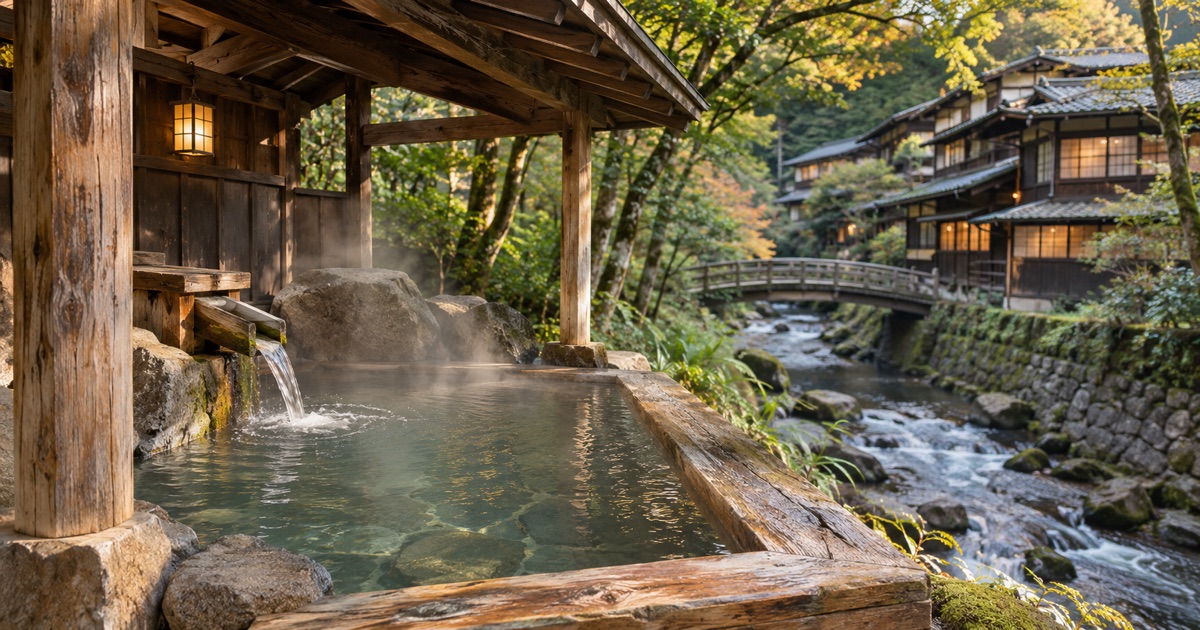
Located in the city of Maniwa (真庭市) along the Asahi River (旭川), Yubara Onsen is best known for Sunayu (砂湯). This famous outdoor bath sits directly at the base of the massive Yubara Dam. Thermal water bubbles up naturally through the gravel bed of the river, creating a dramatic, open-air bathing environment.
Sunayu is a mixed-gender bath (konyoku, 混浴). Unlike most traditional Japanese hot springs, female bathers may wear special rental bathing dresses, and men often use modesty towels. The bath is completely outdoors, free of charge, and open around the clock, though maintenance closures can occur.
Beyond Sunayu, Yubara features traditional ryokan and standard gender-separated public bathhouses, such as Yumoto Onsenkan (湯本温泉館), which offer indoor washing stations, warm indoor tubs, and sauna facilities.
- Transit time: Roughly 2 hours from Okayama Station via highway bus, or via train to JR Chugoku-Katsuyama Station (中国勝山駅) followed by a local bus.
2. Yunogo Onsen (湯郷温泉)
Yunogo Onsen is nestled in the foothills of Mimasaka City. Legend states that a Buddhist monk named Ennin discovered the spring over 1,200 years ago after noticing an injured white heron soothing its wing in the steaming marshland.
Yunogo caters well to day-trippers. The town is compact and flat, making it easy to stroll between hot springs, footbaths (ashiyu, 足湯), and small local toy and music box museums. The primary municipal bathhouse, Yunogo Sagisoyu (湯郷鷺温泉館), provides spacious indoor baths, open-air rock pools (rotenburo, 露天風呂), and private family baths available for hourly rental.
- Transit time: Roughly 70 to 90 minutes from Okayama Station by direct highway bus, or via train on the JR Tsuyama Line to Tsuyama Station (津山駅) with a local bus connection.
3. Okutsu Onsen (奥津温泉)
Situated deep along the scenic Okutsu Gorge (奥津渓) in Kagamino Town, Okutsu Onsen provides a tranquil, rustic experience. The town is historic and famous for "Ashibumi Sentaku" (足踏み洗濯), an ancient custom where local women washed laundry in the river pools by stomping on clothes to protect themselves from bears and wolves. Demonstrations of this practice still take place on select mornings from spring through autumn.
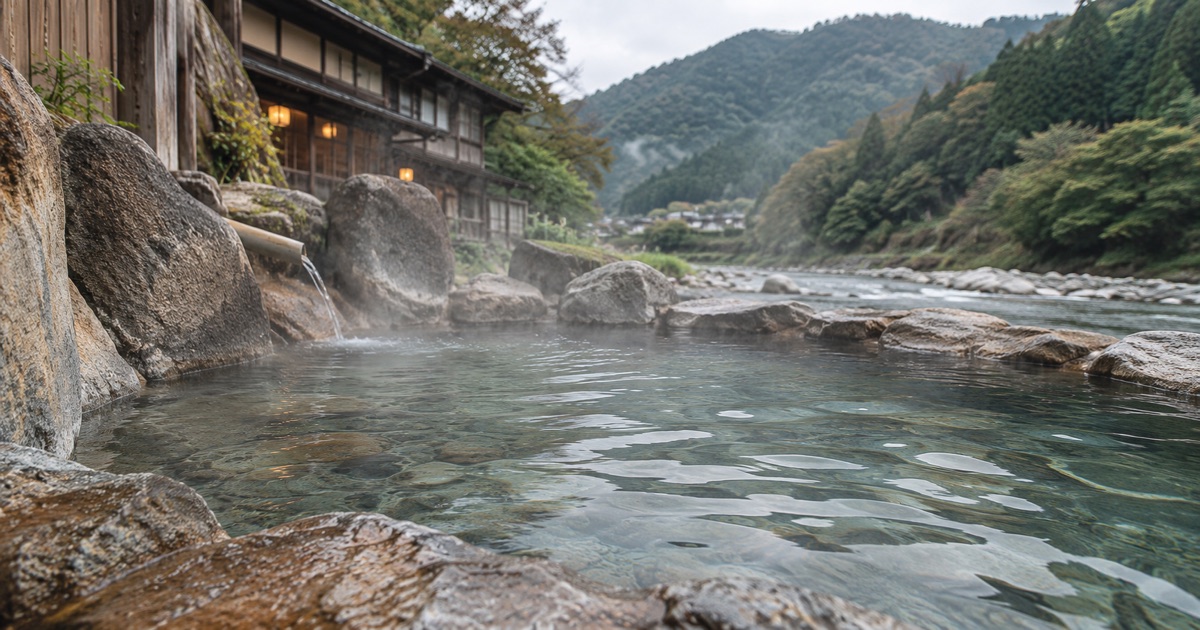
Okutsu's bathhouses sit directly beside the mountain stream. Facilities like Okutsu Onsen Hanabijin-no-Sato (花美人里) feature wooden interiors, expansive communal baths, and views of the surrounding cedar forests.
- Transit time: Roughly 2 hours from Okayama Station, requiring a train to JR Tsuyama Station followed by a regional bus into the valley.
Coastal and Urban Bathing Alternatives
Travelers with tighter itineraries do not need to travel into the northern mountains to enjoy thermal baths near Okayama.
Washu Highland and Kojima (鷲羽山・児島)
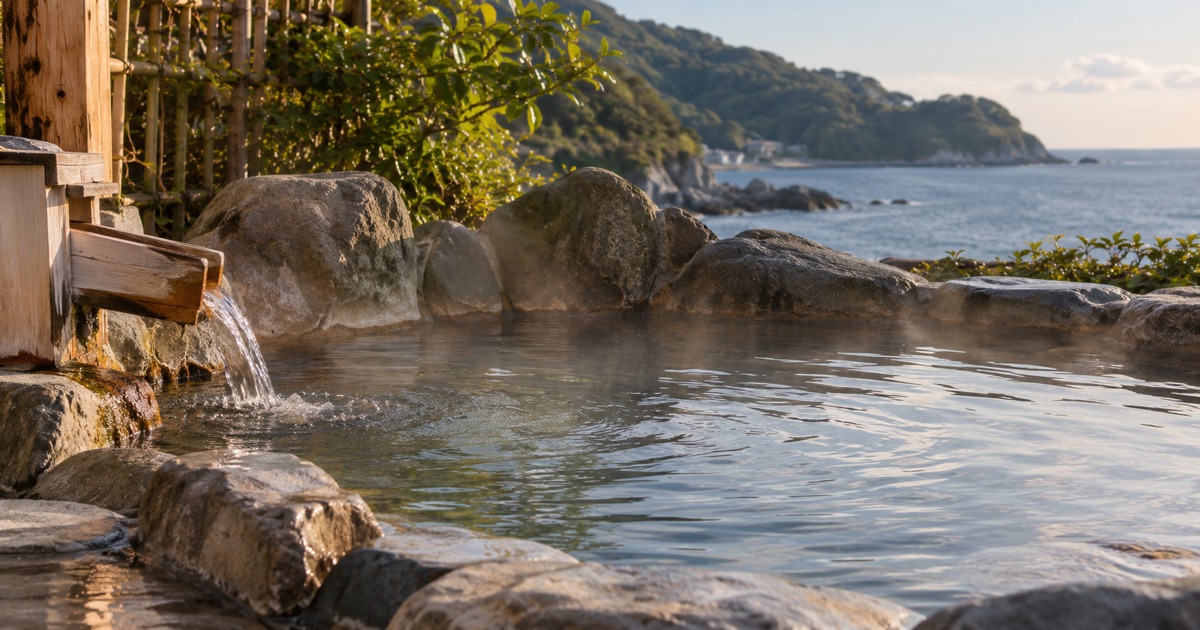
South of Okayama City, along the coast of the Seto Inland Sea, several modern ryokan and resort hotels operate seaside onsen baths. Facilities in the Kurashiki Kojima area feature elevated outdoor baths overlooking the Great Seto Bridge (Seto Ohashi) and the dotted islands of the inland sea. While not a classic walking town like Yubara, the coastal panorama pairs well with day trips to the Kurashiki Bikan Historical Quarter.
- Transit time: Roughly 30 to 40 minutes from Okayama Station to JR Kojima Station via the JR Seto-Ohashi Line, followed by a short taxi or hotel shuttle ride.
We are working to carry Japanese craft and everyday culture beyond Japan, by building Japan Towns with local partners.
Read the Japan Town plan →How to Plan Transit from Okayama Station
Public transportation in rural Okayama requires forward planning. Trains and rural buses run infrequently compared to urban transit in Tokyo or Osaka.
Train and Bus Routes
- To Yubara: Board a direct Chutetsu Bus from the Okayama Station bus terminal heading toward Katsuyama and Yubara Onsen. Alternatively, take the JR Tsuyama Line from Okayama to Tsuyama, transfer to the JR Kishin Line to Chugoku-Katsuyama, and board a Maniwa Community Bus to Yubara.
- To Yunogo: Take a direct Uno Bus from Okayama Station heading toward Hayashino Station (林野駅) or Yunogo Onsen. Alternatively, take the train to Tsuyama Station and transfer to an outward bus.
When booking rail connections, consult the official website of JR West for current timetables and pass coverage. Many regional rail passes, like the Kansai WIDE Area Pass, cover the train lines to Tsuyama, but do not cover municipal highway buses.
Connections between trains and rural buses can be tight. Avoid schedules that allow under 20 minutes for transfers at rural hubs like Tsuyama or Chugoku-Katsuyama, as bus stops are sometimes located outside the station plaza and ticket purchasing requires extra time. Always carry cash, as small local buses in northern Okayama may not accept nationwide IC cards (such as Suica or Icoca).
For general travel assistance and regional bus schedule translations, visit the Okayama Station Tourist Information Center near the central ticket gates or check tourist resources through the Japan National Tourism Organization.
Onsen Etiquette for First-Time Visitors
Public hot spring bathing in Japan follows established customs to keep shared water clean.
- Wash thoroughly before entering the water: Every facility provides low stools, shower heads, shampoo, and body wash. Wash and rinse completely before stepping into any soaking tub.
- No swimwear in standard baths: With rare exceptions like the open-air Sunayu in Yubara, traditional hot springs require total nudity. Swimsuits, underwear, and shoes are strictly forbidden in the water.
- Keep towels out of the water: You may carry a small modesty washcloth to the bathing area, but it must not touch the bathwater. Place it on your head, set it on a dry rock along the edge, or leave it on the wash counter.
- Tie up long hair: Hair should be tied up above the shoulders using a hair tie or wrapped in a towel so it does not soak in the communal water.
- Dry off before returning to the changing area: Use your small washcloth to wring off excess water before walking onto the dry mats of the changing room.
What to Bring
Most commercial day-use facilities (higaeri onsen, 日帰り温泉) provide basic body soap and shampoo. However, smaller community bathhouses operate minimally:
- Two towels: Bring one small washcloth for washing and modest cover, and one large bath towel to dry off. Facilities sell small towels for around 200 to 400 yen and rent larger towels, but bringing your own saves money.
- Coins (100 yen): Many shoe lockers and locker-room storage cubbies require a 100-yen coin deposit, which is refunded when you unlock the door.
- Drinking water: Soaking in hot thermal water causes perspiration. Carry a bottle of water to rehydrate before and after bathing.
- A plastic bag: Keep wet towels separated from the dry clothes inside your daypack.
Tattoo Policies and Private Baths
Bathing policies regarding body art vary across Okayama Prefecture. Historically, visible tattoos have been widely banned in Japanese public hot springs due to traditional associations with organized crime.
In municipal bathhouses and standard ryokan public baths around Yunogo, Okutsu, and Yubara, individuals with large, visible tattoos may be turned away. Smaller tattoos can occasionally be covered with waterproof seal patches or flesh-colored bandages purchased at local pharmacies.
If you have extensive tattoos, book a ryokan with a private bath (kashikiri-buro, 貸切風呂) or an in-room bath (rotenburo-tsuki kyakushitsu, 露天風呂付き客室). Many facilities in Yunogo Onsen rent private family baths by the hour to day-use guests without inquiring about tattoos. Because policies differ across facilities and can change without notice, always verify bathing rules directly on the facility's official website prior to your arrival.
FAQ
- Q. What is the most famous hot spring area near Okayama?
- A. The Mimasaka region (美作) features the "Three Hot Springs of Mimasaka": Yubara Onsen, Yunogo Onsen, and Okutsu Onsen, all located in northern Okayama Prefecture.
- Q. Can I visit hot springs near Okayama as a day trip?
- A. Yes, Yunogo Onsen and Yubara Onsen are accessible by highway bus or train from Okayama Station within roughly 70 to 120 minutes each way.
- Q. Are tattoos allowed in hot springs around Okayama?
- A. Public communal baths often prohibit visible tattoos, though policies vary by facility. Travelers with tattoos should consider renting a private bath (kashikiri-buro) or staying in a room with an attached bath.
Cite or share this article
Copy the link below. If you quote this article, please link to this page as the source.