Kagoshima Onsen Guide: Sand Baths, Volcanoes, and Day Trips
Key takeaways
- Kagoshima offers diverse onsen experiences, from coastal naturally heated sand baths in Ibusuki to forested mountain springs in Kirishima.
- Most day-use baths cost between 300 and 1,200 JPY, with coin lockers requiring a 100 JPY coin that is usually returned after use.
- Public transit via JR Kyushu trains and local buses reaches major hubs, but rental cars offer far more flexibility in remote areas.
Kagoshima onsen resorts are among the most volcanically diverse hot spring destinations in Japan, offering everything from black-sand beach steam baths to mineral-rich mountain soaks beneath active craters. Located at the southern tip of Kyushu, the prefecture sits atop intense geothermal activity driven by Mount Sakurajima (桜島) and the Kirishima mountain range, creating distinct hot spring hubs suitable for both overnight stays and easy day trips.
For international travelers planning their first visit, Kagoshima presents a unique landscape. Navigating the region requires understanding regional transport, facility customs, and the practical differences between seaside sand baths and high-altitude forest pools.
Major Onsen Regions in Kagoshima
Kagoshima Prefecture spans a large geographical footprint, and its hot springs cluster into three primary zones. Each area features distinct mineral profiles, scenery, and logistics.
Ibusuki: The Coastal Sand Baths
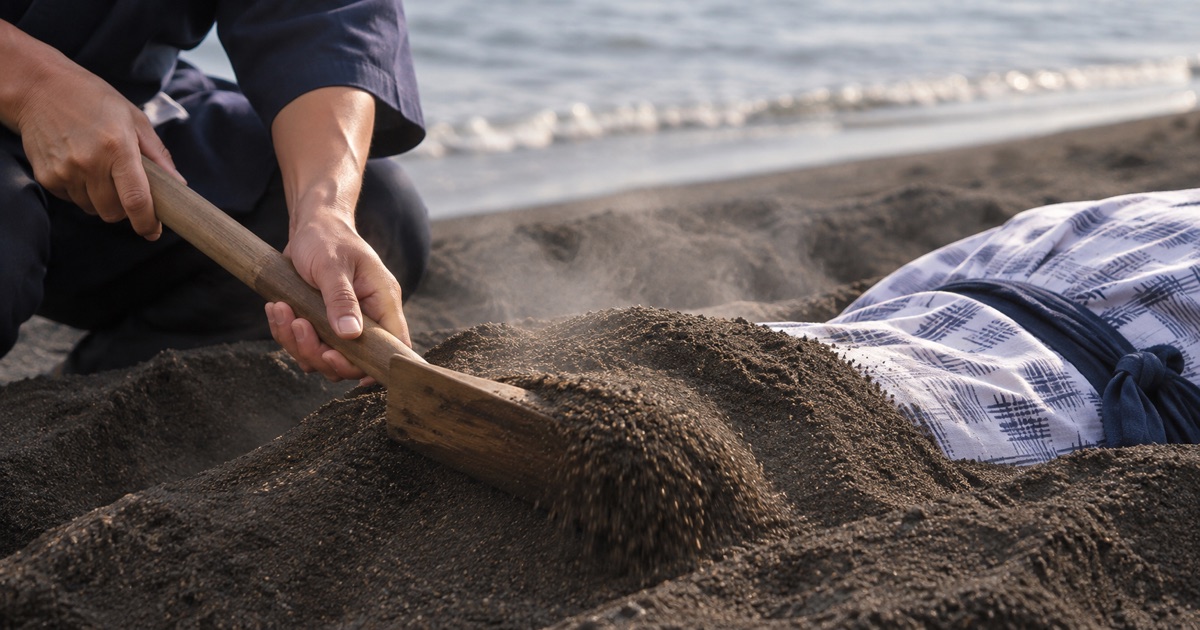
Situated roughly one hour south of Kagoshima City at the tip of the Satsuma Peninsula, Ibusuki (指宿) is world-famous for sunamushi onsen (砂むし温泉)—natural hot sand baths. Geothermal water flows beneath the beach, heating the black volcanic sand along the shore.
Rather than soaking directly in water, visitors lie down on the beach and are buried up to their necks in warm sand. The weight and temperature induce intense perspiration within minutes. After the sand session, bathers rinse off the grit and transition into standard indoor thermal baths within the same complex.
- Atmosphere: Relaxed, coastal, and resort-oriented.
- Water Type: Saline and chloride-rich springs combined with dry, thermally heated sand.
- Top Hub: The coastal strip around Ibusuki Station (指宿駅) and Yamakawa (山川).
Kirishima: Mountain Forests and Sulfur Springs
Kirishima (霧島) sits in the northeastern volcanic highlands bordering Miyazaki Prefecture. This area features elevated onsen villages nestled in cedar and pine forests, ancient Shinto shrines, and active volcanic vents venting steam into the cool mountain air.
The springs here are grouped into several historic hamlets, including Kirishima Onsenkyo (霧島温泉郷) and Myoken Onsen (妙見温泉). Kirishima is famous for its milky, sulfurous waters and rustic wooden bathhouses that contrast sharply with the seaside setting of Ibusuki.
- Atmosphere: High-altitude, tranquil, traditional, and forest-bound.
- Water Type: Sulfuric, acidic, and milky-white waters with a distinctive mineral scent.
- Top Hub: Maruo Onsen (丸尾温泉) serves as the main transit and lodging intersection.
Kagoshima City: Urban Public Baths and Sakurajima Views
Unlike many Japanese prefectural capitals where hot springs require an excursion into rural valleys, Kagoshima City (鹿児島市) boasts hundreds of genuine onsen wells within its city limits. Even modest neighborhood bathhouses (sento) in downtown commercial districts often pump mineral water directly from the ground.
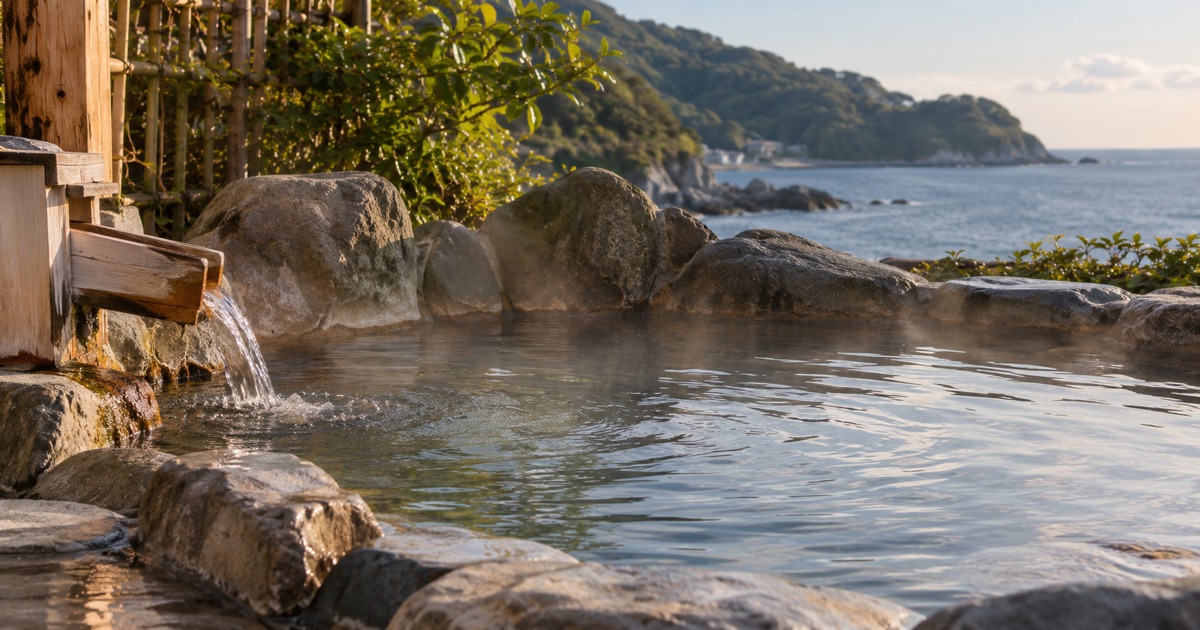
Several waterfront hotels and public facilities on both sides of Kagoshima Bay (Kinko Bay) provide open-air pools (rotenburo) with panoramic views of Mount Sakurajima puffing steam across the water.
How to Experience an Ibusuki Sand Bath: Step by Step
Sand baths operate differently from standard Japanese communal baths. Knowing the sequence beforehand eliminates confusion at the reception desk.
- Check-In and Yukata Collection: At the front counter, pay the admission fee (typically between 1,100 and 1,600 JPY for sand bath access, robe, and towel rental). You will receive a light cotton yukata.
- Locker Room Preparation: Enter the changing room and remove all clothing, including underwear. Put on the yukata, wrapping the left side over the right, and tie the fabric belt firmly around your waist. Take only your small face towel with you to the beach.
- The Sand Pit: Walk to the covered beach pavilion or open sand area as directed by the staff. Staff members (sunakake) will point you to an open trench.
- Getting Buried: Lie on your back with your head resting on a wooden or padded headrest. Place your small towel around your neck or forehead to keep sand out of your hair and ears. Staff will shovel warm volcanic sand over your legs, torso, and arms until only your head remains exposed.
- The Soak: Remain in the sand for between 10 and 15 minutes. The sand feels heavy and hot. If the temperature becomes uncomfortable, you can gently free an arm or leg to release heat, or alert a staff member.
- Rinsing and Indoor Bathing: Sit up, shake off excess sand, and walk to the indoor wash area. Shower thoroughly to remove all black sand from your skin and hair, discard the sandy yukata in the designated collection bins, and enter the indoor hot spring pools completely naked to finish your bath.
We are working to carry Japanese craft and everyday culture beyond Japan, by building Japan Towns with local partners.
Read the Japan Town plan →Practical Etiquette for Kagoshima Hot Springs
Standard Japanese onsen rules apply throughout Kagoshima's traditional baths, with slight modifications depending on the bath type.
Communal Bath Etiquette
- Complete Nudity: Except in designated sand bath zones where yukata are mandatory, swimwear is strictly prohibited in communal onsen pools.
- Wash Before Soaking: Always sit at a washing stall and scrub down thoroughly before stepping into any communal tub. Never stand while showering, as you will splash water onto others.
- Keep Towels Out of the Water: Keep your small modesty towel on your head, on the pool edge, or on a shelf. Never allow it to touch the mineral water.
- Tie Up Long Hair: Keep hair tied up securely above the shoulder line so it does not trail in the bath.
Tattoos
Historically, public bathhouses across Japan banned body art due to organized crime associations. Today, policies vary widely depending on the individual operator. In Kagoshima:
- Municipal bathhouses and traditional ryokan (inns) often enforce strict no-tattoo rules.
- Modern western-style hotels sometimes allow tattoos if they are discreetly covered with waterproof skin-toned patches.
- Travelers with prominent tattoos should book accommodations offering a kashikiri (貸切, private bookable bath) or a guest room with an attached private open-air bath (rotenburo-tsuki kyakushitsu).
- Always verify the specific property's policy directly on their website prior to your arrival.
Getting Around Kagoshima's Onsen Areas
Kagoshima is accessible via the Kyushu Shinkansen, which terminates at JR Kagoshima-Chuo Station (鹿児島中央駅). From there, onward travel depends on your target destination.
Traveling to Ibusuki
- By Train: The limited express sightseeing train, the Ibusuki no Tamatebako, runs between Kagoshima-Chuo and Ibusuki Station in approximately 50 to 55 minutes. Regular local trains on the JR Ibusuki-Makurazaki Line run the same route in roughly 70 to 80 minutes. Rail schedules and passes can be reviewed via JR West and local Kyushu transit resources.
- Local Transit: From Ibusuki Station, local buses connect to popular sand bath centers like Saraku (砂むし会館 砂楽) in around 5 minutes, or you can walk in roughly 20 to 25 minutes.
Traveling to Kirishima
- By Train and Bus: Take a JR Limited Express train from Kagoshima-Chuo to Kirishima-Jingu Station (霧島神宮駅) or Kokubu Station (国分駅), taking roughly 45 to 55 minutes. From there, transfer to regional buses heading toward Maruo Onsen, which take between 30 and 45 minutes up into the mountains.
- By Rental Car: Because Kirishima's best sights, walking trails, and remote ryokan are widely dispersed across mountain roads, renting a car near Kagoshima Airport (鹿児島空港) or Kagoshima-Chuo Station is often the most practical choice. Driving from central Kagoshima City to Kirishima takes roughly 60 to 80 minutes depending on highway traffic.
Comprehensive national transit and itinerary planning guidance is maintained by the Japan National Tourism Organization.
Essential Packing List and Practical Tips
Visiting hot springs in Kagoshima requires minimal gear, but a few items make the experience run smoothly:
- 100 JPY Coins: Most locker rooms at day-use baths require a 100-yen coin to lock your belongings. The coin is usually returned when you unlock the door, but some budget facilities retain it.
- Small Hand Towel: While luxury ryokan provide towels, neighborhood baths and day-use facilities often charge between 150 and 300 JPY for basic face towels. Bring your own to save money.
- Hydration: Sand baths and high-mineral sulfuric pools cause rapid fluid loss. Drink water or sports beverages before and immediately after soaking. Most bathhouses feature vending machines in the rest lounges.
- Jewelry Removal: High concentrations of sulfur in Kirishima and salts in Ibusuki can instantly tarnish silver and degrade precious metals or stones. Remove all rings, necklaces, and watches before entering changing rooms.
- Check Operating Hours: Many rural day-use facilities close one day a week for maintenance, and cleaning hours often take place in the middle of the day. Check official websites before setting out on long train journeys to remote locations.
FAQ
- Q. What makes Kagoshima onsen unique compared to other areas in Japan?
- A. Kagoshima features unique geothermal experiences shaped by active volcanoes, most notably the natural hot sand steam baths in coastal Ibusuki and sulfur-rich mountain baths in Kirishima. Visitors can also soak in seaside baths overlooking the active Sakurajima volcano across the bay.
- Q. Can people with tattoos use hot springs in Kagoshima?
- A. Tattoo policies vary widely across facilities in Kagoshima, ranging from complete bans at traditional public bathhouses to full acceptance at modern resorts. Travelers with ink should check each venue's rules in advance, consider booking private rental baths (kashikiri), or use waterproof cover patches.
- Q. How do you experience a sand onsen in Ibusuki?
- A. You change into a provided cotton yukata with no clothing underneath, lie down on the beach, and staff shovel volcanic sand heated by underground thermal waters over your body. Most bathers stay buried for between 10 and 15 minutes before rinsing off and soaking in regular hot spring baths inside the facility.
Cite or share this article
Copy the link below. If you quote this article, please link to this page as the source.