Kobe Onsen Hue: Arima's Golden and Silver Springs
Key takeaways
- Arima Onsen in Kobe features two distinct water hues: reddish-brown Kinsen (gold water) and clear Ginsen (silver water).
- The distinct golden hue comes from dissolved iron oxidizing into a rust-like color upon contact with air.
- Arima is reachable in 30 to 45 minutes from central Kobe via local trains, subways, or direct highway buses.
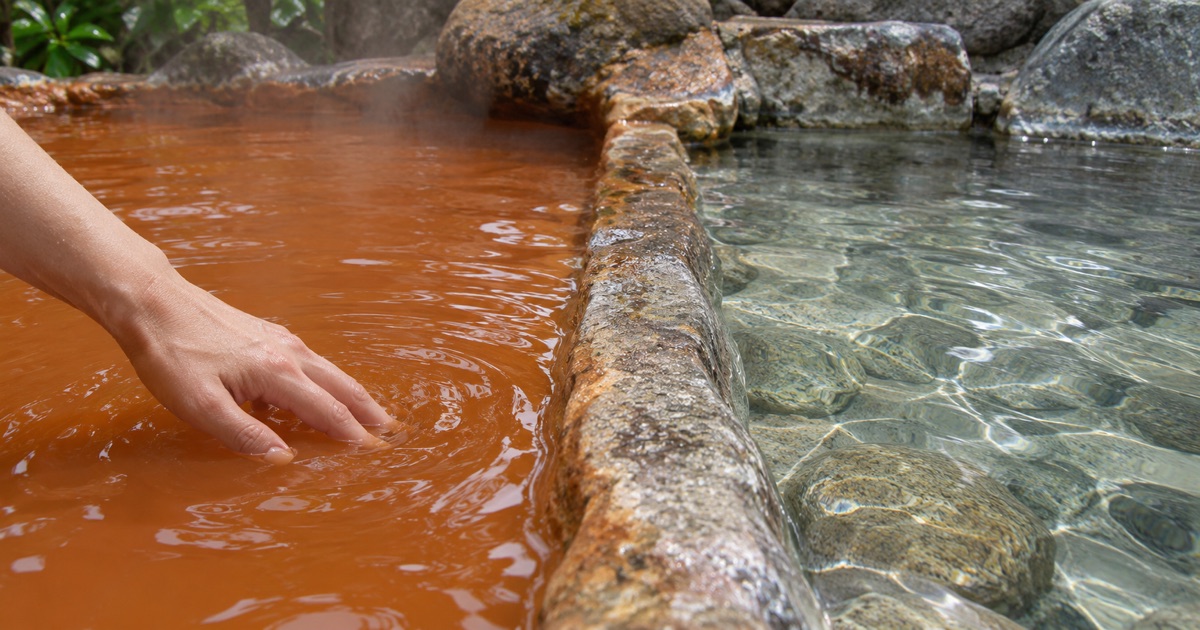
The distinct water hue in Kobe's hot spring district comes from Arima Onsen (有馬温泉), famous for its two contrasting spring types: the reddish-brown, iron-rich Kinsen (金泉, "Gold Water") and the completely clear, carbonated or radium-bearing Ginsen (銀泉, "Silver Water"). Visitors to Kobe can easily experience both vivid hues side by side, as Arima sits tucked behind Mount Rokko (六甲山) just 30 to 45 minutes from the city center.
Understanding the origin of these spring colors, knowing what to pack, and learning standard Japanese bathhouse etiquette will ensure a smooth day trip or overnight stay.
Understanding the Kobe Onsen Hue: Kinsen vs. Ginsen
Unlike standard hot springs that run clear, Arima’s geological formation pushes volcanic-like mineral water up from deep within the earth's crust without an active volcano nearby. The result is two radically different mineral profiles and visual appearances.
The Golden Hue: Kinsen (Gold Water)
When you step into a Kinsen bath, the water resembles a deep amber, rust-orange, or muddy brown broth. This spring is completely clear when it flows underground. However, because it contains massive amounts of dissolved iron and salt, exposure to air causes rapid oxidation.
The iron reacts with atmospheric oxygen, creating an opaque, reddish-brown hue that makes it impossible to see your own feet once submerged. The high sodium chloride concentration also gives the water a distinct, earthy scent and an exceptionally salty taste. Because the water is completely non-transparent, many bathers who feel self-conscious about public nudity find Kinsen more comfortable than clear pools.
The Clear Radiance: Ginsen (Silver Water)
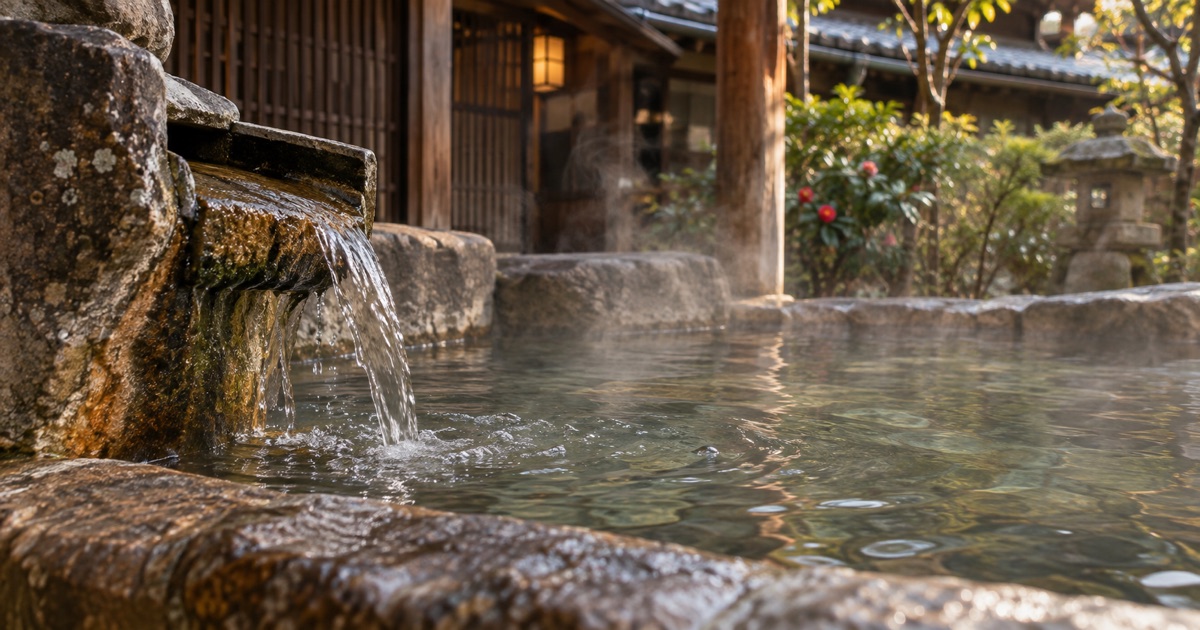
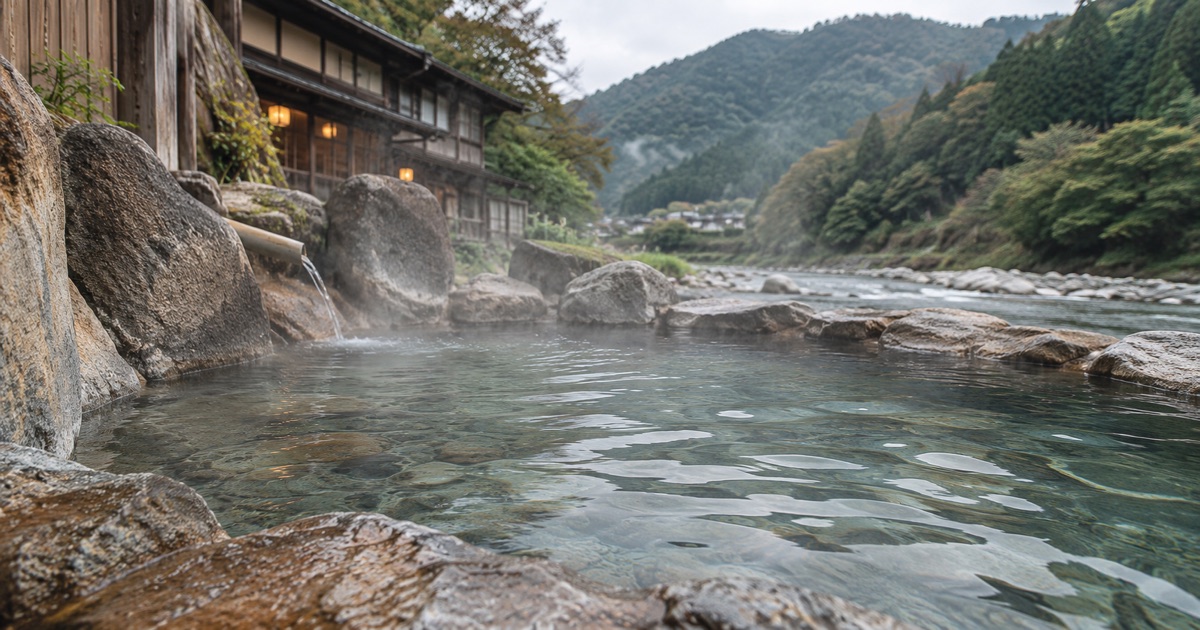
In sharp contrast to the rust-colored springs, Ginsen runs perfectly clear and colorless. Despite looking like standard bathwater, Ginsen encompasses two distinct spring types found in the village:
- Carbonic acid springs: Naturally carbonated mineral water that produces light bubbling sensations on the skin.
- Radon springs: Water containing trace amounts of natural radioactive minerals.
Because it leaves behind a subtle, soft feeling and lacks heavy iron deposits, locals traditionally rotate between both waters during a single visit.
Where to Experience the Waters: Kin no Yu and Gin no Yu
While high-end traditional inns (ryokan, 旅館) maintain private sources, day-trippers can visit the two town-run public bathhouses, which are located about a 5-minute walk from each other.
Kin no Yu (金の湯)
Kin no Yu is Arima's primary public bath for experiencing the famous golden hue.
- The Facility: Offers two indoor Kinsen pools maintained at different temperatures (often around 42°C and 44°C).
- Exterior Footbath: Outside the front entrance sits a free public footbath (ashi-yu, 足湯) fed by the same rust-colored Kinsen. Travelers can roll up their trousers and soak their feet without entering the main bathhouse.
- Cost: Adult admission generally runs around 650 to 800 yen. Combined tickets covering both Kin no Yu and Gin no Yu are often available at the front desk for roughly 1,000 to 1,200 yen. Check the official Arima Onsen tourism listings for the latest pricing.
Gin no Yu (銀の湯)
Located slightly further up the hill along narrow, historic alleys, Gin no Yu is dedicated to the clear Ginsen water.
- The Facility: Features indoor clear baths, a steam room, and natural lighting filtered through high ceilings.
- Cost: Adult admission runs around 550 to 700 yen.
Both facilities operate ticket vending machines near the entrance. These machines usually offer English labels alongside Japanese text. Cash is standard, though some public facilities now accept major Japanese transit IC cards (like ICOCA or Suica).
We are working to carry Japanese craft and everyday culture beyond Japan, by building Japan Towns with local partners.
Read the Japan Town plan →How to Get to Arima Onsen from Central Kobe
Travelers can easily consult route planning via JR West or the local municipal subway maps to plot connections.
Option 1: Direct Highway Bus (Easiest)
- Departure Point: Sannomiya Station (三宮駅) bus terminal.
- Travel Time: Roughly 45 to 55 minutes.
- Details: Hankyu Bus and JR Bus operate frequent direct routes straight to the Arima Onsen bus stop. This removes the need for multiple train transfers and avoids stairs with luggage.
Option 2: Train and Subway (Fastest)
- Route: Take the Kobe Municipal Subway from Sannomiya to Tanigami Station (谷上駅). Transfer to the Kobe Electric Railway (Shintetsu) Arima Line bound for Arima-guchi (有馬口駅), then switch to the single-stop Arima Onsen spur line.
- Travel Time: Approximately 35 to 45 minutes total.
- Details: Transfers are well-signed in English on the platforms. The train drops you at Arima-Onsen Station (有馬温泉駅), situated an easy 5- to 10-minute walk from the town center.
Option 3: The Rokko Cable and Ropeway (Scenic)
If the weather is clear, take a bus to the Rokko Cable Car from Kobe, ride to the top of Mount Rokko, and board the Rokko-Arima Ropeway down the back side of the mountain directly into Arima. This journey takes roughly 90 minutes but delivers wide views over Kobe Harbor.
Essential Packing List and Warnings for Iron-Rich Water
The distinct chemical makeup of the golden onsen requires a few practical precautions:
- Sacrifice a cheap towel: Bathhouses supply or sell small modesty towels (tenugui, 手ぬぐい). The iron particles in Kinsen will permanently stain white or light-colored fabrics yellow-brown. Do not dip your high-end hotel towels into the water.
- Remove all jewelry: Take off silver, gold, copper, and alloy rings, necklaces, and watches before entering. The sulfur, salt, and iron content will tarnish metals almost instantly.
- Rinse off thoroughly before leaving: The high salt and iron density can cause mild skin irritation for sensitive individuals if allowed to dry completely on the skin. Use the sit-down wash stations to rinse with fresh tap water before exiting to the changing room.
- Bring a coin for lockers: Changing room lockers at public baths usually require a 100-yen coin deposit, which is returned when you retrieve your belongings.
Onsen Etiquette for First-Time Visitors
Public bathing in Japan follows strict cultural norms designed to keep shared pools hygienic.
- Undress Completely: Bathing suits are strictly forbidden in traditional onsen baths. Leave all clothing, underwear, and large towels inside your designated locker or basket.
- Wash Before Soaking: Enter the washing area first. Sit on the provided plastic stools, soap your body, wash your hair, and rinse away all suds entirely before taking a single step into the hot springs.
- Keep Towels Out of the Water: Place your small washcloth on your head or balance it on the pool’s dry edge. Never let cloth soak in the communal water.
- Tie Up Long Hair: Secure any long hair with an elastic band so it does not touch the water.
- Dry Off in the Transition Zone: Before stepping from the tile washing area back onto the changing room floor mats, use your small towel to wring off excess water. Walking dripping wet onto the dressing room floor is considered poor manners.
- Tattoo Policies: Japanese hot spring policies regarding body art vary widely. Kin no Yu and Gin no Yu have historically prohibited exposed tattoos, though small markings covered securely with waterproof adhesive patches may be tolerated at staff discretion. Check the official facility rules in advance. If you have visible tattoos, booking a ryokan with a private reservable bath (kashikiri-buro, 貸切風呂) is the most stress-free option.
For general planning, travel passes, and region-wide rail tickets across the Kansai area, review the practical guides provided by the Japan National Tourism Organization.
Making the Most of Your Day in the Village
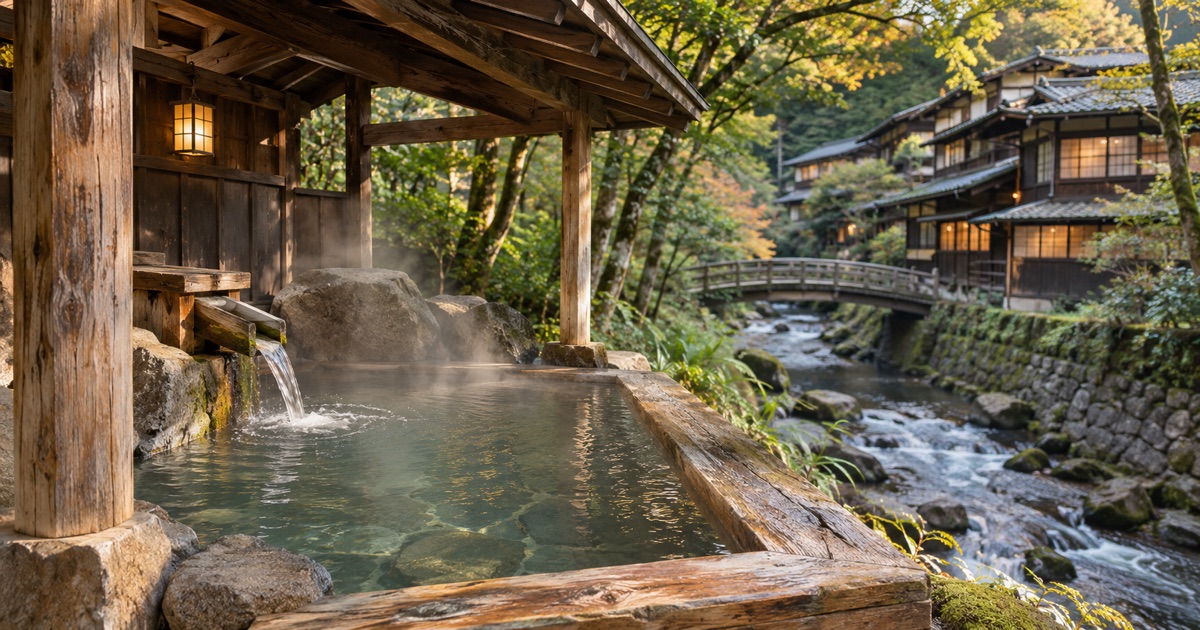
Arima is compact and walkable, filled with steep cobblestone lanes, wooden buildings, and mineral springs venting steam along the roadside.
Between visits to the golden and silver waters, sample the local specialty: Tansan Senbei (炭酸せんべい). These thin, crisp wafers are made using the natural carbonated mineral water of the town's Ginsen springs. Many historic storefronts along the Yumotozaka (湯本坂) shopping street bake them fresh on iron presses, handing them to passersby while still soft before they crisp in the cool air.
By timing your visit to experience both the dense, rust-colored pools of Kinsen and the light waters of Ginsen, you will experience two of Japan's most distinctive hot spring varieties in a single afternoon.
FAQ
- Q. Why does the onsen water in Kobe's Arima district have a golden hue?
- A. The spring water contains high concentrations of iron and salt. While crystal clear underground, the iron oxidizes upon meeting the air, turning a rich reddish-brown.
- Q. Can I soak in both the golden and clear springs in a single day?
- A. Yes. Public bathhouses Kin no Yu (gold water) and Gin no Yu (silver water) sit within a five-minute walk of each other in Arima.
- Q. Does the reddish-brown Kinsen water stain clothing or skin?
- A. It will not permanently stain your skin, but the iron-rich water can easily ruin light-colored towels, swimsuits, or clothing. Rinse thoroughly before dressing.
Cite or share this article
Copy the link below. If you quote this article, please link to this page as the source.