Kobe Onsen Town Guide: How to Visit Arima Onsen
Key takeaways
- Arima Onsen is Kobe's premier hot spring town, located roughly 30 to 45 minutes from central Kobe stations.
- The town features two distinct spring waters: iron-rich golden Kinsen and clear carbonated Ginsen.
- Day-use bathers can easily access public bathhouses like Kin no Yu and Gin no Yu without booking an overnight stay.
The definitive Kobe onsen town is Arima Onsen (有馬温泉), a historic mountain retreat tucked directly behind Mount Rokko within Kobe's city boundaries. Recognized as one of Japan's three oldest hot spring resorts, it offers travelers rare mineral springs, preserved heritage streets, and easy transit access from central Kobe and Osaka.
For international travelers visiting Kansai, Arima Onsen provides an authentic hot spring experience without requiring a long journey into remote countryside. Whether you visit for a few hours of soaking or settle in for an overnight stay at a traditional inn (ryokan), navigating the town is simple once you understand its layout, waters, and transit connections.
The Historic Kobe Onsen Town: Arima Onsen
Arima Onsen dates back over a millennium, with mentions in ancient texts like the Nihon Shoki. Unlike modern resort towns characterized by sprawling concrete high-rises, central Arima retains a compact, walkable atmosphere. Narrow lanes climb past timber-framed merchant houses, traditional sweet shops, and steaming geothermal vents emerging straight from the pavement.
Geographically, Arima sits on the northern slopes of Mount Rokko (六甲山). While it forms an official district of Kobe City, its mountain topography creates a distinct, secluded microclimate that feels completely removed from the harbor city's urban core. You can explore the entire central village comfortably on foot, though comfortable walking shoes are recommended due to steep slopes and cobblestones.
Kinsen and Ginsen: The Two Waters of Arima
Most hot spring regions in Japan feature clear volcanic water, but Arima's geothermal source is non-volcanic, originating from deep crustal brine. The town is famous for two distinct types of thermal water, categorized by their appearance and mineral content.
Kinsen: The "Gold Water"
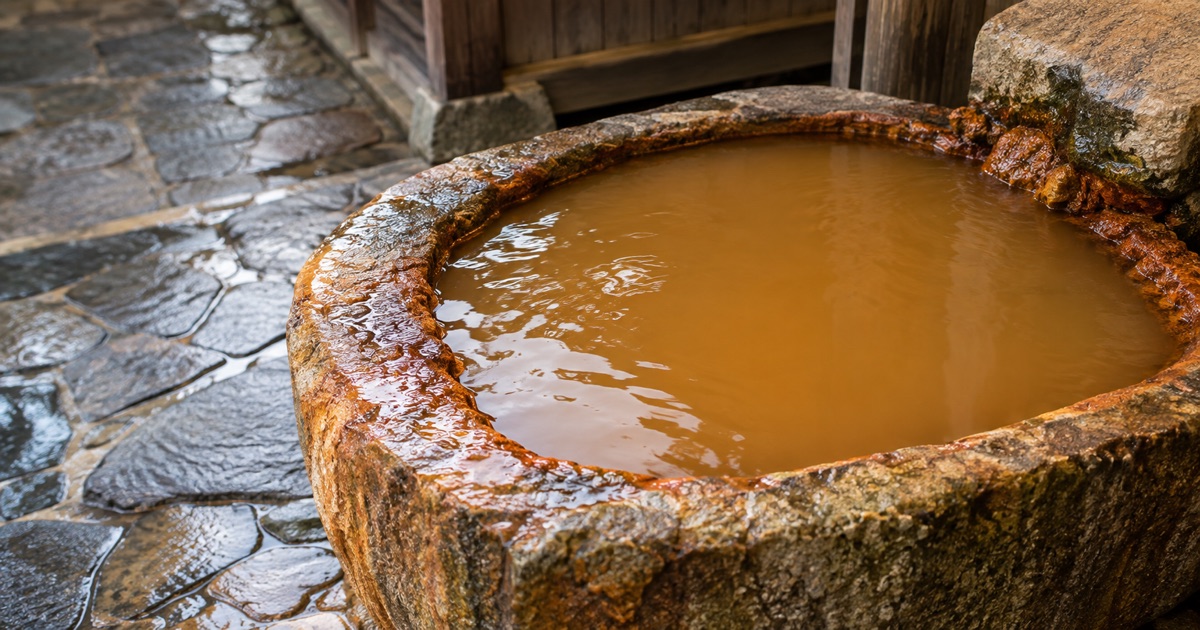
Kinsen (金泉) emerges from the earth completely clear, but quickly oxidizes into a rich, reddish-brown hue upon contact with the air due to high concentrations of iron and salt. The water is remarkably dense and opaque—you will not be able to see your limbs once submerged. Travelers often note the saline buoyancy of the bath, which leaves a light mineral film on the skin.
Ginsen: The "Silver Water"
In contrast, Ginsen (銀泉) is completely transparent, colorless, and odorless. Arima features two varieties of Ginsen: one containing dissolved carbon dioxide (radium-free carbonic springs) and another containing trace amounts of radon. Carbonic springs create delicate micro-bubbles against the skin, offering a soothing, gentle soak that contrasts with the heavy warmth of Kinsen.
We are working to carry Japanese craft and everyday culture beyond Japan, by building Japan Towns with local partners.
Read the Japan Town plan →Top Day-Use Baths in Arima Onsen
You do not need to book an expensive inn to bathe in Arima. The town operates prominent public bathhouses welcoming casual visitors. Opening hours and admission fees fluctuate throughout the year, so verify operating schedules on local community listings before arriving.
Kin no Yu (金の湯)
Located in the heart of town, Kin no Yu is Arima's flagship public bathhouse dedicated to Kinsen. Outside the entrance sits a free thermal footbath (ashiyu), where you can rest your feet without entering the main building. Inside, separate male and female bathing halls feature two large tubs kept at slightly different temperatures (usually one moderate and one hot). Amenities like body wash and shampoo are provided, but towels must be brought with you or purchased at the reception desk for a modest fee.
Gin no Yu (銀の湯)
A short walk uphill from Kin no Yu sits Gin no Yu, the sister public bath focusing on clear Ginsen. It offers a brighter, modern bathing hall featuring a regular tub, a steam sauna, and a bubbling bath. Combining a visit to both Kin no Yu and Gin no Yu allows you to experience Arima's contrasting waters in a single afternoon. Combo tickets covering entry to both facilities are often sold at the front desk.
Taiko no Yu (太閤の湯)
For a full-scale hot spring theme park, Taiko no Yu provides multiple indoor and outdoor baths, saunas, bedrock relaxation rooms (ganbanyoku), and dining areas. While admission costs more than municipal public baths, it includes bath towels and indoor loungewear (館内着, kannaigi), making it convenient for travelers packing light.
How to Get to Arima Onsen from Kobe and Osaka
Arima is among the most accessible mountain onsen towns in Japan. Transit routes depend on whether you prioritize speed, budget, or scenery. For comprehensive schedule planning across Kansai, check route guidelines via West Japan Railway Company (JR West).
Direct Highway Bus (Recommended for Simplicity)
Direct highway buses run frequently from major transport hubs:
- From Kobe (Sannomiya Station): Highway buses take roughly 30 to 45 minutes to reach the Arima Onsen bus terminal.
- From Osaka (Hankyu Umeda or Shin-Osaka): Direct highway buses operate regularly, reaching Arima in approximately 50 to 60 minutes.
Bus travel eliminates train transfers, which is advantageous if you are carrying luggage.
By Train and Subway
Train connections offer consistent timing unaffected by highway traffic:
- From Sannomiya Station (三宮), take the Kobe Municipal Subway Seishin-Yamate Line north to Tanigami Station (谷上).
- Transfer to the Shintetsu Arima Line (Kobe Electric Railway) to Arima-guchi Station (有馬口).
- Switch across the platform to the single-track spur line ending at Arima-onsen Station (有馬温泉).
The full rail journey takes around 35 to 45 minutes from central Kobe.
The Scenic Route: Mount Rokko Ropeway
Travelers seeking panoramic views can cross over Mount Rokko from the Kobe coast. Take a local bus from Hankyu Rokko Station to the Rokko Cable Car, ride to the top of the mountain ridge, catch a summit bus to the Rokko Arima Ropeway, and descend directly into Arima Onsen. This route takes around two hours, but showcases views of Kobe Port and Osaka Bay.
Essential Onsen Etiquette for First-Timers
Bathing in Japan follows strict cultural protocols to keep shared waters pristine. If you have never visited an onsen, keep these basic rules in mind:
- Footwear: Remove your street shoes at the entrance or shoe locker area before stepping onto the tatami or wood flooring.
- Changing Area: Place all clothing, jewelry, watches, and large items into the provided lockers or woven baskets. Take only your small modesty towel (tenugui) into the bath hall.
- Wash Before Soaking: Communal baths are for relaxing, not cleaning dirt off your body. Head straight to the sit-down wash stalls equipped with stools and basins. Lather, scrub, and thoroughly rinse all soap from your body before touching the bath water.
- Keep Towels Out of the Water: Do not submerge your modesty towel in the communal bath. Place it on the side of the tub or fold it on top of your head while soaking.
- No Swimming or Splashing: The bath is a tranquil retreat. Keep your head above water and avoid submerging your hair. Tie long hair securely with a band.
- Dry Off Before Re-entering: Use your wrung-out modesty towel to wipe excess water from your skin before walking back into the locker room to keep the floor dry.
A Note on Tattoos
Like many historic Japanese hot spring destinations, traditional public baths in Arima often enforce strict policies barring visible body art. Some facilities permit guests to enter if their tattoos can be completely concealed using waterproof flesh-toned patches. If you have extensive body art, consider booking a private rental bath (kashikiri-buro) at an area ryokan, or look for accommodations that offer in-room private thermal baths. Always consult each facility's official website beforehand.
Local Specialties to Try
A trip to Arima is incomplete without sampling local foods sold along Yumotozaka (湯本坂), the town's main shopping lane:
- Tansan Senbei (炭酸煎餅): Paper-thin, crispy wafers traditionally made with carbonated spring water, flour, and sugar. Many shops bake them fresh in front of visitors.
- Arima Sansho (有馬山椒): Regionally grown Japanese mountain pepper, prized for its citrusy aroma and tongue-tingling spice. You will find it infused into soy-simmered beef, savory crackers, and condiments.
- Kobe Beef: Many dining establishments and inns in Arima serve genuine Hyogo-raised Wagyu beef, prepared as sukiyaki, shabu-shabu, or grilled steaks.
For broader regional travel coordination, refer to national overviews on the Japan National Tourism Organization website. Pairing a relaxing bath in Arima Onsen with central Kobe's vibrant food scene creates an ideal itinerary for any Kansai vacation.
FAQ
- Q. What is the main hot spring town in Kobe?
- A. Arima Onsen (有馬温泉) is the premier hot spring town located within Kobe city limits, nestled behind Mount Rokko. It is one of Japan's three oldest onsen destinations and is easily accessible by train, subway, or direct highway bus.
- Q. Can you visit Arima Onsen as a day trip from Kobe or Osaka?
- A. Yes, Arima Onsen makes a straightforward day trip, taking roughly 30 to 45 minutes from central Kobe and about an hour from central Osaka. Public bathhouses like Kin no Yu cater specifically to day visitors, making an overnight stay optional.
- Q. Are tattoos allowed in Arima Onsen public baths?
- A. Most traditional public bathhouses in Arima Onsen strictly prohibit visible tattoos in communal bathing areas. Travelers with body art should look for facilities that allow waterproof cover patches, or reserve a private bath (kashikiri) at a local ryokan.
Cite or share this article
Copy the link below. If you quote this article, please link to this page as the source.