Onsen Town Near Morioka: Best Hot Spring Getaways
Key takeaways
- Tsunagi Onsen is the closest hot spring area to Morioka, reachable in about 30 minutes by local bus.
- Historic areas like Hanamaki and Nyuto Onsen offer traditional ryokan stays within 1 to 2 hours of the city.
- Most regional buses require cash or numbered transit tickets, so carry Japanese yen on day trips.
The best onsen town near Morioka is Tsunagi Onsen (繋温泉), located approximately 30 minutes west of Morioka Station by bus along the shores of Lake Gosho. For travelers seeking historic mountain atmosphere or rustic wooden baths, Hanamaki Onsen and the Nyuto Onsen village are also easily accessible within one to two hours.
Morioka, the capital of Iwate Prefecture in northern Tohoku, is widely known for its vibrant craft scene and famous noodle traditions. It also serves as an exceptional railway hub for exploring some of northeastern Japan's finest mineral springs. Whether you have an afternoon between Shinkansen connections or want an overnight stay in a traditional Japanese inn (ryokan), the hot springs surrounding Morioka offer an authentic, restful escape.
The Top Hot Spring Destinations Near Morioka
Depending on your schedule and travel style, several distinct hot spring areas surround the city. Travel times range from a short city-bus hop to scenic mountain train rides.
1. Tsunagi Onsen (繋温泉)
Located right on the perimeter of Lake Gosho, Tsunagi Onsen is the definitive local resort for Morioka residents. Legend states that the warrior Minamoto no Yoshiie tethered his horse to a stone here to bathe the animal's wounds, giving the town its name (tsunagi means "tethered" or "connected").
- Atmosphere: A lakeside resort town with a mix of mid-sized modern hotels and traditional ryokan.
- Travel Time: Roughly 30 to 35 minutes by direct bus from Morioka Station.
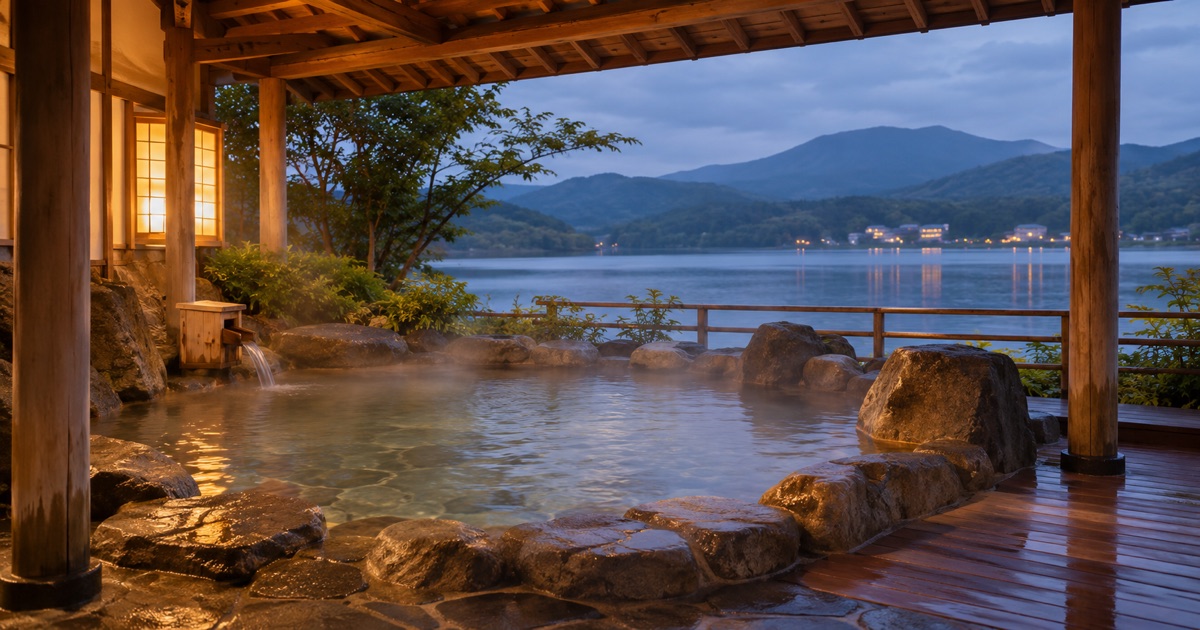
- Highlights: Open-air baths overlooking the lake and views of Mount Iwate (岩手山) on clear days. Footbaths (ashiyu) are scattered around the village for public use.
2. Oushuku Onsen (鶯宿温泉)
Just a 10-minute drive further west from Tsunagi, Oushuku Onsen sits along a quiet mountain stream. The town has a history stretching back over 450 years, discovered when an injured bush warbler (uguisu) was seen soothing its wing in the steaming waters.
- Atmosphere: Quaint, quiet, and less commercialized than Tsunagi. It features narrow streets lined with family-run inns and independent bathhouses.
- Travel Time: Approximately 45 to 50 minutes by bus from Morioka Station, or a short taxi ride from Tsunagi.
- Highlights: Unpretentious traditional hospitality and piping hot waters running through local village bathhouses.
3. Hanamaki Onsen-kyo (花巻温泉郷)
Located south of Morioka, the Hanamaki hot spring valley encompasses over a dozen distinct hot spring sources along the Dai and Toyosawa rivers. The area is divided into the large resort district of Hanamaki Onsen and several historic, rustic hot springs collectively called the Hanamaki Minami Onsenkyo.
- Atmosphere: Diverse options ranging from grand, multi-bath resort complexes with rose gardens to deep-valley historic wooden inns such as Osawa Onsen (大沢温泉) and Namari Onsen (鉛温泉).
- Travel Time: Around 35 to 45 minutes south of Morioka by JR Tohoku Line train to Hanamaki Station or Shin-Hanamaki Station, followed by a 20- to 30-minute local bus.
- Highlights: Classic wooden multi-story architecture, riverside outdoor baths, and long histories tied to famous poet Kenji Miyazawa.
4. Nyuto Onsen-kyo (乳頭温泉郷)
While technically across the prefectural border in Akita, Nyuto Onsen is situated just west of Mount Akita-Komagatake and is easily reached from Morioka via the Akita Shinkansen. It is one of Japan's most famous secluded hot spring areas (hitou).
- Atmosphere: Deep rustic forest, thatched-roof buildings, and mineral-clouded water nestled inside Towada-Hachimantai National Park.
- Travel Time: Roughly 30 minutes on the Akita Shinkansen from Morioka to Tazawako Station (田沢湖駅), then about 45 to 50 minutes by local bus.
- Highlights: Historic outdoor baths such as Tsurunoyu (鶴の湯), surrounded by beech forests.
How to Get There from Morioka Station
Public transit links all of these onsen towns, though frequencies vary depending on the season and time of day.
For train routes, ticketing, and regional passes, consult JR East for schedules across the Shinkansen and Tohoku main lines.
Taking the Bus to Tsunagi and Oushuku
- Exit Morioka Station via the East Exit bus terminal.
- Board the Iwate Kotsu bus bound for Tsunagi Onsen or Oushuku Onsen (typically departing from Bus Stop No. 10, though you should check the terminal board for daily bay assignments).
- Pay the fare upon arrival or use local IC cards if supported on that specific vehicle. Regional buses often operate on the paper ticket system (take a numbered slip when boarding, match the number to the fare board at the front, and pay the driver in cash when disembarking).
Taking the Train and Bus to Hanamaki
- Board a local JR Tohoku Main Line train southbound from Morioka Station to Hanamaki Station (roughly 40 minutes).
- From Hanamaki Station, switch to the local bus serving Hanamaki Onsen or the southern valley baths (such as Osawa or Namari).
- If staying overnight at a ryokan, many accommodations operate private shuttle buses directly from Shin-Hanamaki or Hanamaki Station; contact your lodging in advance to reserve a seat.
We are working to carry Japanese craft and everyday culture beyond Japan, by building Japan Towns with local partners.
Read the Japan Town plan →Day-Use vs. Overnight Ryokan Stays
Visitors can experience these hot springs either as a day-use guest (higaeri nyuyoku) or as an overnight guest.
- Day-Use Bathing: Many ryokan open their baths to non-staying guests for a modest fee, typically ranging from 500 to 1,200 yen. Operating windows are generally restricted to midday hours (for example, 11:00 AM to 3:00 PM) to allow for cleaning before overnight guests check in. Always verify operating hours on the property's website, as hours change seasonally.
- Overnight Stays: Booking an overnight package at a ryokan includes traditional Japanese dinners and breakfasts (often featuring regional Iwate beef, fresh river fish, and seasonal mountain vegetables). Overnight guests also enjoy late-night and early-morning bath access when the facilities are quietest.
Practical Onsen Etiquette for First-Time Visitors
Public bathing in Japan involves shared community spaces. Following basic rules ensures an easy, comfortable experience for everyone.
Before Entering the Water
- Remove all footwear at the facility entrance or locker room entryway.
- Separate by gender: Look for the fabric curtains (noren) at the bath entrance. Red or pink typically indicates the women's bath (女), while blue typically indicates the men's bath (男).
- Wash thoroughly first: Never step straight into the soaking tubs. Head to the seated washing stations equipped with stools, basins, and soap. Wash and rinse completely before entering the water.
Inside the Bath Area
- No swimwear: Bathing is done completely unclothed.
- Modesty towels: Facilities provide a small face towel. You may use this to cover yourself while walking between the shower and the bath, but keep it out of the communal water. Fold it and place it on your head or set it on the dry edge of the pool.
- Keep hair tied up: Long hair should be tied up so it does not touch the bathwater.
- Quiet ambiance: Hot springs are quiet spaces intended for relaxation; avoid loud conversations, splashing, or swimming.
Tattoo Policies
Policies regarding tattoos differ across facilities in Tohoku. Some modern resorts and municipal public baths require tattoos to be covered entirely with waterproof bandages or patches. Others, particularly historic or secluded rural baths, may be more accommodating, but it is never guaranteed. If you have large, visible tattoos, consider booking a ryokan that offers private-hire baths (kashikiri-furo) or rooms featuring their own private outdoor tubs (rotenburo). For national travel standards and cultural tips, visit the Japan National Tourism Organization.
What to Bring and Common Mistakes to Avoid
A smooth onsen trip requires just a small amount of preparation:
- Carry Cash (Yen): Regional buses, rural locker deposits, and day-use entrance vending machines frequently do not take credit cards or mobile payment apps. Keep coins and small bills handy.
- Bring a Small Towel: While hotels provide towels to overnight guests, day-use visitors must either bring their own or purchase a small washcloth at the reception desk for a nominal fee (around 200 to 300 yen).
- Check Return Bus Schedules: Mountain buses run infrequently, sometimes with intervals of two hours or more between departures. Take a photo of the bus timetable at the stop as soon as you arrive in the village so you do not miss your ride back to Morioka.
- Remove Jewelry: Natural mineral waters, especially those containing sulfur, can quickly tarnish or discolor silver, gold, and other metals. Store all rings, necklaces, and watches in your locker before bathing.
FAQ
- Q. What is the closest onsen town to Morioka Station?
- A. Tsunagi Onsen (繋温泉) is the closest, situated roughly 30 minutes west of Morioka Station by local Iwate Kenpoku or Iwate Kotsu bus.
- Q. Can I visit hot springs near Morioka as a day trip?
- A. Yes, many ryokan and public bathhouses in Tsunagi Onsen, Oushuku Onsen, and Hanamaki Onsen offer day-use bathing (higaeri onsen) during set daytime hours.
- Q. Are tattoos allowed in hot springs around Morioka?
- A. Policies vary widely by facility. Some traditional inns strictly forbid visible tattoos in public baths, while others allow waterproof patches or offer private rental baths (kashikiri-furo). Always check the facility's official policy beforehand.
Cite or share this article
Copy the link below. If you quote this article, please link to this page as the source.