Nagano Onsen Monkey Guide: Jigokudani Snow Monkeys
Key takeaways
- Nagano's famous snow monkeys bathe in a designated outdoor hot spring pool inside Jigokudani Monkey Park.
- Visitors cannot bathe with the monkeys, but historic onsen towns like Shibu Onsen and Yudanaka Onsen are nearby.
- The winter trail requires a 30- to 45-minute snowy walk, so sturdy, waterproof footwear is essential.
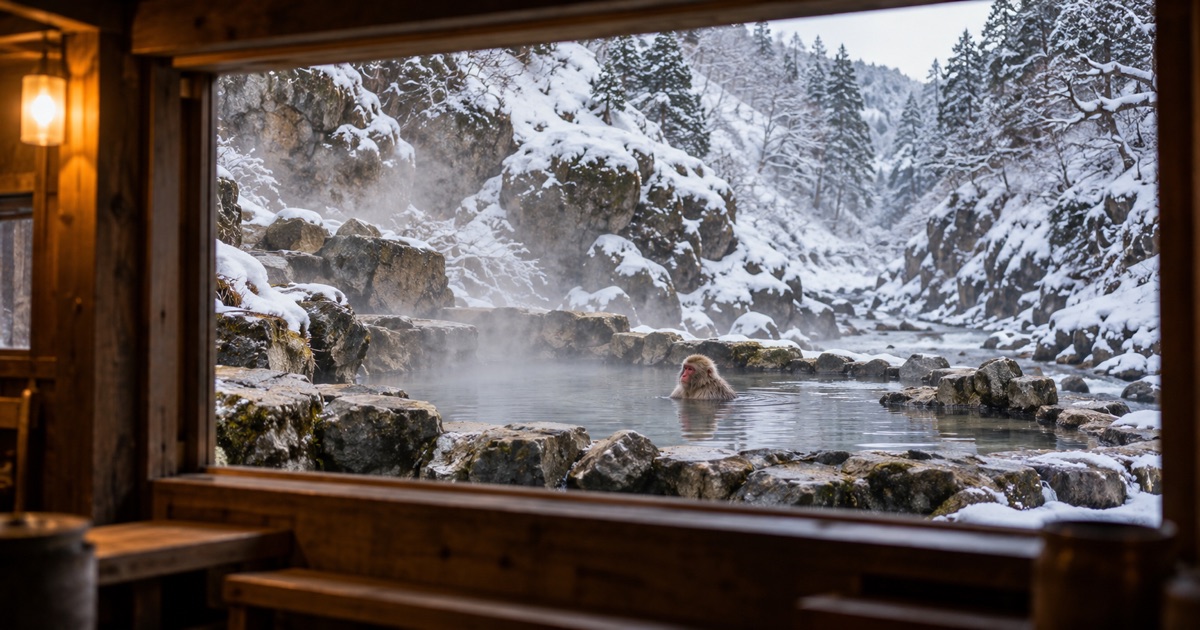
The famous Nagano onsen monkeys live in the Jigokudani Monkey Park (Jigokudani Yaen-Koen, 地獄谷野猿公苑) located in the northern mountains of Nagano Prefecture. These wild Japanese macaques naturally warm themselves in an outdoor hot spring pool, creating one of Japan's most celebrated winter wildlife sights.
This guide explains how to reach the park from Tokyo and Nagano City, what to expect on the trail, how to combine your visit with authentic human hot spring baths, and the common mistakes first-time visitors make.
What to Expect at Jigokudani Monkey Park
Jigokudani translates to "Hell's Valley," named for the steep cliffs and steaming hot spring water bubbling from the frozen riverbed. The park opened in the 1960s after local conservationists observed wild macaques imitating humans soaking in nearby baths. To keep the monkeys safe from surrounding roads and orchards, a designated outdoor bath (rotenburo, 露天風呂) was constructed exclusively for the troop.
A key point for first-time visitors: humans cannot bathe with the monkeys. The pool inside the monkey park is strictly for the animals. The water contains monkey hair and natural waste, making it unsuitable and unsafe for human use. If you want to soak in an onsen, you can visit the traditional bathhouses and historic ryokan in the neighbouring towns just downstream.
The monkeys are completely wild. They roam down from the forested cliffs during the day, spend hours grooming and lounging near the bath, and head back into the mountains at dusk. Park staff provide small amounts of food at scheduled intervals to encourage them to stay near the observation area, but there are no cages, fences, or physical barriers separating you from the animals.
How to Get to the Snow Monkeys
Getting to the park from Tokyo requires a bullet train ride followed by local transit and a scenic forest walk.
Step 1: Tokyo to Nagano Station
From Tokyo Station (東京駅), take the Hokuriku Shinkansen (北陸新幹線) to Nagano Station (長野駅). The ride takes roughly 80 to 100 minutes. You can purchase standard tickets or use regional rail passes such as those offered via JR East.
Step 2: Nagano Station to the Trailhead
From Nagano Station, you have two primary public transport routes to reach the trailhead:
- Direct Express Bus (Nagaden Express Bus): From the East Exit of Nagano Station, take the Nagaden express bus bound for Shiga Kogen (志賀高原). Get off at the Snow Monkey Park stop (Kanbayashi Onsen, 上林温泉). The bus ride takes roughly 45 to 55 minutes.
- Local Train + Local Bus: From the underground platforms at Nagano Station, board the Nagano Electric Railway (Nagaden, 長野電鉄) limited express train to Yudanaka Station (湯田中駅), which takes about 45 to 50 minutes. At Yudanaka Station, transfer to a local bus or take a short taxi ride to the Kanbayashi Onsen bus stop (around 10 to 15 minutes).
Bus timetables change between summer and winter seasons. Always check current schedules before travelling.
Step 3: The Forest Walk
All transit options terminate near Kanbayashi Onsen. From there, you must walk on foot. The route begins with a paved incline past a few local buildings before entering a 1.6-kilometre unpaved forest trail through tall cedar trees.
The walk takes between 30 and 45 minutes each way. In winter, this path is packed with snow, mud, and hidden ice patches. Wheelchairs and strollers cannot navigate this trail, especially during winter.

We are working to carry Japanese craft and everyday culture beyond Japan, by building Japan Towns with local partners.
Read the Japan Town plan →Combining the Monkeys with Nearby Onsen Towns
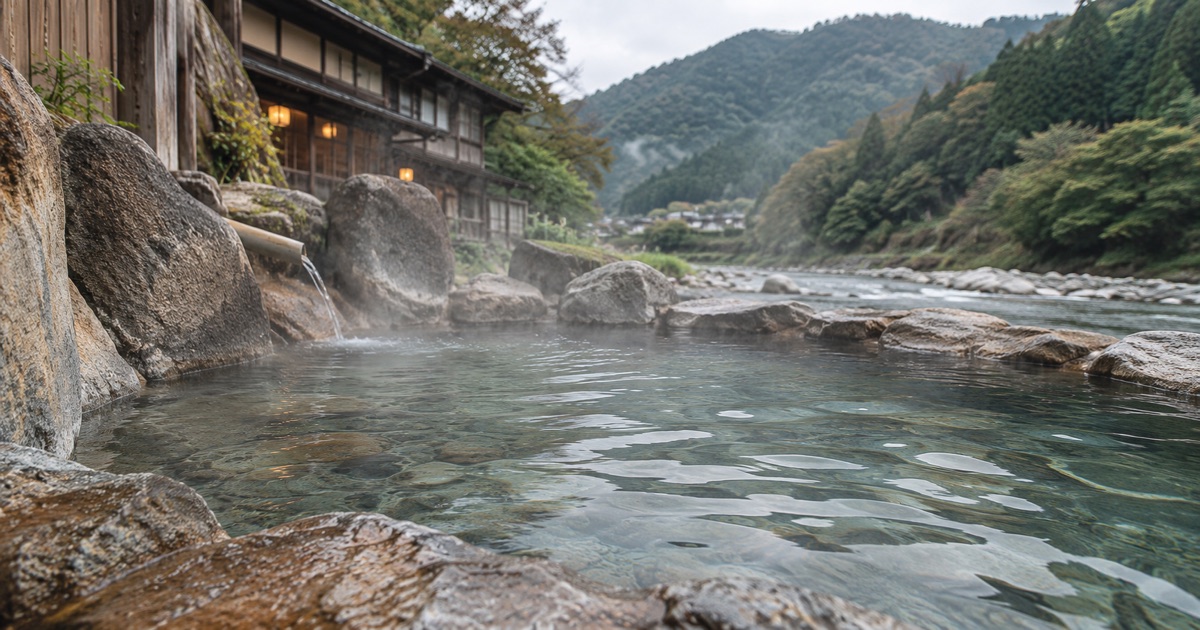
Because you cannot bathe at the park itself, staying in an authentic onsen town nearby completes the experience. Two classic destinations sit just minutes down the valley:
Shibu Onsen (渋温泉)
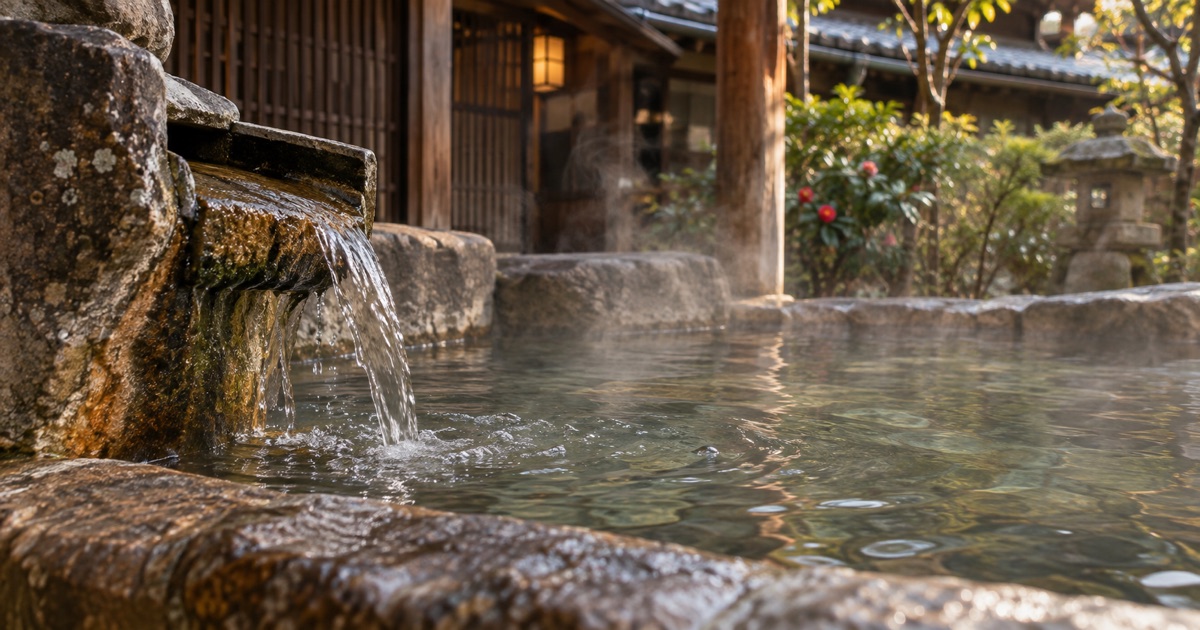
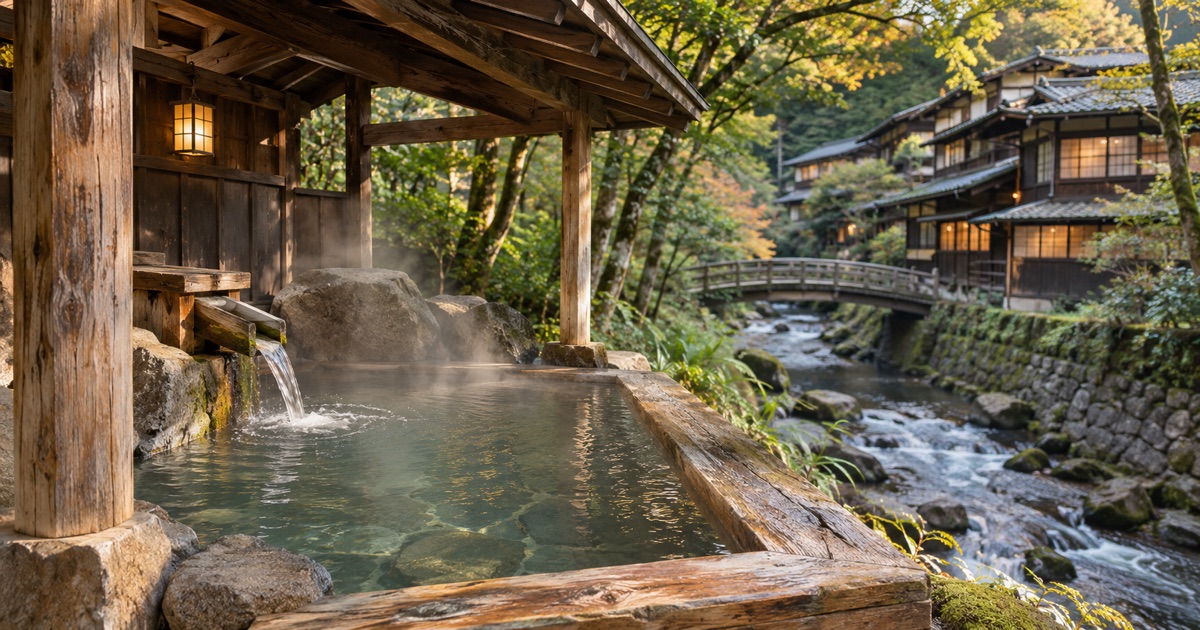
Shibu Onsen is a historic hot spring village dating back over 1,300 years. Its narrow cobblestone street is lined with multi-storey wooden ryokan (traditional inns) and atmospheric lanterns.
Guests staying overnight at registered ryokan in Shibu receive a master wooden key that unlocks nine communal public baths (soto-yu, 外湯) scattered along the village street. Walking from bath to bath wearing a light cotton robe (yukata, 浴衣) and wooden sandals (geta, 下駄) is the traditional way to experience this town.
Yudanaka Onsen (湯田中温泉)
Yudanaka Onsen serves as the valley's railway terminus and transport hub. It offers a broader mix of accommodations, ranging from classic heritage inns to modern, Western-style hotels. Yudanaka is well-suited for travellers who prefer minimal luggage transfers or who want fast train access back to Nagano Station the following morning.
Onsen Etiquette and Rules in the Region
When visiting human hot springs in Shibu, Yudanaka, or broader Nagano:
- Wash before entering: Always scrub and rinse thoroughly at the washing stations before stepping into the communal soaking pool.
- No clothing or swimwear: Traditional Japanese onsen require complete nudity. Do not bring swimsuits into the bath water.
- Tattoos: Policies on tattoos vary significantly across accommodations and public baths. Some ryokan welcome tattooed guests, others permit them only in private baths (kashikiri-furo, 貸切風呂), and some historic public baths have strict restrictions. Always verify the specific tattoo policy directly on your chosen accommodation’s official website prior to booking.
Best Time to Visit
While the park remains open throughout the year, the experience shifts dramatically with the seasons:
- Winter (December to March): This is peak season. Snow blankets the landscape, temperatures plummet below freezing, and the macaques spend extended periods submerged up to their necks in the hot pool.
- Spring (April to May): Snow melts, greenery emerges, and newborn monkey babies often arrive around late April and May. The monkeys rarely soak in the pool during warmer daytime hours.
- Summer (June to August): Temperatures rise, and the valley turns lush and green. Monkeys spend more time foraging in the trees and less time near the water.
- Autumn (September to November): Cool temperatures and vibrant autumn foliage make the forest walk pleasant, with monkeys returning to the pool intermittently as frosts begin.
For official details on park conditions, visitor guidelines, and seasonal opening times, consult the Japan National Tourism Organization or the monkey park's official portal.
What to Pack for the Winter Trail
Winter in the Nagano highlands is cold, damp, and snowy. Proper preparation prevents slips and hypothermia:
- Footwear with traction: Wear sturdy, waterproof winter boots. Smooth-soled sneakers, dress shoes, and slip-on boots are dangerous on the icy trail. Compact slip-on crampons (available at trail shops near the bus stop) provide useful grip on packed ice.
- Layered warm clothing: Thermal base layers, fleece mid-layers, and a windproof, waterproof outer jacket are recommended. Temperatures frequently drop below 0°C (32°F).
- Gloves, beanie, and scarf: Prolonged standing around the open-air pool requires full cold-weather accessories.
- Cash (Japanese Yen): Small local buses, trailside cafes, coin lockers, and park admission booths may not accept foreign credit cards.
- Extra camera battery: Sub-zero temperatures drain lithium-ion batteries rapidly. Keep spare camera and smartphone batteries in an inner jacket pocket close to your body heat.
Park Etiquette: Protecting the Wildlife
To ensure both human and animal safety, the park enforces clear rules:
- Never feed the monkeys: Feeding disrupts their natural foraging patterns and encourages aggressive behaviour toward humans.
- Do not touch or pet them: Although the macaques are accustomed to human crowds, they remain wild animals. Never reach out your hand or attempt to stroke them.
- Maintain a respectful distance: Do not chase monkeys or crowd them into corners for photos. Give them room to walk past you on trails.
- Do not eat while walking: Carrying open food, snacks, or sugary drinks invites monkeys to snatch items directly from your hands or backpacks. Keep all food sealed inside your bags.
- No selfie sticks or drones: Extending poles close to the monkeys can startle them and provoke defensive bites or scratches. Drones are prohibited throughout the park.
FAQ
- Q. Can humans bathe with the monkeys in Nagano?
- A. No, humans cannot enter the hot spring pool with the monkeys. The pool inside Jigokudani Monkey Park is exclusively for the wild Japanese macaques. However, travellers can stay and bathe in nearby hot spring towns such as Shibu Onsen or Yudanaka Onsen.
- Q. What is the best time of year to see the monkeys bathing?
- A. The monkeys are most likely to soak in the hot spring during the cold winter months, particularly from December to March when snow blankets the valley. While the park remains open year-round, monkeys may enter the pool less frequently during warmer weather.
- Q. How long does the walk from the bus stop to the monkey park take?
- A. The walk from the Kanbayashi Onsen bus stop to the monkey park entrance takes roughly 30 to 45 minutes along an unpaved forest trail. During winter, this path often becomes icy, muddy, and covered in snow.
Cite or share this article
Copy the link below. If you quote this article, please link to this page as the source.